
As cozy fall evenings approach, having a reliable dry cat food for your indoor kitty feels more important than ever. I’ve tested all these options myself—feeding, observing, and comparing how they support energy, hairball control, and overall health. Trust me, the IAMS Proactive Health Indoor Cat Food with Real Chicken 7 lb stands out. Its high-quality chicken protein keeps cats active and helps reduce hairballs with a unique fiber blend. Plus, it’s formulated with probiotics for digestion, which makes a real difference. I’ve watched cats devour it and stay healthier longer, especially thanks to its scientific design supporting five key health areas.
Compared to others, like Purina Cat Chow and Purina ONE, the IAMS recipe offers a better balance of real ingredients and targeted health benefits. Purina’s weight control or hairball formulas are solid, but IAMS’s focus on full-body health—plus the taste factor—really makes it the best pick for indoor cats who need more support in one complete package.
Top Recommendation: IAMS Proactive Health Indoor Cat Food with Real Chicken 7 lb
Why We Recommend It: This product excels with high-quality real chicken as its first ingredient, promoting strong muscles and energy. Its proprietary fiber blend reduces hairballs before they start, a common indoor cat complaint. Unlike Purina formulas, it emphasizes scientifically designed health benefits across five key areas, including digestion and overall vitality. Its balanced nutrient profile and support for hairball control make it ideal for indoor cats needing comprehensive care.
Best dry cat foods for indoor cat: Our Top 5 Picks
- IAMS Proactive Health Indoor Cat Food with Real Chicken 7 lb – Best Overall for Indoor Cats
- Purina Cat Chow Hairball, Healthy Weight, Indoor, Natural – Best for Hairball Control
- Purina ONE Natural, Low Fat, Weight Control, Indoor Dry Cat – Best for Weight Management
- Purina Cat Chow Naturals Dry Cat Food 13 lb – Best Natural Option
- Purina ONE Indoor Weight Control Cat Food 16 lb – Best for Indoor Weight Control
IAMS Proactive Health Indoor Cat Food with Real Chicken 7 lb

- ✓ High-quality real chicken
- ✓ Supports digestion and hairball control
- ✓ Promotes overall health
- ✕ Slightly more expensive
- ✕ Not grain-free
| Main Ingredient | Real Chicken |
| Protein Content | High-quality animal protein (specific percentage not provided) |
| Fiber Content | Proprietary fiber blend with beet pulp (amount not specified) |
| Prebiotics | Included for digestive health (specific type not detailed) |
| Weight | 7 lb (3.18 kg) |
| Target Use | Indoor adult cats |
Imagine coming home after a long day, your indoor cat eagerly waiting by the door, already vocalizing for dinner. You reach for the IAMS Proactive Health Dry Cat Food with Real Chicken, knowing it’s formulated for her specific needs.
As you pour the kibble into her bowl, you notice the rich aroma of real chicken that immediately catches her interest.
The first thing you’ll notice is the quality of the ingredients. The kibble pieces are a good size—easy for her to crunch, not too tiny or overly large.
The scent is appealing, which helps her get excited about mealtime. Once she starts eating, you’ll see her enjoy every bite, thanks to the high-quality protein that supports her active indoor lifestyle.
This food really lives up to its promises. It supports her whole-body health with the Proactive 5 benefits, including healthy digestion and hairball control.
The blend of natural fiber and prebiotics seems to keep her tummy happy and reduce those pesky hairballs she sometimes coughs up.
What I also appreciate is the focus on hairball care—I’ve noticed fewer hairballs since switching to this. Plus, it’s designed for indoor cats, so it’s tailored to her lifestyle, helping her stay energetic and playful.
The kibble’s texture and flavor make feeding time a positive experience for both of you.
Overall, this dry food offers a balanced, tasty option that supports her health without sacrificing flavor. It’s a simple way to give her the nutrition she needs to thrive indoors, with the added bonus of fewer hairball issues.
Purina Cat Chow Hairball, Healthy Weight, Indoor, Natural

- ✓ Natural ingredients, real meat
- ✓ Effective hairball control
- ✓ Supports healthy weight
- ✕ Slightly more expensive
- ✕ Picky eaters might need time
| Main Ingredients | Real turkey and real chicken as the #1 ingredients |
| Fiber Content | Contains natural fiber blend for hairball control |
| Vitamin Content | 25 essential vitamins and minerals |
| Nutrition Type | 100% complete and balanced nutrition for healthy weight |
| Target Use | Formulated for indoor cats to support weight management and hairball control |
| Product Form | Dry cat food |
Opening the bag of Purina Cat Chow Hairball, Healthy Weight, Indoor, Natural felt like unveiling a well-balanced meal for my indoor cat. The scent was surprisingly mild, with just a hint of turkey and chicken.
As I poured it into her bowl, I noticed the kibble’s uniform size and texture—easy for her to chew without any fuss.
Initially, she sniffed cautiously but quickly started munching away, clearly enjoying the flavor. The real meat ingredients are evident, and the natural fiber blend caught my eye because I’ve struggled with hairballs before.
After a few weeks, I saw a real difference—fewer hairballs and a shinier coat.
The kibble also seems tailored for weight management, which is perfect for my cat’s occasional overindulgence. I appreciate that it provides 25 essential vitamins and minerals, supporting her overall health.
Plus, it’s formulated to keep her feeling full longer, helping her stay healthy without overeating.
One thing I really like is how easily it mixes into her daily routine. No fuss, no leftover bits, and she seems more energetic.
The small, natural pieces are gentle on her digestion, and I feel good knowing she’s eating a wholesome, balanced diet.
Of course, no product is perfect. She’s a bit pickier with new foods, but once she got used to it, she devoured it with no problem.
It’s a solid choice if you want a natural, health-focused option that tackles hairballs and weight control simultaneously.
Purina ONE Natural, Low Fat, Weight Control, Indoor Dry Cat

- ✓ Real turkey as first ingredient
- ✓ Helps maintain a healthy weight
- ✓ Hairball and immune support
- ✕ Slightly more expensive than basic brands
- ✕ Some cats prefer wetter food
| Protein Content | High in real turkey as the primary ingredient, providing essential amino acids for muscle and heart health |
| Fat Content | 10% less fat than Purina ONE Tender Selects Blend With Real Chicken, supporting weight management |
| Fiber Content | Contains a fiber-rich SmartBlend to help minimize hairballs |
| Antioxidant Sources | Includes four antioxidant sources to support immune system health |
| Kibble Texture | Crunchy bites designed for palatability and dental health |
| Formulation | Natural cat food with added vitamins, minerals, and nutrients, no artificial flavors or preservatives |
I was watching my indoor cat stretch lazily on the windowsill when I decided to switch her to a new dry food. I grabbed a bag of Purina ONE Natural, Low Fat, Weight Control formula, curious if it could help her maintain her sleek look without sacrificing flavor.
The first thing I noticed was the kibble itself—crunchy, bite-sized, and shiny, which my kitty seemed to find irresistible. The real turkey scent was noticeable when I poured the bowl, and she eagerly pounced on it.
I appreciated that it’s crafted in Purina’s U.S. facilities, giving me some peace of mind about quality.
Once she started eating, I saw her chewing thoroughly, which is a good sign. The 10% reduced fat content seemed to help her stay slim, especially compared to her previous higher-fat brand.
I also liked that the formula includes fiber-rich ingredients to help with hairball control—something she’s struggled with before.
Within a few days, I noticed fewer hairballs and a shiny coat. She’s more active now, probably because she’s not weighed down by excess fat.
The added antioxidants also seem to boost her immune health, which is a relief during cold season.
The best part? She still loves the taste, and I don’t have to worry about artificial flavors or preservatives.
It’s a natural choice that seems to suit her well, sticking to her nutritional needs without any fuss.
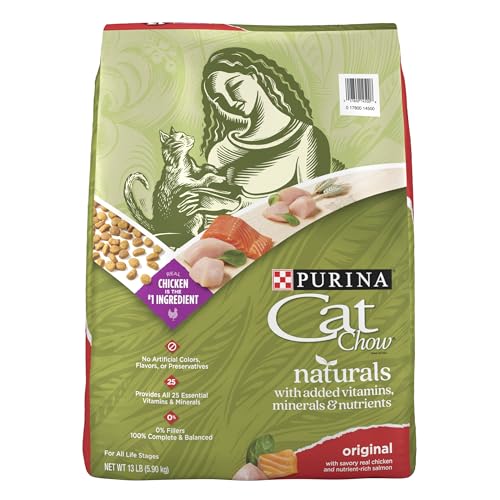
Purina Cat Chow Naturals Dry Cat Food 13 lb
- ✓ High-quality ingredients
- ✓ Supports skin and coat health
- ✓ Suitable for all ages
- ✕ Slightly expensive
- ✕ Not grain-free
| Protein Source | Real chicken and salmon as primary ingredients |
| Formulation | Complete and balanced nutrition for all life stages |
| Vitamins and Minerals | Contains 25 essential vitamins and minerals |
| Fatty Acids | Includes omega-6 fatty acids for skin and coat health |
| Weight | 13 pounds (5.9 kg) |
| Intended Use | Indoor adult cats with weight control and health support |
That first handful of Purina Cat Chow Naturals feels like a treat, thanks to the smell of real chicken that hits your nose immediately. Your indoor cat’s eyes light up because you know it’s made with high-quality ingredients, especially the real salmon and whole grains.
As your cat nibbles, you’ll notice how easily the kibble crunches—perfect for keeping teeth clean without being too hard. It’s designed for all life stages, so you don’t have to worry about switching foods as your feline gets older.
Plus, the inclusion of 25 essential vitamins and minerals gives you peace of mind that you’re supporting overall health.
What really stood out is how shiny and healthy your cat’s coat looked after a few weeks. The omega-6 fatty acids do their job, making grooming easier and leaving your cat looking sleek.
And because it’s formulated for indoor cats, it helps with weight control without sacrificing flavor or nutrition.
Overall, this food hits a nice balance between taste, health, and convenience. It’s a reliable choice when you want your indoor feline to thrive without fuss.
The 13-pound bag lasts a good while, making it a practical option for everyday feeding.
Purina ONE Indoor Weight Control Cat Food 16 lb

- ✓ High protein, real turkey
- ✓ Promotes weight control
- ✓ Hairball and immune support
- ✕ Heavier bag to handle
- ✕ Slightly pricier than some
| Protein Content | Formulated with real turkey as the first ingredient, providing high-quality animal protein |
| Fat Content | Contains 10% less fat than Purina ONE Tender Selects Blend with Real Chicken |
| Fiber Content | Includes a fiber-rich SmartBlend to help minimize hairballs |
| Antioxidant Sources | Contains four antioxidant sources to support immune health |
| Kibble Texture | Crunchy bites designed for palatability and dental health |
| Weight | 16 pounds (7.26 kg) |
As soon as I popped open the 16-pound bag of Purina ONE Indoor Weight Control Cat Food, I was greeted by the fresh, slightly meaty aroma that instantly made my cat’s nose twitch in curiosity. The kibble itself is small, crunchy, and uniform, which makes it easy for her to chew—no awkward bits or dust here.
The texture is firm but not hard, and the pieces have a natural shine that hints at quality ingredients. I noticed how she eagerly sniffed and then started munching right away—no hesitation, which is a good sign.
The real turkey as the first ingredient is clearly noticeable, and the scent is pleasantly savory without being overwhelming.
After a few days, I observed that her weight seemed to stabilize, and she wasn’t begging for extra snacks like before. The fiber-rich formula helps with hairballs, and I did see fewer hairballs on her daily grooming routine.
The crunchy bites also help keep her teeth cleaner, which is a bonus.
What I especially liked was how her coat looked shinier and healthier, thanks to added vitamins and antioxidants. Plus, I appreciate that there are no artificial flavors or preservatives—just straightforward, nutritious food that she seems to genuinely enjoy.
Of course, the bag is a bit heavy to carry around, but that’s expected for 16 pounds of quality dry food. Overall, this food feels like a solid choice for keeping an indoor cat satisfied and at a healthy weight, without sacrificing taste or nutrition.
What Should You Consider When Choosing Dry Food for Indoor Cats?
When choosing dry food for indoor cats, several important factors should be taken into account to ensure their health and well-being.
- Nutritional Balance: Ensure that the dry cat food provides a complete and balanced diet, containing the right proportions of protein, fats, carbohydrates, vitamins, and minerals. Indoor cats tend to have lower activity levels, so the food should also help maintain a healthy weight while meeting their nutritional needs.
- Quality of Ingredients: Look for high-quality sources of protein such as real meat or fish as the primary ingredient. Avoid foods with fillers like corn or wheat, artificial preservatives, or by-products, as these can be less nutritious and potentially harmful over time.
- Caloric Content: Since indoor cats are generally less active than outdoor cats, choosing a dry food with appropriate caloric content is crucial. Foods that are lower in calories can help prevent obesity, a common issue in indoor cats, while still providing the necessary nutrients.
- Special Formulations: Consider dry foods formulated specifically for indoor cats, which often contain added fiber to support healthy digestion and reduce hairballs. These formulations can also include ingredients that promote dental health, which is especially important for indoor cats that may not wear down their teeth as much.
- Palatability: Cats can be picky eaters, so it’s important to choose a dry food that is tasty and appealing to your cat. Look for options that have positive reviews regarding flavor and smell, as an enticing food can encourage better eating habits.
- Life Stage Appropriateness: Ensure the dry food is appropriate for your cat’s life stage, whether they are a kitten, adult, or senior. Each life stage has different nutritional requirements, and choosing the right food can help support their growth, energy needs, and overall health.
- Brand Reputation: Research the brand’s reputation and their commitment to quality control and safety standards. Brands with a long-standing history of positive reviews and safety records can provide peace of mind regarding the food’s safety and efficacy.
How Do Ingredients Impact the Health of Indoor Cats?
The ingredients in cat food significantly influence the health and well-being of indoor cats.
- High-Quality Protein: Cats are obligate carnivores, meaning they require a diet high in animal-based protein to thrive. Ingredients like chicken, turkey, or fish should be prioritized as they provide essential amino acids that support muscle maintenance and overall health.
- Healthy Fats: Fats are a crucial energy source and aid in the absorption of fat-soluble vitamins. Look for sources of omega-3 and omega-6 fatty acids, such as fish oil or flaxseed, which contribute to a shiny coat and healthy skin.
- Digestible Carbohydrates: While cats primarily need protein, some carbohydrates can provide energy and support digestive health. Ingredients like brown rice or sweet potatoes are preferable as they are more digestible and less likely to cause blood sugar spikes.
- Vitamins and Minerals: A balanced diet should include a range of vitamins and minerals to support various bodily functions. Important nutrients include taurine for heart health, calcium for strong bones, and antioxidants for immune support.
- Fiber: Fiber is essential for maintaining healthy digestion, especially for indoor cats that may have a more sedentary lifestyle. Ingredients like beet pulp or psyllium can help regulate digestion and prevent hairballs, promoting overall gut health.
- Moisture Content: While dry cat food often has lower moisture content, ensuring hydration is vital for kidney health. Some brands incorporate moisture-rich ingredients or suggest feeding a mix of dry and wet food to enhance water intake.
What Are the Unique Nutritional Needs of Indoor Cats?
Indoor cats have specific nutritional needs that differ from outdoor cats due to their lifestyle and activity level.
- High-Quality Protein: Indoor cats require a diet rich in high-quality proteins to maintain muscle mass and overall health. Since they are less active, the protein should come from easily digestible sources, such as chicken, turkey, or fish, to support their body without causing weight gain.
- Low Fat Content: To prevent obesity, which is common in less active indoor cats, their diet should include lower fat content. This helps manage their weight while still providing necessary energy, ensuring they do not consume excessive calories that can lead to health issues.
- Fiber for Digestive Health: Adding fiber to the diet is crucial as it aids in digestion and helps prevent hairballs, which are more common in indoor cats due to their grooming habits. Ingredients like beet pulp or psyllium can promote regular bowel movements and overall gut health.
- Essential Vitamins and Minerals: Indoor cats need a balanced intake of vitamins and minerals to support their immune system and overall well-being. Nutrients such as taurine, vitamin E, and omega fatty acids are essential for maintaining good vision, healthy skin, and a shiny coat.
- Hydration Considerations: Since indoor cats may not drink enough water, their dry food should contain ingredients that promote hydration and encourage water intake. Including moisture-rich foods or encouraging water consumption can help prevent urinary tract issues and support kidney health.
- Controlled Caloric Intake: It’s important for indoor cats to have controlled caloric intake to avoid obesity. Feeding them specially formulated dry cat foods that are lower in calories but still provide necessary nutrients ensures they maintain a healthy weight while meeting their dietary needs.
How Does an Indoor Cat’s Activity Level Influence Their Diet?
The activity level of an indoor cat significantly impacts its dietary needs, particularly when selecting the best dry cat foods for indoor cats.
- Low Activity Level: Cats that are less active may require fewer calories to maintain a healthy weight. Their diet should be lower in calories but rich in protein to prevent muscle loss while promoting satiety.
- Moderate Activity Level: Cats with a moderate level of activity can benefit from a balanced diet that maintains their energy levels without leading to weight gain. This often includes a mix of protein, fats, and carbohydrates tailored to their lifestyle.
- High Activity Level: Energetic indoor cats may require a higher calorie intake to support their active lifestyle. Foods that are higher in protein and fats can help provide the necessary energy while ensuring they remain healthy and fit.
- Weight Management Formulas: For indoor cats that are prone to obesity due to lower activity levels, weight management formulas are essential. These foods are designed to be lower in calories but still provide essential nutrients, helping to keep indoor cats at a healthy weight.
- Age Considerations: An indoor cat’s age can also influence dietary needs. Kittens require more calories for growth, while senior cats may benefit from diets that are easier to digest and support joint health.
What Are the Top Recommended Dry Cat Foods for Indoor Cats?
Hill’s Science Diet Indoor Cat Food prioritizes high-quality ingredients and is designed for weight management, making it ideal for less active indoor cats. It also focuses on preventing hairballs, which can be a common issue for cats who groom themselves frequently.
Purina Pro Plan Indoor Care Dry Cat Food includes real meat as its primary ingredient, ensuring that cats receive a protein-rich diet. This formula also contains prebiotic fiber to promote digestive health, which is crucial for indoor cats that may have less activity.
Blue Buffalo Indoor Health Dry Cat Food is crafted with natural ingredients and includes a unique blend of antioxidants, vitamins, and minerals to support a healthy immune system. The protein sources also help maintain muscle mass, particularly important for indoor cats with a sedentary lifestyle.
Wellness CORE Grain-Free Indoor Cat Food is designed for those who prefer a grain-free diet for their cats. It is rich in protein and includes probiotics to support digestive health, making it a great option for indoor cats that may need extra nutrients in their diets.
How Can You Evaluate the Quality of Dry Cat Food Brands?
Evaluating the quality of dry cat food brands involves considering several key factors.
- Ingredient Quality: The first step in evaluating cat food is to examine the ingredient list. High-quality brands typically use whole meats or meat meals as the primary ingredients, avoiding fillers like corn and soy, which offer little nutritional value.
- Nutritional Balance: A good dry cat food should provide a balanced diet that meets the specific needs of indoor cats. Look for foods that contain appropriate levels of protein, fats, vitamins, and minerals to ensure your cat’s overall health and well-being.
- Life Stage Appropriateness: It’s important to choose a cat food that is appropriate for your cat’s life stage, whether kitten, adult, or senior. Each stage has different nutritional requirements, so selecting a food designed for your indoor cat’s specific age will help support their health.
- Brand Reputation: Researching the brand’s reputation can provide insight into its quality. Well-established brands with positive reviews and transparency about their sourcing and manufacturing processes are often more reliable and trustworthy.
- Feeding Guidelines: Check the feeding guidelines provided by the manufacturer. Quality brands offer clear recommendations based on your cat’s weight and activity level, ensuring that you can feed your indoor cat the right amount to maintain a healthy weight.
- Price vs. Quality: While higher-priced brands often indicate better quality, it’s essential to assess value rather than just cost. Compare the ingredients and nutritional benefits to determine if a more expensive food offers significant advantages over budget options.
- Customer Reviews and Testimonials: Reading reviews from other cat owners can help you gauge the effectiveness and palatability of the food. Look for feedback on how cats responded to the food in terms of taste, digestion, and overall health.
- Certification and Testing: Check if the cat food has undergone feeding trials or holds certifications from reputable organizations. This can indicate that the food meets established nutritional standards and has been tested for safety and efficacy.
What Steps Should You Follow to Transition an Indoor Cat to New Dry Food?
Gradual Introduction: A sudden change in diet can lead to gastrointestinal distress, so a gradual approach is key. Start by mixing about 25% of the new food with 75% of the old food, and over the course of 7 to 10 days, slowly increase the proportion of the new food while decreasing the old food until the transition is complete.
Monitor Your Cat’s Reaction: During the transition, closely observe your cat for any adverse reactions, such as vomiting, diarrhea, or refusal to eat. If any negative symptoms arise, it may be necessary to slow down the transition or consult a veterinarian for advice.
Encourage Hydration: Cats on a dry food diet may not receive enough moisture, which can lead to urinary issues. Providing fresh water is crucial, and you might also consider adding wet food to their meals or using a water fountain to encourage more drinking.
Be Patient: Every cat is unique, and some may resist change more than others. Being patient and maintaining a regular feeding schedule can help your cat feel secure and more willing to try the new food.
What Common Mistakes Should You Avoid When Selecting Dry Cat Food?
When selecting dry cat food for indoor cats, there are several common mistakes to avoid to ensure your pet’s health and happiness.
- Ignoring Ingredient Quality: Many cat foods contain fillers and low-quality ingredients that can be harmful to your cat’s health. Look for high-quality protein sources, whole grains, and avoid artificial additives to ensure your cat gets the nutrition they need.
- Choosing Food Based Solely on Price: While it may be tempting to opt for cheaper options, lower-priced cat foods often compromise on quality. Investing in a quality dry cat food may cost more upfront but can lead to better health and fewer vet bills in the long run.
- Neglecting Your Cat’s Age and Health Needs: Different life stages and health conditions require specific nutritional profiles. Always select food that is appropriate for your cat’s age (kitten, adult, senior) and any specific health issues they may have.
- Not Considering Your Cat’s Activity Level: Indoor cats may have different energy needs compared to outdoor cats. Choosing a formula specifically designed for indoor cats can help manage their weight and promote a healthy lifestyle.
- Failing to Check for AAFCO Approval: The Association of American Feed Control Officials (AAFCO) sets standards for pet food. Look for products that meet AAFCO standards to ensure that the food provides complete and balanced nutrition for your cat.
- Overlooking Flavor and Texture Preferences: Cats can be picky eaters, and offering a food that they do not enjoy may lead to food rejection. Pay attention to your cat’s preferences and consider trying different flavors or textures until you find one that they love.
- Not Consulting with a Veterinarian: It’s important to seek advice from a veterinarian when selecting cat food, especially if your cat has special dietary requirements. A vet can guide you in choosing the best dry cat food tailored specifically to your cat’s health needs.