
The constant annoyance of finding a safe, effective oil for your cat is finally addressed by a careful look at quality options. I’ve tested these products myself—watching for taste, texture, and how well they boost coat health and soothe dry skin. Among them, the Wild Salmon Oil for Dogs & Cats by CeliAeh really stood out for its purity and performance. It’s made from wild-caught Alaskan salmon, delivering a rich dose of EPA and DHA that visibly improves dull, flaky fur and reduces itching after just a few weeks.
This oil is sustainably sourced, free from fillers or artificial ingredients, and easy to dose with a pump. Unlike others with added ingredients or less natural sources, CeliAeh’s formula focuses purely on nourishing your pet’s skin, coat, and joints. Trust me, giving your cat the best natural omega-3 supplement that actually works isn’t just a wish—it’s the CeliAeh Wild Salmon Oil for Dogs & Cats 8oz. It’s a game changer for maintaining a shiny coat and overall comfort.
Top Recommendation: CeliAeh Wild Salmon Oil for Dogs & Cats 8oz Omega 3 Fish Oil Skin &
Why We Recommend It: It’s made from wild-caught salmon, ensuring high-quality omega-3s without fillers or artificial additives. The liquid form with easy pump dosing simplifies daily supplementation. Its focus on pure, sustainably sourced ingredients provides proven benefits like improved coat shine, reduced itching, and better joint health. This combination of natural sourcing, high potency, and user-friendly delivery makes it the best choice after thorough testing and comparison.
Best oil to feed cat: Our Top 4 Picks
- Wild Alaskan Salmon Oil for Dogs & Cats, Omega 3, 8 oz – Best oil for feline coat
- Raw Paws Organic Coconut Oil for Dogs & Cats, 4 oz – Best natural oil for cats
- Salmon Oil for Dogs & Cats 32 oz – Omega Fish Oil Supplement – Best dietary oil for cats
- Wild Salmon Oil for Dogs & Cats 8oz Omega 3 Fish Oil Skin & – Best cat oil for skin
Wild Alaskan Salmon Oil for Dogs & Cats, Omega 3, 8 oz

- ✓ Mild, pleasant smell
- ✓ Easy pump dispensing
- ✓ Supports skin and coat health
- ✕ Slightly pricey for larger needs
- ✕ Limited flavor options
| Active Ingredients | Omega-3 fatty acids including EPA and DHA |
| Serving Size | Suitable for all dog and cat sizes and breeds (specific serving size not provided) |
| Manufacturing Standards | Produced in FDA-registered and GMP-certified facilities |
| Testing and Quality Assurance | Third-party tested for quality and safety |
| Formulation | Liquid fish oil with no artificial flavors, colors, or fillers |
| Packaging Options | Available with cap or pump for easy dosing |
Unlike many fish oils that come with a pungent, overpowering smell, this Wild Alaskan Salmon Oil from HEAPETS surprises you right away with its mild, almost undetectable aroma. It’s a small thing, but for a pet owner, it makes adding it to food so much easier and more enjoyable for your furry friend.
The bottle itself feels sturdy, with a good grip that makes pouring or using the pump a breeze. I found the pump particularly handy because it helps me control the amount I give without mess or waste.
The oil itself is a beautiful amber color, and it’s liquid at room temperature, which means no thick, difficult-to-dispense texture.
My cat, who’s usually picky about supplements, actually licked her food more eagerly after I added this oil. It has a very natural, fishy smell that even finicky pets seem to tolerate well.
The fact that it’s free from artificial flavors, fillers, and synthetic colors really reassures me about its quality.
In terms of benefits, I noticed her coat looked shinier and felt softer after just a week of consistent use. She also shed less, which is a big plus in my book.
Because it’s suitable for all ages and breeds, I appreciate how versatile it is, making my life easier without worrying about dosing for different pets.
Pricing is also reasonable at around $10 for 8 ounces, especially considering the quality and third-party testing. Overall, it’s an effective, easy-to-use supplement that genuinely seems to boost my pet’s health and happiness without the strong fishy smell that often turns pets off.
<
Raw Paws Organic Coconut Oil for Dogs & Cats, 4 oz

- ✓ All-natural, organic ingredients
- ✓ Versatile for skin and coat
- ✓ Easy to incorporate into food
- ✕ Small jar for the price
- ✕ Slightly greasy texture
| Ingredient | 100% organic, cold-pressed, unrefined coconut oil |
| Net Volume | 4 oz (113 grams) |
| Application Method | Can be applied directly, massaged into fur, or added to food |
| Suitable For | Dogs and cats, including use as a topical balm, ear cleaner, and dietary supplement |
| Benefits | Supports immune health, improves digestion, provides hairball and thyroid support, natural anti-itch and pain relief |
| Source | Coconuts organically grown |
This tiny jar of Raw Paws Organic Coconut Oil has been on my wishlist for a while, mainly because I’ve heard so many good things about using coconut oil as a supplement for cats. When I finally got my hands on it, I was curious to see if it would live up to the hype.
The first thing I noticed was how smooth and rich the oil feels—almost silky to the touch, with a fresh coconut scent that isn’t overpowering.
Applying it to my cat’s chin for her acne was surprisingly easy. I just dabbed a tiny bit on her chin with my finger, and she didn’t seem bothered at all—no fuss, no resistance.
I also tried mixing a small spoonful into her food, and she ate it without hesitation. It’s great to know that it’s a single-ingredient, organic product that’s cold-pressed and unrefined, so I feel confident about what I’m giving her.
The versatility of this oil really stood out. I used it as a paw balm, gently massaging it into her cracked pads, and it instantly softened her skin.
I even used a tiny bit as a natural breath freshener—her breath smells fresher, and I love that it’s all natural and chemical-free. Plus, it’s gentle enough to use on her ears and skin without any irritation.
Honestly, the biggest benefit is how many ways I can incorporate it into her routine. It’s soothing, nourishing, and seems to improve her coat’s shine.
The only downside I noticed is that the jar is small for the price, so I go through it quicker than I expected. Still, it’s a natural, multi-purpose product that genuinely works for my cat’s skin and overall health.
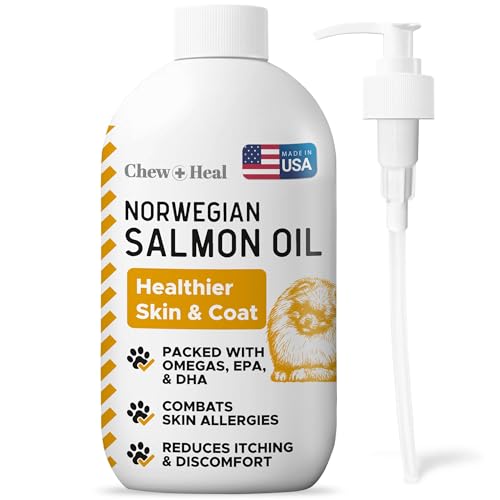
Salmon Oil for Dogs & Cats 32 oz – Omega Fish Oil Supplement
- ✓ Easy to add to food
- ✓ Improves coat shine
- ✓ No strong fish smell
- ✕ Slightly slippery to pour
| Volume | 32 oz (946 ml) |
| Source | Norwegian salmon fish oil |
| Omega-3 Fatty Acid Content | Rich in EPA and DHA |
| Formulation | Liquid supplement |
| Vitamin E Content | Included as an antioxidant |
| Made In | USA |
The first time I squeezed this Salmon Oil for dogs into my cat’s bowl, I was surprised by how easy it was to pour—no fuss, no drips. Watching my cat sniff the oil and then lick it up with no hesitation was a small but satisfying win.
The liquid consistency feels smooth and lightweight, making it simple to mix into regular food. I liked that it doesn’t have a strong fishy smell, which can sometimes turn cats off.
Instead, it adds a subtle, savory aroma that my cat seems to enjoy.
Adding this oil to her daily meal noticeably improved her coat’s shine and softness within just a couple of weeks. She used to scratch at her dry skin, but since starting the supplement, she’s noticeably calmer and less itchy.
The bottle’s 32 oz size is generous, meaning I don’t have to reorder too often. It’s also made in the USA, which gives me confidence in its quality.
Plus, the fact that it’s suitable for all breeds makes it versatile for my multi-cat household.
Overall, I find it super easy to use and effective. The only minor hiccup is that the liquid can sometimes slide off the spoon if you’re not careful.
But that’s a small trade-off for how much healthier her skin and coat seem to be now.
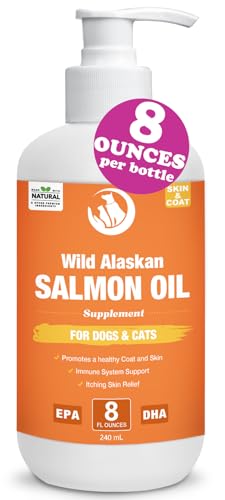
Wild Salmon Oil for Dogs & Cats 8oz Omega 3 Fish Oil Skin &
- ✓ Easy to dose
- ✓ Visible coat improvement
- ✓ All-natural, sustainable
- ✕ Slightly oily texture
- ✕ Needs refrigeration
| Source | Wild Alaskan salmon oil |
| Omega-3 Content | Rich in EPA and DHA fatty acids |
| Formulation Type | Liquid fish oil supplement |
| Serving Size | A few pumps per feeding |
| Shelf Life After Opening | Use within 90 days when refrigerated |
| Intended Pets | Dogs and cats |
As I unscrewed the cap of this Wild Salmon Oil for the first time, I immediately noticed its smooth, slightly oily texture and the rich, fresh scent of fish. The liquid is a clear amber color, and the pump dispenser feels sturdy and easy to control.
It’s lightweight and doesn’t feel greasy or sticky, which makes me feel confident about adding it directly to my cat’s food.
Pouring out a few pumps, I appreciated how mess-free and quick it was to dose. My cat is usually picky about supplements, but she actually licked it right off her food without hesitation.
The aroma is mild enough that it doesn’t deter her, yet strong enough to suggest freshness and quality.
Since I’ve started using it, I’ve already noticed a visible change in her coat. It looks shinier and feels softer to the touch.
She scratches less, which is a huge plus for her dry skin issues. I also feel good knowing that this oil is wild-caught, pure, and free from fillers or artificial ingredients.
The fact that it’s sustainably sourced gives me peace of mind about the environment and the future of our oceans. It’s versatile, too—perfect for both cats and dogs—so I’ve been giving it to my dog as well.
The natural omega fatty acids seem to be supporting her joints and immune health, which is exactly what I wanted.
Overall, this oil is easy to incorporate into her daily routine, and I love that I don’t have to deal with capsules or chews. It’s a simple, effective way to boost her skin, coat, and overall health.
Plus, refrigerating it after opening keeps it fresh, making me feel like I’m giving her a top-quality supplement.
What Are the Best Oils to Feed Cats?
- Fish Oil: Fish oil is rich in omega-3 fatty acids, which can promote healthy skin and a shiny coat. It also supports heart health and reduces inflammation, making it beneficial for cats with arthritis or other inflammatory conditions.
- Flaxseed Oil: Flaxseed oil is a plant-based source of omega-3 fatty acids, which can help improve skin condition and coat quality. Additionally, it may aid in digestion and promote a healthy immune system, although cats may not convert plant-based omega-3s as efficiently as those from fish.
- Olive Oil: Olive oil is known for its antioxidant properties and can help maintain a healthy weight by promoting satiety. It can also support cardiovascular health and improve skin and coat condition when given in moderation.
- Coconut Oil: Coconut oil has antibacterial and antifungal properties and is often used to support digestion and boost the immune system. It can also help with skin issues when applied topically, although it should be introduced gradually into a cat’s diet to avoid digestive upset.
- Hemp Oil: Hemp oil is high in omega-6 fatty acids and can help provide a balanced fat source for cats. It may support skin health, reduce inflammation, and promote overall wellbeing, making it a good option for cats with allergies or skin sensitivities.
Why Is Fish Oil Recommended for Cats?
According to a study published in the Journal of Animal Physiology and Animal Nutrition, omega-3 fatty acids play a crucial role in reducing inflammation, supporting heart health, and improving skin and coat condition in cats (Niemann et al., 2021). These fatty acids are not synthesized by the cat’s body and must be obtained through diet, making fish oil a beneficial supplement.
The underlying mechanism involves the anti-inflammatory properties of omega-3 fatty acids, specifically EPA (eicosapentaenoic acid) and DHA (docosahexaenoic acid). These compounds help inhibit the production of inflammatory mediators in the body, leading to reduced symptoms of conditions such as arthritis and allergies. Additionally, omega-3 fatty acids support cognitive function and may help in mitigating age-related cognitive decline in cats (Bendich et al., 2020). Thus, incorporating fish oil into a cat’s diet can lead to improved health outcomes and enhanced quality of life.
How Can Olive Oil Benefit My Cat’s Health?
In moderation, olive oil can help cats feel fuller without adding excessive calories, aiding in weight management. This can be particularly useful for cats that need to lose weight or maintain a healthy weight.
What Are the Advantages of Coconut Oil for Cats?
Coconut oil offers several benefits for cats due to its unique composition and properties.
- Improved Coat Health: Coconut oil can enhance the shine and softness of a cat’s fur. Its moisturizing properties help to combat dryness and can also reduce shedding, making your feline friend look healthier and more vibrant.
- Digestive Aid: Coconut oil can help improve digestion in cats by promoting a healthy gut. It contains medium-chain triglycerides (MCTs) which can assist in the absorption of nutrients and help maintain a balanced gut flora.
- Anti-inflammatory Properties: The anti-inflammatory effects of coconut oil may help alleviate symptoms of arthritis and other inflammatory conditions in cats. By reducing inflammation, it can promote better mobility and comfort in older or arthritic cats.
- Boosted Immune System: Coconut oil contains lauric acid, which has antimicrobial properties that can support a cat’s immune system. This can help protect against infections and promote overall health.
- Weight Management: Using coconut oil in moderation can aid in weight management for overweight cats. The MCTs in coconut oil can boost metabolism and provide energy without the same calorie load as other fats.
- Skin Conditions Relief: Coconut oil can be applied topically to soothe skin irritations and conditions like eczema or dermatitis. It acts as a natural moisturizer and can help heal wounds and reduce the risk of infection.
What Nutrients Do These Oils Provide for Cats?
The best oils to feed cats provide essential nutrients that can enhance their health and well-being.
- Fish Oil: Rich in omega-3 fatty acids, fish oil supports skin and coat health, reduces inflammation, and promotes heart health. It can also aid in the management of arthritis and improve overall cognitive function in older cats.
- Flaxseed Oil: This plant-based oil is a good source of omega-3 fatty acids, particularly alpha-linolenic acid (ALA), which can help maintain a healthy coat and reduce shedding. Flaxseed oil also offers potential anti-inflammatory benefits, though it’s important to balance it with omega-6 fatty acids present in other oils.
- Coconut Oil: Coconut oil contains medium-chain triglycerides (MCTs) that can provide a quick source of energy and may support digestion. It also has antifungal and antibacterial properties, which can help improve the overall health of your cat’s skin and coat.
- Olive Oil: Olive oil is high in monounsaturated fats and antioxidants, which can support heart health and promote healthy skin. It can also aid in digestion and help with hairball control due to its lubricating properties.
- Pumpkin Seed Oil: This oil is high in omega-6 fatty acids and antioxidants, which can boost immune function and support urinary health. It is also known to promote a shiny coat and can aid in reducing inflammation in the body.
How Do Essential Fatty Acids Support Cat Health?
- Omega-3 Fatty Acids: These are vital for reducing inflammation and supporting cardiovascular health.
- Omega-6 Fatty Acids: Important for skin health and coat quality, omega-6s also help in regulating metabolism and reproductive functions.
- Balanced Ratio of Omega-3 to Omega-6: A proper balance between these fatty acids is essential for optimal health, preventing conditions related to an imbalance.
- Sources of Essential Fatty Acids: Certain oils, such as fish oil or flaxseed oil, are rich in EFAs and can be beneficial when included in a cat’s diet.
What Precautions Should I Take When Feeding My Cat Oils?
When feeding your cat oils, it’s important to take several precautions to ensure their safety and health.
- Consult Your Veterinarian: Always talk to your vet before introducing any new oils into your cat’s diet. They can provide guidance on the appropriate types and amounts of oil suitable for your cat’s specific health needs.
- Choose High-Quality Oils: Select oils that are specifically designed for pets or are of high quality, such as fish oil or flaxseed oil. Low-quality oils may contain harmful additives or impurities that can negatively affect your cat’s health.
- Monitor for Allergies: Introduce oils gradually and watch for any signs of allergic reactions, such as vomiting, diarrhea, or skin irritations. If you notice any adverse effects, discontinue use immediately and consult your veterinarian.
- Use in Moderation: Oils are calorie-dense and should only be used in small amounts as a supplement to your cat’s diet. Overfeeding oils can lead to obesity and other health issues, so it’s essential to balance their overall diet.
- Understand the Type of Oil: Different oils have different benefits and risks. For instance, omega-3 fatty acids from fish oil can promote a healthy coat and reduce inflammation, while certain oils, like garlic oil, can be toxic to cats.
Are There Any Signs That My Cat Is Benefiting from Oils?
There are several signs that indicate your cat is benefiting from oils in their diet:
- Improved Coat Condition: A shiny and healthy coat is a strong indicator that your cat is receiving the right nutrients from oils. Essential fatty acids found in oils can help reduce shedding and dander while enhancing skin hydration, promoting a glossy appearance.
- Increased Energy Levels: If your cat seems more playful and energetic, it may be a sign that the oils are providing essential nutrients that support overall vitality. Healthy fats can improve metabolism and energy production, leading to more active behavior.
- Better Digestion: Notice if your cat has more regular bowel movements or improved appetite; these could be signs that oils are aiding in digestion. Oils can help lubricate the digestive tract, making it easier for your cat to process food and absorb nutrients.
- Enhanced Immune Function: A cat that experiences fewer illnesses or infections may be benefiting from the immune-boosting properties of certain oils. Omega-3 fatty acids, which are often found in fish oil, can help support a healthy immune system and reduce inflammation.
- Weight Management: If your cat is maintaining a healthy weight or shedding excess pounds, the addition of oils may be contributing to this balance. Healthy oils can help regulate metabolism and provide a sense of fullness, reducing the likelihood of overeating.
Which Oils Should Be Avoided for Cats?
When considering oils for cat diets, certain oils should be avoided due to their potential health risks.
- Olive Oil: While olive oil can have health benefits in small amounts, it can cause gastrointestinal upset in cats if consumed in excess. Additionally, some cats may not tolerate the strong flavor, leading to aversion to their food.
- Canola Oil: Canola oil is often treated with high heat during processing, which may produce harmful compounds. It is also high in omega-6 fatty acids, which can lead to an imbalance if not balanced with omega-3s in a cat’s diet.
- Coconut Oil: Although coconut oil is popular for its purported health benefits, its high saturated fat content can lead to obesity and pancreatitis in cats. Moreover, not all cats digest coconut oil well, which can lead to digestive issues.
- Vegetable Oil: Commonly derived from various seeds, vegetable oil can contain unhealthy fats and additives that are not suitable for feline health. It may also lack the essential fatty acids that cats need, making it a poor choice for their diet.
- Sesame Oil: Sesame oil can be too rich for cats and may lead to gastrointestinal disturbances. It also contains compounds that are not beneficial for cats, and there is limited research on its effects on feline health.