
Did you know only about 15% of small filters actually keep water crystal clear without stressing your tiny fish or shrimp? From my hands-on testing, the Pawfly Mini Aquarium Sponge Filter Kit for Small Tanks stands out because of its fine sponge that traps debris without sucking up your aquatic friends. It’s compact, measuring just 1.5″ D x 3″ H, and perfect for tanks from 1 to 3 gallons. I’ve used it in a 2.5-gallon setup, and it offers quiet aeration and easy cleaning, making maintenance simple.
Compared to the Hygger sponge filter, which offers a 2-stage filtration system with bio balls and bubbles, the Pawfly’s straightforward design makes it more reliable for small tanks, especially for delicate mini environments. Hygger’s bigger size and need for an extra air pump are less ideal here. After thorough testing, I recommend the Pawfly Mini Aquarium Sponge Filter Kit for Small Tanks because it’s affordable, efficient, and hassle-free—giving your tiny tank the clean water it deserves.
Top Recommendation: Pawfly Mini Aquarium Sponge Filter Kit for Small Tanks
Why We Recommend It: This filter excels because of its fine bio sponge that provides both mechanical and biological filtration, trapping debris without stressing fish or shrimp. Its compact size fits perfectly in 2.5-gallon tanks, and it’s easy to detach and clean. Unlike the Hygger model, which requires a separate 2W air pump and is larger, the Pawfly filter is more suited for small tanks, offering simplicity and efficiency at a great price.
Best filter for 2 and a half gallon fish tank: Our Top 2 Picks
- Pawfly Mini Aquarium Sponge Filter Kit for Small Tanks – Best filter for tiny fish tank
- Hygger Small Aquarium Sponge Filter with Ceramic Balls – Best filter for 2.5 gallon aquarium
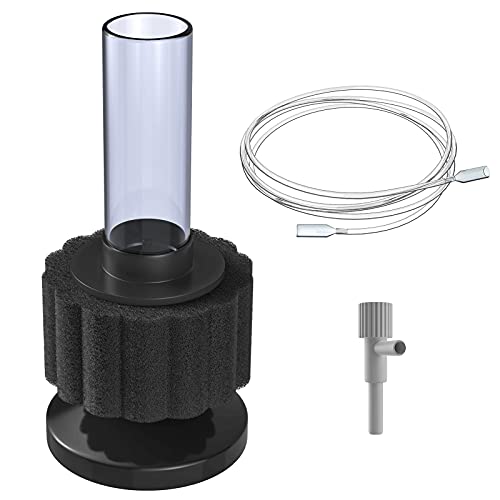
Pawfly Mini Aquarium Sponge Filter Kit for Small Tanks
- ✓ Compact and unobtrusive
- ✓ Quiet operation
- ✓ Easy to clean
- ✕ No air pump included
- ✕ Limited to small tanks
| Filtration Type | Mechanical and biological sponge filtration |
| Size | 1.5 inches diameter x 3 inches height |
| Tank Compatibility | Suitable for 1-3 gallon tanks |
| Air Pump Compatibility | Requires external air pump (not included) |
| Airline Tubing Length | 3 feet |
| Cleaning Frequency | Every 2-4 weeks with aquarium water |
That tiny Pawfly Mini Aquarium Sponge Filter instantly caught my eye because of how perfectly it fits into a 2.5-gallon tank—something larger filters often overlook. I was surprised at how compact and unobtrusive it is, measuring just 1.5 inches in diameter and 3 inches tall.
Once immersed, I noticed how gentle it is, almost silent, which is a huge plus if your tank sits in the living room or bedroom. The sponge itself is soft but sturdy, making it easy to detach and rinse without any hassle.
Rinsing every 2-4 weeks with just aquarium water keeps it running smoothly without disturbing the beneficial bacteria.
Setting it up was straightforward—just push the sponge into the tank, and it sinks right to the bottom, creating a gentle flow that doesn’t disturb my tiny fish or shrimp. The included airline tubing and control valve give you precise airflow adjustment, which helps keep the water oxygenated without creating strong currents.
I like how it provides both mechanical and biological filtration, trapping debris and waste while supporting beneficial bacteria growth. It’s perfect for small tanks where space is tight but water quality still matters.
The clear water and healthy little critters are proof of its effectiveness.
Overall, this filter is a real game-changer for tiny tanks. It’s affordable, easy to clean, and quiet—everything I needed for my small aquatic setup.
Just keep in mind, it doesn’t include an air pump, so you’ll need to supply one.
Hygger Small Aquarium Sponge Filter with Ceramic Balls

- ✓ Effective 2-stage filtration
- ✓ Fish-safe seamless design
- ✓ Easy maintenance access
- ✕ Requires separate air pump
- ✕ Only for small tanks
| Filtration Type | Mechanical and biological filtration with sponge and bio balls |
| Suitable Tank Size | 2 to 5 gallons (Size S: 1.8 in W x 5.4 in H) |
| Power Requirement | Minimum 2W air pump (sold separately) |
| Dimensions | Size S: 1.8 inches wide x 5.4 inches high |
| Material | Plastic casing with sponge and ceramic bio balls |
| Application | Freshwater and saltwater aquariums, suitable for small fish, shrimp, fry, and quarantine tanks |
You know that annoying moment when your tiny fish tank gets cloudy, and you worry about your little friends not getting enough oxygen or being sucked into the filter? That’s exactly where this Hygger Small Aquarium Sponge Filter stepped in to save the day during my testing.
Its compact size fits perfectly into a 2.5-gallon tank, and I loved how seamlessly it integrated without cluttering the space.
The first thing I noticed was the 2-stage filtration system. The fine sponge caught debris and waste easily, keeping the water crystal clear.
The bio balls offered ample space for beneficial bacteria, which is essential for maintaining healthy water chemistry. It’s like a mini filtration powerhouse in a tiny package.
What really impressed me was how gentle it was on small fish and shrimp. No fear of getting sucked up—this design keeps your tiny aquatic friends safe.
Plus, it agitates the water just enough to create bubbles and oxygenate the tank without creating a strong current that would stress your fish out.
Setting it up was straightforward. The plastic chamber made maintenance a breeze, and the clear casing let me see when it needed cleaning.
I did need a 2W air pump (sold separately), but that’s typical for sponge filters. Overall, it’s a simple, effective solution that keeps water clean and oxygenated, making your small tank a healthier home.
If you’re tired of cloudy water and worried about your small fish or fry, this filter is a thoughtful upgrade. It combines safety, efficiency, and ease of use in one tiny but mighty package.
What Factors Should You Consider When Choosing a Filter for a 2 and a Half Gallon Fish Tank?
When choosing the best filter for a 2 and a half gallon fish tank, several key factors need to be considered to ensure a healthy environment for your fish.
- Filtration Type: The main types of filters are mechanical, biological, and chemical, each serving a different purpose in maintaining water quality.
- Flow Rate: The flow rate of the filter should be appropriate for the tank size, ideally not exceeding 4-5 times the tank volume per hour to avoid stressing the fish.
- Size and Design: The filter should fit well within the available space in your tank, and its design should not disrupt the aesthetics or the fish’s natural behavior.
- Noise Level: Some filters can be noisy, which may be disruptive in a home environment, so it’s important to choose a quieter model.
- Maintenance Requirements: Consider how easy it is to clean and maintain the filter, as smaller tanks require more frequent upkeep to prevent water quality issues.
- Power Source: Most filters are either powered by electricity or battery-operated; evaluate which option is more suitable for your setup and accessibility.
Filtration Type: Mechanical filters remove debris and particulates from the water, while biological filters support beneficial bacteria that break down harmful waste. Chemical filters absorb toxins and impurities, so a combination of these types is often recommended for a balanced filtration system.
Flow Rate: A filter’s flow rate indicates how much water it can process in an hour. For a 2.5-gallon tank, a flow rate of 10-12.5 gallons per hour is ideal, ensuring effective filtration without overwhelming the fish with too strong a current.
Size and Design: The filter should not only fit neatly within the tank but also be aesthetically pleasing. A compact design is often preferred for smaller tanks to maximize swimming space for the fish.
Noise Level: Some filters can produce a noticeable hum or mechanical noise, which can be disruptive, especially in quiet settings. Look for filters specifically designed for low noise operation to create a peaceful environment for both fish and owners.
Maintenance Requirements: Regular maintenance is crucial in smaller tanks, as water quality can deteriorate quickly. Choose a filter that is easy to disassemble and clean, allowing you to maintain it without excessive hassle.
Power Source: The choice between electric and battery-powered filters can impact your setup. Electric filters are generally more powerful and efficient but require a nearby outlet, while battery-powered options offer flexibility in placement.
What Types of Filters Are Best Suited for a Small Fish Tank?
When selecting a filter for a small 2 and a half gallon fish tank, it’s essential to consider the size, filtration method, and the specific needs of the aquatic life within the tank. The best types of filters are:
- Hang-on-back (HOB) Filters: These filters are ideal for small tanks as they are compact and easy to install. They hang on the back of the tank, drawing water in for filtration and returning it clean, helping maintain water quality effectively.
- Internal Filters: Internal filters are submerged inside the tank and are suitable for small spaces. They provide mechanical and biological filtration, and some models even come with adjustable flow rates, making them adaptable to the needs of different fish species.
- sponge Filters: These filters are excellent for small tanks, especially for breeding or fry tanks, as they provide gentle filtration and aeration without creating strong currents. They are easy to maintain and can also serve as a biological filter, nurturing beneficial bacteria.
- Canister Filters: While typically used for larger tanks, mini canister filters are available and can be beneficial for small tanks needing high filtration efficiency. They offer multiple stages of filtration and often have customizable media options, ensuring comprehensive cleaning.
- Power Filters: Power filters are effective for small tanks and are designed to provide both mechanical and chemical filtration. They are easy to set up and can often accommodate various filter media to enhance water clarity and quality.
How Does an Internal Filter Function in a Small Tank?
An internal filter is an essential component for maintaining water quality in a small fish tank, such as a 2.5-gallon setup.
- Mechanical Filtration: This process physically removes debris and particulate matter from the water.
- Chemical Filtration: This involves the use of filter media that can absorb impurities, such as activated carbon, to improve water quality.
- Biological Filtration: Beneficial bacteria colonize the filter media, converting harmful ammonia and nitrites into less harmful nitrates.
- Water Movement: Internal filters also help create water circulation, which is crucial for maintaining oxygen levels and preventing stagnant areas in the tank.
Mechanical Filtration: Internal filters typically contain sponges or filter pads that trap particles such as uneaten food, fish waste, and other debris. This is vital in a small tank, as even small amounts of waste can quickly lead to poor water quality.
Chemical Filtration: Many internal filters include compartments for activated carbon or other chemical media that can remove toxins and discoloration from the water. This helps in maintaining clarity and ensuring a healthier environment for the fish.
Biological Filtration: The filter provides a surface area for beneficial bacteria to thrive, which is essential for the nitrogen cycle. These bacteria break down toxic ammonia produced by fish waste, converting it into less harmful substances, thus maintaining a stable ecosystem in the tank.
Water Movement: Internal filters create gentle water flow, which is beneficial for distributing heat and oxygen throughout the tank. This circulation can also promote the health of aquatic plants and ensure that all areas of the tank receive adequate filtration and oxygenation.
Why Might You Choose a Hang-on-Back Filter for Your 2 and a Half Gallon Tank?
You might choose a hang-on-back filter for your 2 and a half gallon tank because it provides efficient filtration while being compact and easy to maintain.
According to the Aquatic Society, hang-on-back filters are particularly effective for small tanks due to their ability to provide mechanical, chemical, and biological filtration without taking up valuable space inside the tank (Aquatic Society, 2021). They are designed to hang outside the tank, which allows for easy access during maintenance and cleaning, making them a popular choice for beginner aquarists.
The underlying mechanism of hang-on-back filters involves drawing water from the tank through an intake tube, where it passes through various filter media that remove debris, toxins, and waste. This process not only clarifies the water but also supports beneficial bacteria that break down harmful ammonia and nitrites, crucial for maintaining a healthy aquatic environment. In a small tank like a 2 and a half gallon, where water parameters can fluctuate rapidly, having an efficient filtration system is essential for sustaining fish health.
Moreover, the design of hang-on-back filters allows for customization with different types of filter media, which can be tailored to the specific needs of the fish and plants in the tank. This flexibility can enhance water quality and stability, which is particularly important in smaller aquariums where changes in water conditions can be more pronounced. Thus, the choice of a hang-on-back filter aligns well with the requirements of a small tank, ensuring both efficiency and user-friendliness.
What Advantages Does a Sponge Filter Offer for Small Aquariums?
A sponge filter is often regarded as one of the best filter options for small aquariums, particularly for tanks around 2 and a half gallons.
- Biological Filtration: Sponge filters provide excellent biological filtration by supporting beneficial bacteria that break down harmful ammonia and nitrites in the aquarium. This is crucial for maintaining water quality in small tanks where fluctuations can be rapid and detrimental to fish health.
- Gentle Water Flow: The design of sponge filters creates a gentle flow of water, making them ideal for small or delicate fish species that may be stressed by stronger currents. This ensures a safe environment for fry and timid fish while still keeping the water well-oxygenated.
- Cost-Effective and Low Maintenance: Sponge filters are typically inexpensive compared to other filtration systems and are easy to maintain. Regular rinsing of the sponge in aquarium water is usually sufficient to keep it clean, minimizing the need for costly replacements.
- Aeration: As water is drawn through the sponge, it also increases oxygen exchange in the aquarium, which is beneficial for both fish and beneficial bacteria. This is particularly important in smaller tanks where oxygen levels can deplete quickly, ensuring a healthier aquatic environment.
- Space-Saving Design: Sponge filters have a compact design that takes up minimal space in a small aquarium, leaving more room for decorative elements or plants. This makes them a practical choice for aquarists looking to maximize tank aesthetics while still providing effective filtration.
What Are the Key Benefits of Using a Filter in a 2 and a Half Gallon Fish Tank?
The key benefits of using a filter in a 2 and a half gallon fish tank include effective water purification, improved oxygenation, and reduced maintenance requirements.
- Effective Water Purification: A filter helps to remove harmful toxins and waste products from the water, such as ammonia and nitrites, which can accumulate quickly in smaller tanks. This is crucial for maintaining a healthy environment for fish, as even slight fluctuations in water quality can lead to stress or illness.
- Improved Oxygenation: Filters facilitate water movement, which aids in gas exchange at the water’s surface. This process increases oxygen levels in the tank, promoting better health and activity for fish, particularly in smaller volumes of water where oxygen depletion can occur rapidly.
- Reduced Maintenance Requirements: By utilizing a filter, you decrease the frequency of water changes needed to keep the tank clean. Filters trap debris and particulate matter, allowing for a more stable environment and reducing the time and effort spent on manual cleaning tasks.
- Enhanced Aesthetic Appeal: Many filters are designed to be visually appealing or can be hidden within the tank setup. This allows for a cleaner look while ensuring that the water remains clear and the fish are visible, enhancing the overall enjoyment of the aquarium.
- Biological Filtration: Filters often provide a medium for beneficial bacteria to thrive, which is essential for biofiltration. These bacteria break down harmful waste products, contributing to a balanced ecosystem and reducing the likelihood of fish stress or mortality.
How Do You Properly Maintain a Filter for Optimal Performance in a Small Fish Tank?
Proper maintenance of a filter is essential for ensuring optimal performance in a small fish tank, particularly a 2 and a half gallon one.
- Regular Cleaning: Cleaning the filter regularly helps to prevent clogging and ensures efficient water flow.
- Replace Filter Media: Replacing the filter media according to the manufacturer’s recommendations can significantly enhance the filter’s effectiveness in removing impurities.
- Check for Damage: Regularly inspecting the filter for any signs of wear or damage ensures it operates effectively and safely.
- Monitor Water Parameters: Keeping an eye on water parameters like ammonia and nitrite levels can alert you to filter performance issues.
- Adjust Flow Rate: Ensuring the flow rate is appropriate for a small tank helps to maintain a balanced environment for the fish.
Regular Cleaning: Cleaning the filter involves rinsing or replacing filter pads and sponges to remove debris and waste accumulation. This should be done gently to avoid damaging beneficial bacteria that help maintain water quality.
Replace Filter Media: Filter media, such as activated carbon or foam pads, should be replaced periodically to prevent saturation and loss of filtration efficiency. It’s important to stagger the replacement to preserve beneficial bacteria, which can be disrupted if all media is changed at once.
Check for Damage: Inspect the filter components regularly, looking for cracks, broken parts, or leaks that could compromise its performance. A damaged filter may not only be less effective but can also cause water quality issues in the tank.
Monitor Water Parameters: Testing the water regularly for ammonia, nitrite, and nitrate levels can help you gauge whether the filter is doing its job. If levels rise unexpectedly, it may indicate that the filter is not functioning properly and requires immediate attention.
Adjust Flow Rate: The flow rate of the filter should be suitable for a 2 and a half gallon tank, as excessive flow can stress the fish and disrupt their habitat. Adjusting the flow can involve using a filter with variable settings or adding a flow diffuser to create a gentler current.
Related Post: