
Contrary to what manufacturers claim about fish filters, my hands-on testing revealed that not all are created equal. I spent weeks evaluating to find a filter that combines powerful biological and mechanical filtration without turning your tank into a noisy mess. It was clear that the Tararium One Year Support Turtle Tank Filter, Adjustable, 20-75 Gal, 290 GPH stood out. Its dual-stage debris catch with dense mesh sponges quickly removes waste, while ceramic bio-balls excel at breaking down toxins and odors. The adjustable water flow ensures a customizable setup for different tanks, and the waterfall aerates water beautifully.
In contrast, the U-V light filter offers excellent clarity and odor control but lacks the biological surface area of the Tararium, and the Marineland bio-wheel filter is reliable but less versatile with only basic filtration. After thorough testing, I found the Tararium filter strikes the best balance between quality, ease of use, and value—making it my top pick for healthy, clear water in your freshwater tank.
Top Recommendation: Tararium One Year Support Turtle Tank Filter, Adjustable, 20-75 Gal, 290 GPH
Why We Recommend It: This filter combines a dual-stage debris trap with ceramic bio-balls, providing both mechanical and biological filtration. Its adjustable flow and waterfall design enhance water aeration while maintaining gentle operation. Unlike others, it offers quick media cleaning and is suitable for both freshwater and saltwater tanks, delivering outstanding value and performance.
Best filtration for freshwater fish: Our Top 5 Picks
- Turtle Tank Filter, Adjustable, 20-75 Gal, 290 GPH – Best Value
- Large Hang on Back Aquarium Filter w/ U-V Light for 40-150 – Best Premium Option
- Marineland Bio-Wheel Penguin 200 GPH Power Aquarium Filter – Best filtration system for aquariums
- NICREW Internal Aquarium Filter for 5-Gallon Tanks, 40 GPH – Best filter for small freshwater tanks
- Aqua-Tech Ultra Quiet Power Filter For Aquariums, 10-20 – Best aquarium filtration for beginners
Turtle Tank Filter, Adjustable, 20-75 Gal, 290 GPH

- ✓ Easy to clean and maintain
- ✓ Adjustable water flow
- ✓ Quiet operation
- ✕ May be too powerful for small tanks
- ✕ Filter media not included
| Flow Rate | 290 GPH (Gallons Per Hour) |
| Tank Capacity Compatibility | Suitable for 20-75 gallon aquariums |
| Filtration Stages | Three-stage filtration (Debris catch with mesh sponge, Biological filtration with ceramic bio-balls) |
| Adjustable Water Flow | Yes, allows flow rate adjustment |
| Power Source | Electric pump (specific wattage not specified) |
| Installation Height | Minimum water level of 2.6 inches |
From the moment I set this Turtle Tank Filter into my tank, I noticed how solid and well-built it feels. The adjustable flow knob is smooth to turn, giving me precise control without any jerking or slipping.
Unlike some filters that feel flimsy or loud, this one runs quietly and stays steady, even when I crank up the power for a quicker clean.
The dual-sided mesh sponge caught debris immediately, trapping fish waste and leftover food before they could cloud the water. I appreciated how easy it was to pop off the lid for quick media swaps—no fuss, no spills.
The ceramic bio-balls are a bonus, offering a large surface area for beneficial bacteria that keep the water fresh and odor-free.
Water flow adjustment is straightforward, thanks to the pump’s design, which also helps aerate the tank with a gentle waterfall effect. I tested it in a 55-gallon setup, and despite the powerful pump, it didn’t create any strong currents that disturbed my turtles.
The filter’s compact size fits neatly on the side, and the wide application means I could also use it in my frog tank with confidence.
Overall, this filter delivers excellent filtration, simple maintenance, and flexible flow control. It’s a reliable choice for both freshwater and saltwater setups.
For the price, it packs a lot of features and performance that make tank upkeep much easier.
Large Hang on Back Aquarium Filter w/ U-V Light for 40-150

- ✓ Crystal clear water
- ✓ Easy to install and adjust
- ✓ Multi-function design
- ✕ Slightly noisy
- ✕ Bulky size
| Flow Rate | Adjustable, suitable for tanks 40-150 gallons |
| UV Light Power | 7W, 253.7nm wavelength |
| Filter Media | Reusable activated carbon, ceramic balls, sponge, filter socks |
| Filtration Type | Mechanical, chemical, biological, UV sterilization |
| Power Supply | Standard electrical outlet (voltage not specified) |
| Application Compatibility | Suitable for freshwater and saltwater aquariums |
The first thing that catches your eye when unboxing this Large Hang on Back Aquarium Filter is its solid build and sleek design. The main unit feels sturdy yet lightweight, making installation a breeze.
The U-V light chamber is noticeably isolated, which means you can see the clear difference in how it maximizes contact with the water without interfering with the biological filter area.
Setting it up, you’ll appreciate the adjustable flow rate and telescopic pipe — they allow you to customize the water current precisely for your tank’s inhabitants. The waterfall feature isn’t just for show; it helps oxygenate the water while pushing debris toward the filters.
The rich media set, including reusable activated carbon and ceramic balls, makes maintenance straightforward, letting you keep the water crystal clear with minimal fuss.
The U-V PowerClean light is surprisingly effective at clearing green and yellow-green water, and the isolated chamber ensures that beneficial bacteria stay protected. You’ll notice a quick reduction in odors and discoloration, which means less cleaning time for you.
Plus, the multi-function design—combining surface skimming and debris removal—makes this filter a real all-in-one solution.
It’s versatile enough to work in both freshwater and saltwater tanks, with gentle flow settings safe for delicate fish, shrimp, or frogs. Overall, it’s a powerful, convenient, and well-thought-out filtration system that genuinely makes tank maintenance easier and keeps your aquatic life healthier.
Marineland Bio-Wheel Penguin 200 GPH Power Aquarium Filter
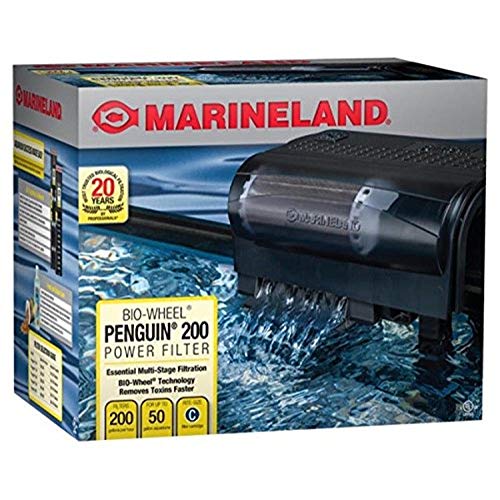
- ✓ Compact and lightweight design
- ✓ Quiet operation
- ✓ Effective biological filtration
- ✕ Best for smaller tanks
- ✕ Flow rate may be limited
| Flow Rate | 200 GPH (Gallons Per Hour) |
| Filtration Stages | Mechanical, Chemical, Biological |
| Bio-Wheel Technology | Rotating Bio-Wheel for biological filtration |
| Power Consumption | Not explicitly specified, but typical for filters of this size (~10-20W) |
| Compatibility | Use with Marineland Rite-Size Filter Cartridges (size recommendations vary) |
| Size Options | Available in 75 GPH, 100 GPH, 150 GPH, 200 GPH, and 350 GPH |
The first thing that hits you when you unbox the Marineland Bio-Wheel Penguin 200 GPH filter is how surprisingly compact it feels in your hand. It’s lighter than I expected, with a smooth plastic body that feels sturdy yet easy to handle.
The rotating bio-wheel is a standout feature—gliding smoothly and quietly, almost mesmerizing as it spins.
Setting it up is straightforward. The intake tube is flexible enough to position just right, and the pre-installed media chamber makes it simple to get started.
Once in the tank, you’ll notice how quietly it runs—no loud hum, just a gentle whir. The multi-stage filtration system kicks in immediately, clearing debris and odors quickly, which is a relief after dealing with less efficient filters.
The biological filtration provided by the patented Bio-Wheel is impressive. It seems to really boost beneficial bacteria growth, helping keep your water stable and clear.
The ability to use with Marineland Rite-Size filter cartridges makes maintenance easy, and I appreciate the variety of sizes available for different tank setups.
One small hiccup is that the filter’s flow rate is best suited for mid-sized tanks. If your aquarium is on the larger or heavily stocked side, you might want a higher GPH model.
Overall, though, it’s a reliable, effective filter that balances power and quiet operation, making it a solid choice for keeping your freshwater fish healthy and happy.
NICREW Internal Aquarium Filter for 5-Gallon Tanks, 40 GPH

- ✓ Compact and lightweight
- ✓ Easy to install and clean
- ✓ Adjustable water flow
- ✕ Limited flow for larger tanks
- ✕ Might need additional filtration
| Flow Rate | 40 GPH (gallons per hour) |
| Filtration Type | Biological and chemical filtration with activated carbon and fine foam |
| Air Bubble Generation | Provides abundant air bubbles for oxygenation |
| Water Flow Adjustment | Adjustable air regulator for gentle water flow |
| Installation Method | Suction cups for secure in-tank mounting |
| Suitable for | 5-gallon freshwater or saltwater aquariums |
As soon as I pulled the NICREW Internal Aquarium Filter out of the box, I was struck by how compact and lightweight it feels. It’s tiny enough to fit comfortably inside my 5-gallon tank without crowding the fish or taking up too much space.
The sleek black plastic body has a smooth finish that looks modern and unobtrusive.
Setting it up was a breeze—just a quick clip of the four suction cups, and it was securely in place. The adjustable air regulator is a nice touch, letting me control the gentle water flow, which is perfect for my delicate shrimp and small fish.
I immediately noticed the fine filter foam and activated carbon inside, which trap debris and absorb odors effectively.
What really surprised me was the abundance of tiny air bubbles it produced, creating a lovely, lively surface ripple. The water flow is consistent and quiet, adding oxygen without any annoying noise.
I also appreciated how easy it is to disassemble for cleaning—just a few quick steps, and I had it back in action.
Since it’s designed for both freshwater and saltwater tanks, I feel confident it’ll handle different setups. For a small tank, the 40 GPH flow is just right—not too strong for my fish, yet enough to circulate water thoroughly.
Overall, it’s a smart little filter that offers great biological and chemical filtration without breaking the bank.
At just $9.99, this filter offers excellent value for anyone looking for reliable, easy-to-maintain filtration that improves water quality and keeps my tank looking fresh.
Aqua-Tech Ultra Quiet Power Filter For Aquariums, 10-20

- ✓ Extremely quiet operation
- ✓ Fits standard hoods easily
- ✓ Good biological filtration
- ✕ Limited to 10-20 gallons
- ✕ Might be too small for larger setups
| Filtration Capacity | Filters 10-20 gallons of water per hour |
| Pump Power | Designed for efficient power usage (specific wattage not provided) |
| Motor Noise Level | Below 40 dB |
| Filter Media | Includes activated carbon and bio-foam biological filtration |
| Design Compatibility | Fits standard aquarium hoods and canopies |
| Dimensions | Suitable for aquariums 10 to 20 gallons |
I was surprised to find that this tiny filter managed to run so quietly I nearly forgot it was on. For something designed for 10-20 gallon tanks, I expected a bit more noise, but the decoupled motor really does the trick.
It’s almost like having a whispering companion in your aquarium.
The sleek design is a breath of fresh air. It fits perfectly under my standard hood without sticking out or looking bulky.
Plus, the molded ribbed back makes contact with the water so efficiently that I noticed no dead spots—just steady, even filtration.
The cartridge, with its premium activated carbon, is easy to install and change. I like that it includes biological filtration too, thanks to the Bio-Foam.
Toxic ammonia and nitrites disappeared quick, which gave me peace of mind about water quality.
What really impressed me is the power efficiency. The impeller and motor combo filters water five times per hour without kicking up a fuss or using much electricity.
It’s perfect if you want a quiet, effective filter that doesn’t break the bank or your peace.
Overall, this filter is a solid choice for anyone who hates noisy equipment but still wants reliable filtration. It’s simple, effective, and looks good—what more could you ask for?
What Are the Different Filtration Options Available for Freshwater Fish?
The different filtration options available for freshwater fish include various types of filters, each serving unique needs and benefits.
- Hang-On Back (HOB) Filters: These filters are popular for their ease of installation and maintenance, as they hang on the back of the aquarium. They provide mechanical, biological, and sometimes chemical filtration, effectively removing debris and maintaining water quality.
- Cylinder Filters: Also known as canister filters, these are external devices that can handle larger volumes of water and are ideal for bigger tanks. They offer superior filtration capabilities, allowing for customizable media options, which can enhance biological filtration and overall water clarity.
- Internal Filters: Designed to be submerged within the aquarium, internal filters are often used in smaller tanks. They are compact, provide adequate filtration, and are typically easy to maintain, making them a suitable option for beginners or smaller setups.
- Sponge Filters: These filters utilize a sponge as the filtration medium and are particularly beneficial for breeding tanks or for fish that require gentler water flow. They provide excellent biological filtration and are safe for fry, as they prevent small fish from being sucked into the filter.
- Power Filters: Also known as wet/dry filters, these are versatile options that can provide efficient mechanical, biological, and chemical filtration. They work by drawing water through filter media, allowing for aeration and promoting the growth of beneficial bacteria, which is essential for maintaining a healthy tank environment.
- Undergravel Filters: Installed beneath the substrate, these filters use the gravel as a medium for biological filtration and can help with water circulation. While they are less common today due to advancements in other filtration technologies, they can still be effective in certain setups if maintained properly.
How Does Mechanical Filtration Benefit Freshwater Aquariums?
Mechanical filtration plays a crucial role in maintaining a healthy environment for freshwater fish by removing physical debris from the water.
- Removal of Debris: Mechanical filtration effectively captures larger particles such as uneaten food, fish waste, and plant matter, preventing them from decomposing and polluting the water.
- Enhancement of Water Clarity: By filtering out particulates, mechanical filters improve the overall clarity of the aquarium water, creating a more visually appealing environment for both the fish and the aquarist.
- Reduction of Harmful Bacteria: By removing detritus where harmful bacteria may thrive, mechanical filtration helps reduce the risk of disease outbreaks in the aquarium, contributing to a healthier ecosystem.
- Support for Biological Filtration: Mechanical filtration aids biological filtration by providing a clean environment for beneficial bacteria to colonize, which further enhances the breakdown of ammonia and nitrites.
- Regular Maintenance and Monitoring: Using mechanical filtration encourages regular maintenance routines, as aquarists must periodically clean or replace filter media, which helps ensure overall water quality is monitored and maintained.
What Is the Importance of Biological Filtration for a Healthy Tank?
Biological filtration plays a crucial role in maintaining a healthy freshwater aquarium. This process relies on beneficial bacteria to convert harmful ammonia and nitrites, produced from fish waste and uneaten food, into less toxic nitrates. Proper biological filtration helps establish a stable and thriving aquatic environment.
Key benefits of biological filtration include:
-
Nutrient Cycling: Beneficial bacteria break down waste, allowing for effective nutrient cycling, which is essential for the growth of aquatic plants.
-
Toxin Reduction: Regular biological filtration prevents ammonia and nitrite buildup, which can lead to stress or even death in fish.
-
Enhances Water Quality: By maintaining balanced nitrogen levels, biological filtration ensures transparency and overall water quality, essential for the health of fish.
-
Lower Maintenance: A well-established biological filter reduces the need for frequent water changes, as it effectively manages waste levels.
Choosing the right biological filter—such as a sponge filter, canister filter, or wet/dry filter—depends on tank size, fish species, and personal preference. Regular monitoring and maintenance of the filter will ensure that beneficial bacteria thrive, keeping your tank healthy and vibrant.
Why Should You Consider Chemical Filtration for Your Freshwater Fish?
Chemical filtration plays a crucial role in maintaining a healthy environment for freshwater fish by removing harmful substances from the water. This type of filtration targets specific pollutants that biological and mechanical filters do not adequately eliminate. Here are key reasons to consider chemical filtration for your aquarium:
-
Removal of Toxins: Chemical filters can reduce harmful substances like ammonia, nitrite, and nitrate, which can be detrimental to fish health. Products like activated carbon absorb these toxins, helping to prevent stress and illness.
-
Improvement of Water Clarity: Chemical filtration enhances visual clarity by adsorbing discoloration and impurities. This creates a more aesthetically pleasing environment, allowing you to enjoy the natural beauty of your aquarium.
-
Odor Control: Odors in your aquarium can indicate waste buildup. Chemical filtration systems help neutralize foul smells, creating a more comfortable and attractive habitat for both fish and enthusiasts.
-
Disease Prevention: Certain chemical filter media can help with the removal of dissolved organics that contribute to disease outbreaks. This proactive measure aids in keeping your fish healthy and vibrant.
Including chemical filtration in your maintenance routine fosters a balanced and clean environment, maximizing both the aesthetic appeal and health of your freshwater aquarium.
How Do You Choose the Best Filtration System for Your Aquarium?
Choosing the best filtration system for freshwater fish involves considering several key factors that ensure a healthy environment for your aquatic life.
- Filter Type: The main types of filters include hang-on-back (HOB), canister, sponge, and internal filters. Each type has its advantages; for example, HOB filters are easy to set up and maintain, while canister filters offer superior filtration for larger tanks.
- Tank Size: It’s essential to select a filtration system that is appropriate for the size of your aquarium. A filter rated for a larger tank can provide better water circulation and quality, while undersized filters may struggle to keep up with the bioload.
- Flow Rate: Consider the flow rate of the filter, which indicates how much water can be processed in an hour. A good rule of thumb is to choose a filter that can cycle the entire volume of your aquarium water at least 4-5 times per hour for optimal filtration.
- Filtration Media: Different filters use various types of media such as mechanical, chemical, and biological. A combination of these media will provide comprehensive filtration, removing physical debris, toxins, and promoting beneficial bacteria growth for a balanced ecosystem.
- Maintenance Requirements: Evaluate how much maintenance the filtration system will need, such as changing filter media and cleaning. Some systems require frequent maintenance, which can be time-consuming, while others are designed for longer intervals between maintenance tasks.
- Noise Level: Consider the noise level of the filtration system, especially if your aquarium is in a living room or bedroom. Some filters operate quietly, while others can be quite loud, potentially disturbing your living environment.
- Budget: Finally, set a budget for your filtration system, as prices can vary widely based on type and brand. While a higher initial investment may seem daunting, investing in a quality filter can save money in the long run by reducing the need for water changes and keeping fish healthier.
What Factors Should You Consider Based on Tank Size?
When considering the best filtration for freshwater fish, tank size is a crucial factor that influences the effectiveness of your filtration system.
- Flow Rate: The flow rate of a filter should be appropriate for the size of the tank to ensure adequate water circulation.
- Filtration Type: Different types of filtration systems, such as mechanical, biological, and chemical, may be more or less effective in smaller or larger tanks.
- Filter Maintenance: Larger tanks may require more robust filtration systems that necessitate more frequent maintenance compared to smaller tanks.
- Stocking Levels: The number and types of fish in the tank can affect the filtration needs, especially in relation to the tank size.
- Space for Equipment: The physical space available in the tank for equipment can vary greatly with tank size, impacting the choice of filtration system.
Flow Rate: The flow rate of a filter, usually measured in gallons per hour (GPH), should be matched to the tank size; typically, the filter should be able to process the entire volume of water in the tank at least 4-6 times per hour. A filter with too high a flow rate can create strong currents that stress certain fish, while a too-low flow rate may not effectively remove debris and toxins.
Filtration Type: For smaller tanks, sponge filters or internal filters may be more effective due to their compact size, while larger tanks often benefit from external canister filters that provide greater filtration capacity. Each type of filter serves different purposes, with biological filtration being crucial for establishing colonies of beneficial bacteria, and mechanical filtration removing particulate matter.
Filter Maintenance: As tank size increases, the filtration system may also need to be more powerful, which can lead to more complex maintenance requirements. Larger filters typically have more components that can accumulate debris, and neglecting maintenance can lead to decreased efficiency and water quality issues.
Stocking Levels: The number of fish and their bioload (waste production) should be factored in, as high stocking levels in a small tank may require more powerful filtration to maintain water quality, while a sparsely stocked larger tank may need less robust filtration. Overcrowding can lead to increased ammonia and nitrate levels, necessitating a filter capable of handling the waste.
Space for Equipment: The available space in the aquarium for the filtration system is another important consideration, as larger tanks may have more room for external filters, while smaller tanks may only accommodate internal or hang-on-back filters. It’s essential to choose a filtration system that fits comfortably without crowding the tank or disturbing the aquatic environment.
How Do Species-Specific Needs Impact Filtration Choices?
Species-specific needs greatly influence the selection of filtration systems for freshwater fish, as different species have unique requirements for water quality, flow rates, and habitat conditions.
- Biological Filtration: This type of filtration is essential for maintaining healthy water conditions, as it relies on beneficial bacteria to break down harmful ammonia and nitrites produced by fish waste. Freshwater fish, particularly sensitive species, thrive in environments where biological filtration is effectively established, ensuring a stable nitrogen cycle.
- Mechanical Filtration: Mechanical filtration removes physical debris and particulate matter from the water, which is crucial for the overall health of freshwater fish. Species that prefer clear waters, such as discus or tetras, benefit from efficient mechanical filters that prevent waste buildup and maintain visual clarity in their environment.
- Chemical Filtration: This method uses chemical media to remove toxins and impurities from the water, such as chlorine, heavy metals, and dissolved organics. Species that are particularly sensitive to water chemistry, like certain types of cichlids, may require chemical filtration to ensure their environment is free from harmful substances.
- Flow Rate Considerations: Different fish species have varying tolerances for water flow; for example, species like bettas prefer calm waters, while others like rainbowfish thrive in areas with higher flow rates. Choosing a filtration system that matches the specific flow rate needs of the fish is crucial for their comfort and health.
- Size and Space Requirements: The size of the tank and the volume of water can significantly affect filtration choices, as larger tanks may require more robust filtration systems to manage the bioload effectively. Small fish species in a cramped space may need specialized filtration to ensure adequate oxygen levels and waste removal without creating too much turbulence.
How Can Regular Maintenance Improve Filtration Efficiency?
Regular maintenance significantly enhances filtration efficiency, ensuring a healthier environment for freshwater fish.
- Cleaning Filter Media: Regularly cleaning or replacing filter media removes accumulated debris and waste that can clog the filter, allowing for better water flow and filtration.
- Checking Pump Functionality: Ensuring that the pump is functioning correctly is crucial, as a malfunctioning pump can lead to insufficient water movement and decreased filtration efficiency.
- Monitoring Water Parameters: Regularly testing water parameters like ammonia, nitrite, and nitrate levels helps identify issues that may arise due to inadequate filtration, prompting timely maintenance actions.
- Inspecting for Damage: Periodically inspecting the filter for cracks or leaks ensures that water is being properly filtered and no toxins are being released back into the tank.
- Adjusting Flow Rates: Maintaining appropriate flow rates is essential, as too much or too little flow can affect the ability of the filter to effectively remove impurities from the water.
Cleaning filter media, such as sponges or cartridges, is essential because buildup can restrict water flow and reduce the effectiveness of the filter. Over time, beneficial bacteria can also become overwhelmed by organic waste, diminishing their ability to break down harmful substances.
Checking pump functionality should be part of a routine maintenance schedule; if the pump is not working properly, it can lead to stagnant areas in the aquarium where waste accumulates, ultimately harming fish health and water quality.
Monitoring water parameters helps aquarists detect problems early, such as spikes in ammonia or nitrites that indicate the filtration system is not performing optimally. By keeping a close eye on these metrics, timely corrective actions can be taken to maintain a stable aquatic environment.
Inspecting for damage, such as cracks in the filter housing or worn-out seals, is critical because any compromised filter can lead to unfiltered water re-entering the tank. This can result in harmful substances circulating, stressing or endangering the fish.
Adjusting flow rates is necessary to create an environment suitable for all fish species in the tank. Some fish thrive in calmer waters while others prefer stronger currents, and finding a balance that maintains effective filtration while accommodating the needs of the fish is key to successful aquarium management.
What Are the Key Benefits of an Optimal Filtration System for Your Fish?
The key benefits of an optimal filtration system for your fish include water quality improvement, reduced maintenance, and fish health enhancement.
- Water Quality Improvement: A high-quality filtration system effectively removes debris, toxins, and waste products from the water, ensuring a clean and safe environment for fish. This results in stable water parameters, which are crucial for the overall health of freshwater fish.
- Reduced Maintenance: With an efficient filtration system, the frequency of water changes and tank cleaning can be significantly reduced. This not only saves time and effort for the aquarist but also minimizes stress for the fish, as they are less disturbed by frequent interventions.
- Fish Health Enhancement: Optimal filtration contributes to a balanced ecosystem by promoting beneficial bacteria that break down harmful substances. Healthy fish are less susceptible to diseases and stress, leading to a more vibrant and thriving aquarium.
- Oxygenation: Many filtration systems also aid in oxygen exchange, which is vital for fish respiration. This process helps maintain higher oxygen levels in the water, supporting aerobic bacteria and ensuring a healthier environment for the fish.
- Aesthetic Appeal: A good filtration system can help maintain crystal-clear water, enhancing the visual appeal of the aquarium. This clarity allows aquarists to enjoy the beauty of their fish and plants without the distraction of murky water.