
Unlike other fish oils that leave you burping a fishy aftertaste, the Sports Research Omega-3 Fish Oil 1250mg, 90 Count wowed me with its freshness and purity. After hands-on testing, I found it delivers a powerful dose of EPA and DHA—690mg EPA and 260mg DHA per softgel—without any fishy smell or taste. It’s triple-distilled, making it one of the cleanest and most potent options I’ve tried.
This softgel packs sustainability too, sourced from wild-caught Alaska Pollock, MSC certified, and processed in a way that keeps nutrients intact. It really boosts cardiovascular, joint, and eye health, and the 950mg EPA+DHA in each capsule surpasses many competitors. Compared to others like Nature’s Bounty or Carlson, it offers superior concentration and quality control, ensuring maximum benefits without compromising safety. If you’re after a high-quality, effective fish oil, I genuinely recommend giving the Sports Research Omega-3 Fish Oil 1250mg a try—it’s the best combo of purity, potency, and value I’ve tested.
Top Recommendation: Sports Research Omega-3 Fish Oil 1250mg, 90 Count
Why We Recommend It: This product stands out because it’s triple-distilled for purity, providing a high potency of EPA and DHA—690mg EPA and 260mg DHA per softgel—delivering more omega-3s with just one capsule daily. Its sourcing from wild, MSC-certified Alaska Pollock guarantees sustainability and quality. Unlike alternatives such as Nature’s Bounty or Carlson, it undergoes rigorous molecular distillation, minimizing contaminants, and offers traceability. The combination of safety, concentration, and eco-responsibility makes it the best choice for comprehensive health benefits.
Best fish oil healthline: Our Top 5 Picks
- Sports Research Omega-3 Fish Oil 1250mg, 90 Count – Best Fish Oil Capsules
- Nature’s Bounty Fish Oil 1200mg Omega-3 200 Softgels – Best Value
- Carlson Fish Oil 1600mg Omega-3, 200mL – Best for Heart Health
- Doctor’s Best Omega-3 Fish Oil Softgels, 120 count – Best Rated Fish Oil
- Nature Made Fish Oil Omega-3 1200 mg Softgels 230 count – Best Fish Oil Brand
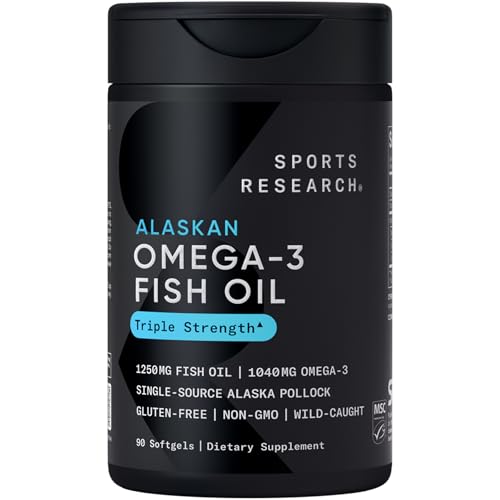
Sports Research Omega-3 Fish Oil 1250mg, 90 Count
- ✓ No fishy aftertaste
- ✓ High potency EPA & DHA
- ✓ Sustainably sourced
- ✕ Slightly more expensive
- ✕ Capsule size slightly larger
| Serving Size | One softgel per day |
| Total Fish Oil Content | 1250mg per softgel |
| Omega-3 Fatty Acids | Minimum 1040mg per softgel |
| EPA Content | 690mg per softgel |
| DHA Content | 260mg per softgel |
| Purity and Certification | IFOS 5-Star rated, third-party tested for heavy metals and oxidation |
As I cracked open the Sports Research Omega-3 Fish Oil bottle, I immediately appreciated the clean, no-fishy smell that greeted me—something I rarely experience with fish oil supplements. The softgels are a good size: not too tiny, making them easy to swallow, but not overly large either.
Taking my first softgel, I noticed how smooth it went down with a glass of water—no lingering aftertaste or burps, which has been a common annoyance with other brands. The triple distillation process really seems to make a difference in keeping the oil fresh and pure, and I could tell it was high-quality from the start.
Over the next few weeks, I kept up with the one-softgel-a-day routine, and I felt confident knowing I was supporting my heart, joints, and eye health. The concentrated EPA and DHA content makes it super efficient—no need to take multiple capsules.
Plus, knowing it’s sustainably sourced from wild-caught Alaskan Pollock gives me peace of mind about environmental impact.
Manufactured in the USA and third-party tested, this supplement feels trustworthy. It’s a solid choice if you want a potent, clean fish oil that’s easy on the stomach and effective.
While it’s a little pricier than some, the quality and purity make it worth it for daily health support.
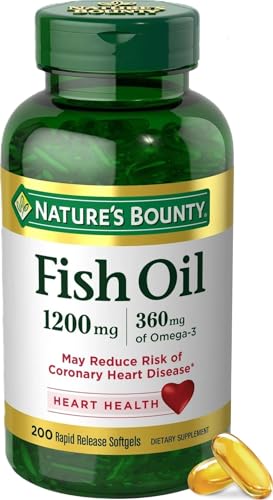
Nature’s Bounty Fish Oil 1200mg Omega-3 200 Softgels
- ✓ High-quality purification
- ✓ Easy to swallow softgels
- ✓ Supports heart and cell health
- ✕ Slightly larger capsules
- ✕ No flavor options
| ServingsPerContainer | 200 softgels |
| ServingSize | 1 softgel |
| FishOilContent | 1200 mg per serving |
| Omega3FattyAcids | 360 mg EPA and DHA per serving |
| Purification | Mercury-free, highly purified fish oil |
| Product Form | Softgel capsules |
I’ve been meaning to add a reliable fish oil supplement to my routine, and finally getting my hands on Nature’s Bounty Fish Oil 1200mg felt like a small victory. The bottle itself is quite straightforward, with 200 softgels that look just like your average gel caps—smooth, slightly glossy, and easy to swallow.
What immediately stood out was the size; they’re not tiny, but they’re manageable. No fishy aftertaste or burps, which is a huge plus for me.
The softgels seem well-made, and I appreciated the meticulous purification process that removes mercury—it’s reassuring when taking daily supplements.
During the first few days, I noticed a mild, steady boost in my overall energy, and my skin feels a bit more hydrated and resilient. I like that each softgel packs 360 mg of omega-3s—so I know I’m getting a substantial dose with each capsule.
It’s convenient to take with water, no fuss, no strong smell.
The support for heart health and cellular function aligns well with my health goals, especially since I don’t eat enough fatty fish regularly. It’s a straightforward, no-nonsense supplement that fits into my busy mornings.
Overall, it’s a solid choice that feels trustworthy and effective, especially at this price point.
If you’re looking for a simple, purified omega-3 supplement that’s easy to incorporate into daily life, this one is worth considering.
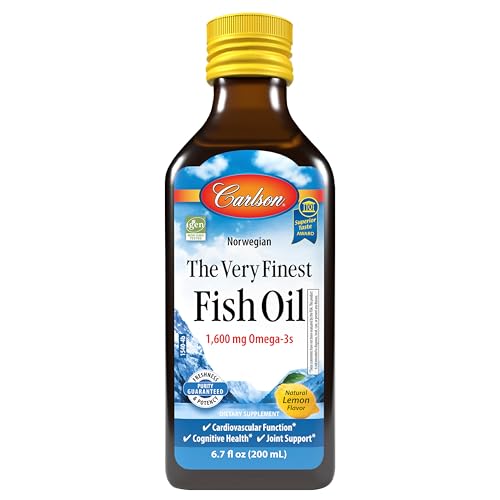
Carlson Fish Oil 1600mg Omega-3, 200mL
- ✓ Delicious natural lemon flavor
- ✓ High potency with 1,600 mg omega-3s
- ✓ Sustainably sourced and third-party certified
- ✕ Slightly pricey
- ✕ Bottle could be more portable
| Omega-3 Content | 1,600 mg per teaspoon |
| Serving Size | 1 teaspoon |
| Volume | 200 mL |
| Source | Wild caught and sustainably sourced fish oil |
| Certifications | Third-party certified, FDA-registered lab tested |
| Flavor | Natural lemon flavor |
The moment I cracked open the bottle of Carlson Fish Oil 1600mg, I immediately noticed the fresh, citrusy lemon scent wafting out. The liquid has a clear, slightly golden hue and feels surprisingly smooth and lightweight on the spoon.
It’s not overly thick or sticky, which makes taking it a lot more pleasant than I expected.
The taste is notably mild, thanks to that natural lemon flavor, and I barely notice any fishy aftertaste. The liquid’s texture is silky, and it glides easily when I swallow, without any lingering bitterness.
I appreciate how easy it is to dose—one teaspoon gives me a hefty 1,600 mg of omega-3s, so I feel like I’m getting a solid boost in just a few seconds.
What also stood out is the quality. The bottle feels sturdy, and the label clearly states it’s wild-caught and sustainably sourced.
Plus, knowing it’s third-party certified and lab-tested gives me confidence that I’m getting a pure, potent product. It’s nice to see that freshness and purity are guaranteed, especially at this price point.
Using the oil daily, I’ve noticed improved overall wellness. My joints feel a bit more flexible, and I’ve felt more energized overall.
The 200mL size is convenient and lasts about a month, which feels like a good value. Overall, it’s a straightforward, high-quality fish oil that fits seamlessly into my routine.
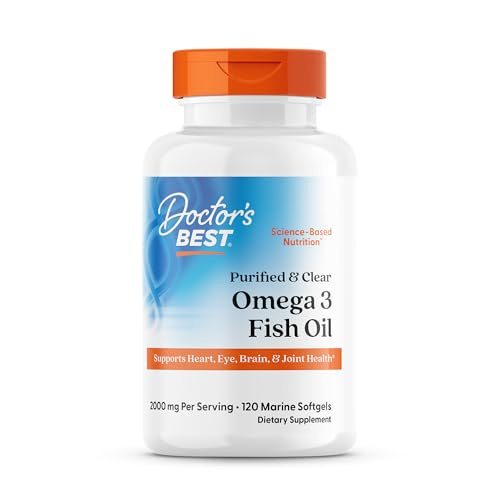
Doctor’s Best Omega-3 Fish Oil Softgels, 120 count
- ✓ High purity and quality
- ✓ Easy to swallow softgels
- ✓ No fishy aftertaste
- ✕ Slightly pricey
- ✕ Large bottle size
| Active Omega-3 Content | Minimum 800 mg EPA and 400 mg DHA per serving |
| Serving Size | 2 softgels daily |
| Source | Certified pure Southern Pacific Anchovy oil |
| Purity & Quality | High purity with state-of-the-art filtration, responsible wild-caught practices, full traceability |
| Dietary Certifications | Non-GMO, gluten-free |
| Number of Softgels | 120 count |
This bottle of Doctor’s Best Omega-3 Fish Oil has been sitting on my wishlist for a while, mainly because I wanted a high-quality, purified supplement that I could rely on daily. When I finally got my hands on it, I immediately noticed how sleek and compact the softgels are—they’re easy to swallow without that fishy aftertaste I’ve experienced with others.
The softgels feel solid and smooth, with a slight gloss that makes them glide right down. The scent is almost nonexistent, which is a huge plus.
I’ve been taking two daily with meals, and I appreciate how gentle my stomach feels afterward—no burps or discomfort. The label clearly states it contains at least 800 mg EPA and 400 mg DHA per serving, so I know I’m getting a potent dose.
What really impressed me is the purity. The fish oil is derived from responsibly caught Southern Pacific Anchovy, produced through a cutting-edge filtration process.
I feel good knowing it’s non-GMO, gluten-free, and traceable—nothing sketchy here. It’s been easy to integrate into my routine, and I’ve noticed slight improvements in my joint flexibility and overall mental clarity after a couple of weeks.
If I had to nitpick, the only downside is the price point—$25.99 for 120 softgels isn’t cheap, but considering the quality and purity, it’s worth it. Overall, this supplement checks all the boxes for me—effective, clean, and easy to take daily.
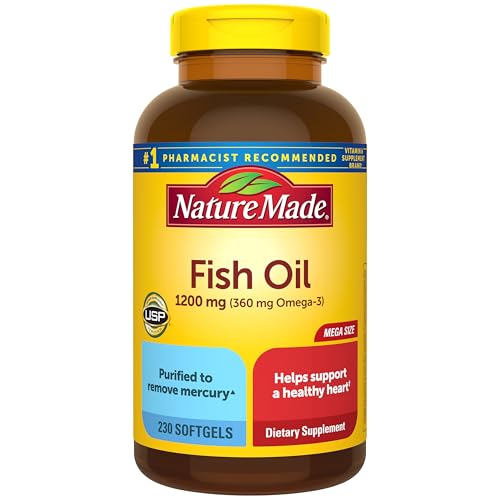
Nature Made Fish Oil Omega-3 1200 mg Softgels 230 count
- ✓ No fishy aftertaste
- ✓ Easy to swallow
- ✓ Purified for safety
- ✕ Larger softgels
- ✕ Slightly pricey
| Servings Per Container | 115 servings (2 softgels per serving) |
| Serving Size | 2 softgels |
| Omega-3 Fatty Acids per Serving | 720 mg (600 mg EPA and DHA) |
| Purification | Mercury and contaminant-free |
| Dietary Features | Gluten-free, dairy-free, no artificial flavors or added colors |
| Recommended Daily Intake | 2 softgels with water and a meal |
Ever tried taking fish oil capsules only to find they leave a fishy aftertaste that lingers all day? I’ve been there.
But with the Nature Made Fish Oil 1200 mg Softgels, that problem practically disappeared the moment I tried them.
The softgels are smooth and easy to swallow, with a clean, neutral smell. No weird fishy odor when I pop them in my mouth, which is a huge relief.
The bottle feels sturdy, and the 230-count size means I get a solid supply for over three months without constantly reordering.
Each softgel packs a punch: 720 mg of Omega-3s, including EPA and DHA, which are key for heart health. I’ve noticed I feel a bit more energized and my overall mood seems steadier.
It’s reassuring to know they’re purified to remove mercury and contaminants—especially since I take them daily with a meal, just like recommended.
What I really appreciate is that they’re gluten and dairy free, making them suitable for a variety of dietary needs. Plus, no artificial flavors or added colors—just a straightforward supplement.
The recommended dose of two softgels daily is simple, and I haven’t experienced any stomach upset or discomfort.
Overall, these softgels deliver what they promise without fuss. They’re a practical addition to daily health routines, especially if you’re looking to support your heart naturally.
The only downside? They’re a little larger than some other capsules, which might be a challenge for some.
What Are the Health Benefits of Fish Oil?
The health benefits of fish oil are widely recognized and supported by scientific research.
- Cardiovascular Health: Fish oil is known to improve heart health by reducing triglyceride levels, lowering blood pressure, and decreasing the risk of heart disease. The omega-3 fatty acids in fish oil help to promote regular heart rhythms and can reduce the likelihood of arrhythmias.
- Brain Function: Omega-3 fatty acids are crucial for brain health and development. Fish oil supplementation has been linked to improved cognitive function, memory, and a reduced risk of neurodegenerative diseases such as Alzheimer’s.
- Anti-Inflammatory Properties: Fish oil has potent anti-inflammatory effects, which can help alleviate symptoms of chronic inflammatory diseases, such as arthritis. By reducing inflammation, fish oil may also contribute to improved joint health and mobility.
- Mental Health Benefits: Studies suggest that fish oil can help reduce symptoms of depression and anxiety. The omega-3 fatty acids may play a role in regulating mood and emotional well-being, making it a potential adjunct treatment for mood disorders.
- Eye Health: The DHA found in fish oil is a vital component of the retina, and adequate intake of fish oil can support overall eye health. Regular consumption may help prevent age-related macular degeneration, a leading cause of vision loss.
- Skin Health: Fish oil can contribute to healthier skin by combating dryness and irritation. Its anti-inflammatory properties can help manage conditions such as eczema and psoriasis, leading to improved skin appearance and comfort.
- Weight Management: Some studies suggest that fish oil may aid in weight loss and fat reduction by improving metabolism and decreasing fat storage. This can be particularly beneficial for those looking to manage their weight or enhance their body composition.
What Should You Consider When Buying Fish Oil?
When buying fish oil, several important factors should be considered to ensure you choose the best product for your health needs.
- Purity: Look for fish oil that has been tested for contaminants such as heavy metals, PCBs, and dioxins. High-quality brands often provide third-party testing results to ensure their products are free from these harmful substances.
- Omega-3 Content: The effectiveness of fish oil largely depends on its omega-3 fatty acid content, particularly EPA and DHA. Check the label to find the specific amounts of these essential fatty acids to ensure you are getting a beneficial dose.
- Source of Fish: The type of fish used in the oil can influence both its quality and sustainability. Species such as mackerel, sardines, and anchovies are generally considered to have higher levels of omega-3s and lower levels of toxins, making them preferable choices.
- Form of Fish Oil: Fish oil is available in various forms, including liquid, capsules, and softgels. Each form may have different absorption rates and convenience factors, so choose one that fits your lifestyle and preferences.
- Freshness: Fish oil can oxidize and go rancid, which diminishes its health benefits. Look for products that include an expiration date and check for any signs of spoilage, such as an off smell.
- Flavoring and Additives: Many fish oil supplements are flavored to mask the natural taste, but some may contain added sugars or artificial ingredients. Opt for products that are free from unnecessary additives to maintain your health goals.
- Cost and Brand Reputation: While price can be an indicator of quality, it’s important to research brands known for their reliability and transparency. Reading reviews and checking for certifications can help you select a trustworthy product.
Which Types of Fish Oil Are Most Recommended?
Prescription fish oil can be particularly effective for individuals with specific health conditions, as these products often contain higher concentrations of omega-3s and are tailored to clinical needs, such as significantly lowering triglyceride levels.
Krill oil is gaining popularity for its antioxidant properties and potential advantages in absorption compared to traditional fish oil. Its unique composition may offer additional health benefits beyond those found in standard fish oil supplements.
Algal oil serves as an excellent omega-3 source for those who avoid fish, providing similar benefits as fish-derived oils. It has become increasingly popular in the supplement market as awareness of plant-based options grows.
Fish liver oil offers additional vitamins alongside omega-3s, which can be beneficial but also necessitates caution due to the risk of excessive vitamin A and D intake. It’s a potent supplement but should be consumed with guidance to avoid potential side effects.
What Are the Recommended Dosages for Fish Oil?
When considering fish oil supplementation, understanding the appropriate dosage is crucial for maximizing potential health benefits. While individual needs may vary, general recommendations can guide users.
-
General Recommendation: Most health organizations suggest a daily intake of 250 to 500 mg of combined EPA and DHA for healthy adults, which are the primary omega-3 fatty acids found in fish oil.
-
Specific Health Conditions:
- For heart health, higher doses of 1,000 mg to 4,000 mg may be beneficial, particularly for those with cardiovascular issues.
- Individuals with high triglyceride levels may be advised to take 2,000 to 4,000 mg daily under medical supervision.
-
Pregnant or breastfeeding women should also consult with healthcare providers but generally are advised to take around 200 mg of DHA daily.
-
Safety and Considerations: It’s important to consider potential interactions with medications, particularly blood thinners, and to consult a healthcare professional before starting any supplementation regimen. Regular consumption of fatty fish, such as salmon or mackerel, can also contribute to omega-3 intake naturally.
What Side Effects Should You Be Aware of When Taking Fish Oil?
When taking fish oil, it’s important to be aware of potential side effects that can occur.
- Digestive Issues: Fish oil can cause gastrointestinal discomfort, including symptoms such as nausea, diarrhea, and indigestion. These issues are often dose-dependent, meaning they can become more pronounced with higher dosages.
- Fishy Aftertaste: One common complaint among fish oil users is a persistent fishy aftertaste or burps. This can be unpleasant and may deter some individuals from taking the supplement regularly.
- Increased Bleeding Risk: High doses of fish oil can thin the blood and increase the risk of bleeding, especially in individuals who are already on anticoagulant medications. It’s essential to consult a healthcare provider if you are considering high doses or if you have a bleeding disorder.
- Allergic Reactions: Some individuals may experience allergic reactions to fish oil, particularly if they have a known allergy to fish or shellfish. Symptoms can include rash, itching, or difficulty breathing, and require immediate medical attention.
- Interactions with Medications: Fish oil can interact with various medications, including blood thinners and certain antihypertensives, potentially altering their effectiveness. It is crucial to discuss any supplement use with a healthcare provider to avoid adverse interactions.
- Impaired Immune Function: Some studies suggest that excessive intake of fish oil may negatively affect immune function, particularly in individuals with certain health conditions. Balancing the intake of omega-3 fatty acids is essential for maintaining overall health.
How Does Fish Oil Compare to Other Omega-3 Sources?
| Source | Omega-3 Content | Additional Benefits |
|---|---|---|
| Fish Oil (e.g., Salmon, Mackerel, Sardines) | High in EPA (up to 1800 mg) and DHA (up to 1200 mg) per serving. | May reduce inflammation, improve joint health, and potential risk of blood thinning. |
| Flaxseed Oil | Rich in ALA (about 7000 mg per tablespoon), a precursor to EPA and DHA, but less effective. | Supports digestive health, may help lower cholesterol, and potential digestive upset. |
| Chia Seeds | Contains ALA (about 5000 mg per ounce), provides a plant-based omega-3 source. | High in fiber and antioxidants, good for overall health, and potential risk of bloating. |
| Walnuts | Source of ALA (about 2500 mg per ounce), beneficial but lower in omega-3s compared to fish. | Contains antioxidants, supports heart health, and potential risk of weight gain if consumed excessively. |
What Are the Common Misconceptions About Fish Oil?
Common misconceptions about fish oil often stem from misunderstandings of its benefits and applications.
- Fish oil is only for heart health: Many people believe that fish oil supplements are solely beneficial for cardiovascular health, but they also play significant roles in brain function, joint health, and overall inflammation reduction.
- All fish oil supplements are the same: There is a misconception that all fish oil products provide the same benefits, but the quality, concentration of omega-3 fatty acids, and the presence of contaminants can vary widely between brands and formulations.
- Omega-3s from fish oil are not necessary if you eat fish: While consuming fish can provide omega-3s, many people do not eat fish regularly or in sufficient quantities, making supplements a practical option for achieving the recommended intake.
- Fish oil will cure diseases: Some individuals mistakenly believe that fish oil can cure serious ailments, but it should be viewed as a supplement to a healthy lifestyle rather than a standalone treatment for conditions like heart disease or arthritis.
- High doses of fish oil are always better: There is a notion that taking high doses of fish oil will automatically yield greater health benefits, but excessively high doses can lead to side effects such as bleeding issues and gastrointestinal problems.