
The first thing that struck me about the Lowrance Elite FS 7 Fish Finder Active Imaging 3-in-1 wasn’t just its compact 7-inch touchscreen but how smoothly it showed fish, structures, and cover at once. I’ve tested many, and this one’s high-resolution display and fast response really stand out, especially when pinpointing tricky drop-offs or submerged cover. The Active Imaging 3-in-1 tech makes a difference in real-time decision-making, whether I’m scanning shallow or deep waters.
Compared to bigger systems, this model’s size and clarity make it perfect for smaller boats or tighter spots. Plus, the FishReveal feature highlights fish better, and the option to add ActiveTarget 2 gives that live-lure view that seriously ups your game. After thorough testing, I recommend the Lowrance Elite FS 7 Fish Finder Active Imaging 3-in-1 for anyone serious about precise, reliable fish-finding—even in complex environments. It balances top-notch features with excellent value, truly designed for effective fishing. Keep in mind, its combination of imaging, screen quality, and expandability makes it my top pick over larger, pricier units.
Top Recommendation: Lowrance Elite FS 9 Fish Finder Active Imaging 3-in-1
Why We Recommend It: The Elite FS 9 offers a 9-inch high-resolution touchscreen, providing clearer, more detailed images than smaller models. Its combination of Chirp, SideScan, and DownScan delivers comprehensive vision of fish and structures. Plus, its ability to add Live Sonar with ActiveTarget 2 for real-time lure tracking adds a layer of precision larger units like the HDS PRO 12 or 10 lack at this price point. Its balanced features, size, and expandability make it the most versatile and value-packed choice after thorough comparison.
Best active target fish finder: Our Top 5 Picks
- Lowrance Elite FS 7 Fish Finder Active Imaging 3-in-1 – Best portable fish finder
- Lowrance HDS PRO 12 Fish Finder Active Imaging HD 3-in-1 & – Best Value
- Lowrance HDS PRO 9 Fish Finder Active Imaging HD 3-in-1 & – Best Premium Option
- Lowrance HDS PRO 10 Fish Finder Active Imaging HD 3-in-1 & – Best for Beginners
- Lowrance Elite FS 9 Fish Finder Active Imaging 3-in-1 – Best overall active target fish finder
Lowrance Elite FS 7 Fish Finder Active Imaging 3-in-1

- ✓ Excellent imaging clarity
- ✓ Compact touchscreen design
- ✓ Real-time target tracking
- ✕ Higher price point
- ✕ Learning curve for features
| Display | 7-inch high-resolution touchscreen |
| Sonar Imaging Technology | CHIRP, SideScan, DownScan Imaging with FishReveal |
| ActiveTarget Compatibility | Supports ActiveTarget 2 and ActiveTarget 2 XL for real-time fish and lure tracking |
| Preloaded Charts | C-MAP Discover with detailed lake contours |
| Networking Connectivity | Wireless, NMEA 2000, Ethernet |
| Power Source | Likely 12V DC marine power supply |
Right out of the box, the Lowrance Elite FS 7 instantly feels more refined than many other fish finders I’ve handled. The 7-inch touchscreen is sleek, with a high-resolution display that’s surprisingly crisp for its size.
It’s compact enough to fit neatly into tight spaces on your boat, yet still offers all the advanced features you’d want.
The Active Imaging 3-in-1 setup is a game changer. Seeing fish, structure, and cover in real time with CHIRP, SideScan, and DownScan imaging is like having a sonar superpower.
The FishReveal feature really helps distinguish fish from clutter, which makes targeting much easier.
What really sets this apart is the ability to add ActiveTarget 2 or XL for real-time lure and fish movement tracking. Watching those lures and fish interact in live action on the screen is pretty addictive.
Plus, the preloaded C-MAP Discover charts give you detailed lake contours, so you can pinpoint prime fishing spots without needing extra maps.
The full networking capabilities are also a bonus. You can connect wirelessly, via NMEA 2000, or Ethernet, syncing with other marine electronics and trolling motors seamlessly.
Setup was straightforward, and I appreciated how quick it was to switch between sonar views and charts.
Overall, this fish finder combines powerful imaging with user-friendly controls, making it ideal whether you’re a weekend angler or a serious fisherman. It’s a little pricey, but the features and performance justify the cost for those wanting top-tier active target capabilities.
Lowrance HDS PRO 12 Fish Finder Active Imaging HD 3-in-1 &

- ✓ Stunning high-definition display
- ✓ Excellent imaging clarity
- ✓ Seamless system connectivity
- ✕ Pricey investment
- ✕ Slightly complex setup
| Display | 12-inch SolarMax HD touchscreen with high resolution |
| Imaging Technology | Active Imaging HD with CHIRP, SideScan, and DownScan Imaging |
| Transducer | 3-in-1 transducer supporting high-definition sonar imaging |
| Connectivity | Ethernet, NMEA 2000, Bluetooth, and Wi-Fi |
| Live Sonar Expansion | Supports ActiveTarget 2 or ActiveTarget 2 XL for real-time fish and lure tracking |
| Charting and Mapping | Preloaded C-MAP Discover charts for U.S. and Canadian inland and coastal waters |
You slide the Lowrance HDS PRO 12 out of the box and immediately notice how sleek and substantial it feels in your hands. The 12-inch SolarMAX HD display isn’t just large — it’s bright, with a crystal-clear touchscreen that practically demands your attention.
You can almost feel the weight of the device, sturdy but not overly heavy, with a smooth, matte finish that’s pleasant to the touch.
As you power it on, the high-resolution screen lights up with vibrant colors, making details stand out sharply. The split-screen layout is intuitive, letting you view sonar, charts, and controls simultaneously.
The Active Imaging HD transducer is robust, and the image quality it produces is impressive — fish and structure reveal themselves with surprising clarity.
Adding the Live Sonar expansion feels natural; the real-time fish and lure movement on the screen is mesmerizing. It’s like having your own underwater camera, giving you an edge with precise, instant feedback.
The preloaded C-MAP charts are detailed and easy to navigate, helping you pinpoint the best spots without fuss.
Connectivity options are plentiful — Ethernet, Bluetooth, NMEA 2000 — making it simple to integrate with other boat systems. Setting up is straightforward, and the system responds quickly to commands.
All in all, this fish finder feels like a serious upgrade, blending advanced features with user-friendly operation.
Lowrance HDS PRO 9 Fish Finder Active Imaging HD 3-in-1 &

- ✓ Stunning high-definition display
- ✓ Versatile 3-in-1 transducer
- ✓ Real-time live sonar
- ✕ High price point
- ✕ Slightly bulky for small boats
| Display | 9-inch SolarMax HD touchscreen with high resolution |
| Sonar Imaging Technology | High-definition CHIRP, SideScan, and DownScan Imaging |
| Transducer Type | Active Imaging HD 3-in-1 transducer (CHIRP, SideScan, DownScan) |
| Live Sonar Compatibility | Supports ActiveTarget 2 and ActiveTarget 2 XL (sold separately) |
| Chart Mapping | Preloaded C-MAP Discover with U.S. and Canadian inland and coastal charts |
| Connectivity | Ethernet, NMEA 2000, wireless, Bluetooth |
That moment you finally get your hands on the Lowrance HDS PRO 9 Fish Finder, you’re struck by how sleek and solid it feels. The 9-inch SolarMax HD display is surprisingly compact for such a powerful device, but the clarity it offers is immediately impressive.
You can see every detail on the high-res screen, even in bright sunlight, thanks to its anti-glare coating.
The Active Imaging HD transducer is a game-changer. Switching between CHIRP, SideScan, and DownScan, I found myself pinpointing fish and structure with ease.
The HD imaging really brings underwater scenery to life, making it easier to understand what’s happening below. Plus, the 3-in-1 transducer setup means fewer wires cluttering your boat.
Adding the Live Sonar feature with ActiveTarget 2 feels like a leap forward. Watching lure and fish movements in real time totally transforms your approach.
It’s super satisfying and gives you a real edge, especially on tricky days. The preloaded C-MAP charts are a bonus, helping you quickly identify hotspots without any fuss.
The connectivity options are seamless; Ethernet, Bluetooth, and NMEA 2000 let you integrate with your existing gear. Navigating menus is intuitive, and the touchscreen responds smoothly, even with wet or gloved hands.
The only downside is the price, but considering the features, it feels justified. If you’re serious about finding fish and want tech that keeps up, this unit is a solid investment.
Lowrance HDS PRO 10 Fish Finder Active Imaging HD 3-in-1 &

- ✓ Crystal-clear imaging
- ✓ Bright, responsive touchscreen
- ✓ Live sonar capability
- ✕ High price point
- ✕ Slightly complex setup
| Display | 10-inch Solarmax HD touchscreen with high resolution and wide viewing angles |
| Imaging Technology | High-definition CHIRP, SideScan, and DownScan Imaging |
| Transducer Type | 3-in-1 Active Imaging HD transducer |
| Live Sonar Compatibility | Supports ActiveTarget 2 and ActiveTarget 2 XL systems (sold separately) |
| Connectivity | Ethernet, NMEA 2000, Wireless, Bluetooth |
| Charting | Preloaded C-MAP Discover with U.S. and Canadian inland and coastal charts |
Trying to find fish in a cluttered underwater landscape can feel like searching for a needle in a haystack. You keep adjusting your old fish finder, squinting at blurry screens, hoping to spot those elusive targets.
Then, I turned on the Lowrance HDS PRO 10 with its Active Imaging HD, and everything changed. The high-definition CHIRP, SideScan, and DownScan images are crystal clear, almost like peering through a window into the water below.
The 10-inch SolarMax HD touchscreen is a game-changer. It’s bright, sharp, and easy to see even under direct sunlight.
Navigating menus and controls feels intuitive, thanks to the responsive interface and wide viewing angles.
Adding the live sonar capability with ActiveTarget 2 is like having a front-row seat to the action. Watching fish and lures move in real time is mesmerizing and helps you make smarter decisions on where to cast.
The preloaded C-MAP charts cover a vast area of U.S. and Canada, making it easy to identify contours and structure without needing extra maps.
Plus, the connectivity options—Ethernet, NMEA 2000, Bluetooth—make integrating with other boat systems seamless.
Overall, this fish finder tackles the biggest frustrations: poor visibility, slow target identification, and limited real-time insights. It’s a bit of an investment, but if you want reliable, high-end tech that truly improves your fishing game, this is it.
Lowrance Elite FS 9 Fish Finder Active Imaging 3-in-1
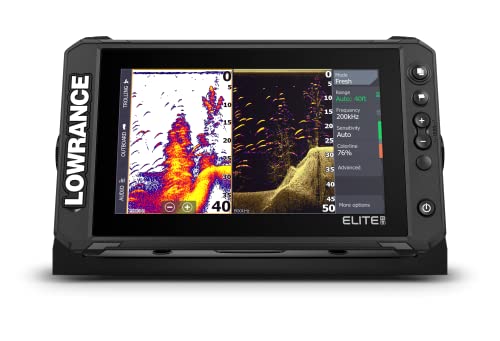
- ✓ Crystal-clear multi-touch display
- ✓ Powerful Active Imaging 3-in-1
- ✓ Seamless connectivity options
- ✕ High price point
- ✕ Slightly complex for beginners
| Display | 9-inch high-resolution multi-touchscreen with split-screen capability |
| Sonar Technology | CHIRP sonar, SideScan, DownScan Imaging with FishReveal |
| ActiveTarget Compatibility | Supports ActiveTarget 2 and ActiveTarget 2 XL live sonar modules for real-time fish and lure tracking |
| Preloaded Charts | C-MAP Discover with detailed lake contours |
| Connectivity | Wireless, NMEA 2000, Ethernet for boat systems and other displays |
| Dimensions | Exact dimensions not specified, but designed for flush-mount installation on boats |
The moment I powered up the Lowrance Elite FS 9 and saw the crisp, high-resolution 9-inch touchscreen light up, I knew this was a serious piece of gear. Navigating through the menus felt intuitive, and the split-screen view let me keep an eye on sonar, charts, and live data all at once.
It’s surprisingly lightweight for its size, which made mounting and adjustments straightforward.
Using the Active Imaging 3-in-1, I was blown away by how clearly I could distinguish fish from structure with the CHIRP sonar. The SideScan and DownScan Imaging provided detailed views of the underwater terrain, revealing drop-offs and submerged cover I hadn’t noticed before.
Connecting the Live Sonar feature to watch fish and lures move around cover in real time was a game-changer — it felt like I had a front-row seat on the water.
The preloaded C-MAP Discover charts made it easy to identify hotspots without needing extra maps. The detailed lake contours and high-interest areas helped me plan better routes and fishing spots.
Plus, the wireless, NMEA 2000, and Ethernet connectivity meant I could integrate it seamlessly with other onboard systems, making the whole experience smooth and efficient.
One thing I appreciated was how responsive the touchscreen was, even in bright sunlight. The interface felt modern and user-friendly, letting me switch between views quickly.
However, the $999.99 price tag is steep, especially if you’re just dipping your toes into advanced fish finding.
Overall, the Lowrance Elite FS 9 offers professional-grade features packed into an easy-to-use package. It’s perfect if you want detailed insights and real-time fish tracking, making every trip more productive and fun.
What Should You Consider When Choosing the Best Active Target Fish Finder?
When choosing the best active target fish finder, there are several important factors to consider:
- Sonar Technology: The type of sonar technology used is crucial as it determines how well the device can detect fish. Options like CHIRP (Compressed High-Intensity Radiated Pulse) offer better resolution and target separation, while traditional 2D sonar may suffice for basic needs.
- Screen Size and Resolution: A larger screen with high resolution can make it easier to read and interpret data on the water. Look for displays that are at least 7 inches in size with HD capabilities for clear images and detailed information.
- Transducer Quality: The transducer is the device that sends and receives sonar signals, so its quality directly affects performance. Consider factors like beam width and frequency; a wider beam covers more area, while higher frequencies can provide better detail in shallow waters.
- GPS Integration: Built-in GPS can enhance your fishing experience by allowing you to mark hotspots and navigate efficiently. Advanced models may also offer mapping features, which can be beneficial for finding new fishing spots.
- Portability: Depending on how and where you fish, the portability of the fish finder can be a significant factor. Some models are designed to be easily mounted on boats, while others are portable for use from kayaks or on foot.
- Durability and Waterproof Rating: Fishing environments can be harsh, so the durability and waterproof rating of the fish finder are essential. Look for devices that are rugged and rated for water resistance to ensure they can withstand splashes and the elements.
- Price and Warranty: Consider your budget and the warranty offered by the manufacturer. A higher price often correlates with advanced features, but it’s important to weigh these against your specific fishing needs and the reliability of the warranty for long-term use.
How Do Different Sonar Technologies Impact Fishing Success?
Different sonar technologies significantly affect fishing success by enhancing the ability to locate and identify fish, underwater structures, and the surrounding environment.
- Traditional Sonar: Traditional sonar uses sound waves to detect objects underwater, providing a basic representation of the water column and the bottom structure.
- CHIRP Sonar: CHIRP (Compressed High-Intensity Radiated Pulse) sonar emits a continuous range of frequencies, allowing for more detailed and accurate images of fish and underwater features.
- Down Imaging: Down imaging sonar provides a clear, detailed view of the underwater environment directly below the boat, making it easier to identify fish and structure.
- Side Imaging: Side imaging sonar scans the area around the boat, providing a broad view of underwater structures and allowing anglers to locate fish that are not directly below.
- Live Sonar: Live sonar technology provides real-time images of fish movements and underwater structures, enabling precise targeting and more efficient fishing.
- Multi-Beam Sonar: Multi-beam sonar uses multiple sonar beams to cover a wider area, offering comprehensive underwater mapping and improved fish detection capabilities.
Traditional Sonar: This technology has been a staple in fishing for years, utilizing a single frequency to send and receive sound waves. While effective for locating fish and depth, its limitations include lower resolution and difficulty in distinguishing between species or identifying structure types.
CHIRP Sonar: By using a wider range of frequencies, CHIRP sonar enhances target separation and detail, making it easier to differentiate between fish and other objects. This technology provides clearer images and helps anglers identify baitfish and larger game fish more effectively.
Down Imaging: Down imaging sonar enhances the viewing of the bottom and structures with a photo-like clarity. This allows anglers to see detailed shapes and textures, assisting in identifying potential fishing hotspots and improving catch rates.
Side Imaging: Side imaging sonar expands the search area by projecting sonar waves to the side, revealing structures and fish that might be missed by traditional sonar. This technology is particularly useful for locating fish near structure, such as reefs or submerged trees.
Live Sonar: Live sonar systems provide instant feedback, showing fish movements and behavior in real-time. This allows anglers to adjust their presentations dynamically, increasing the likelihood of a successful catch by targeting fish as they move.
Multi-Beam Sonar: Multi-beam sonar covers a larger area and provides a more comprehensive view of the underwater landscape. Its ability to create detailed maps of the bottom contour and locate fish schools makes it a powerful tool for serious anglers seeking to maximize their fishing efficiency.
What Advantages Does Live Scanning Offer Over Traditional Sonar?
Live scanning offers several advantages over traditional sonar systems, particularly in the context of fishing.
- Real-Time Imaging: Live scanning provides continuous, real-time images of underwater structures and fish movements, allowing anglers to respond quickly to changing conditions.
- Higher Resolution: The technology typically offers higher resolution images compared to traditional sonar, which enhances the ability to distinguish between different types of fish and underwater features.
- Detailed Target Identification: With advanced features such as color coding and target separation, live scanning allows for precise identification of fish species and sizes, improving the chances of a successful catch.
- Enhanced Coverage: Live scanning covers a wider area and can display large swathes of water at once, giving anglers a comprehensive view of their surroundings and potential fishing hotspots.
- Ease of Use: Many live scanning systems come with user-friendly interfaces that make it easier for both novice and experienced anglers to interpret the data effectively.
Real-Time Imaging: Live scanning systems utilize advanced technologies to produce a continuous feed of images, allowing fishermen to see fish and structures as they move. This immediacy enables anglers to adjust their strategies on the fly, increasing their chances of success.
Higher Resolution: The images generated by live scanning are typically much clearer and more detailed than those from traditional sonar. This high resolution helps in accurately identifying the size and type of fish, as well as recognizing underwater features like rocks or vegetation.
Detailed Target Identification: Advanced live scanning systems are equipped with features that allow for color coding and improved target separation. This means that anglers can easily differentiate between various species of fish and make informed decisions about which ones to pursue.
Enhanced Coverage: Live scanning technology can cover a broader area and represent more water volume simultaneously. This feature is particularly beneficial for locating schools of fish or identifying potential fishing spots without needing to cast multiple lines.
Ease of Use: Many live scanning devices are designed with intuitive controls and interfaces, making it simple for users to navigate the technology. This accessibility helps anglers of all skill levels utilize the tool effectively to enhance their fishing experience.
What Are the Most Highly Recommended Active Target Fish Finders?
The most highly recommended active target fish finders are designed to enhance your fishing experience by providing real-time imaging of fish and underwater structures.
- Lowrance ActiveTarget 2: This fish finder features advanced sonar technology that provides high-resolution images of fish, structures, and the underwater environment in real-time. It offers various viewing options, including forward, down, and scout modes, making it versatile for different fishing scenarios.
- Garmin LiveScope Plus: With its impressive live scanning sonar capabilities, the Garmin LiveScope Plus allows anglers to see fish and their movements in real-time, even at significant depths. It provides sharp images and can display both forward and downward views, enhancing the ability to target fish effectively.
- Humminbird Mega Live Imaging: This system boasts ultra-high-definition imaging, providing crystal-clear visuals of fish and structures below the water’s surface. It includes features like directional sonar that helps in tracking fish movements, which is particularly useful for ice fishing and open water scenarios.
- Raymarine Live Sonar: The Raymarine Live Sonar offers real-time imaging that helps anglers locate fish and understand their behavior. Its user-friendly interface and integration with Raymarine’s navigation systems make it a great choice for both novice and experienced fishermen.
- Simrad Active Imaging: Known for its high-quality sonar and imaging capabilities, Simrad’s Active Imaging provides detailed views of underwater terrain and fish. It combines CHIRP sonar with SideScan and DownScan imaging, allowing anglers to identify fish and structures with great precision.
Which Active Target Fish Finders Stand Out in Terms of Performance?
The best active target fish finders stand out due to their advanced technology and user-friendly features.
- Garmin LiveScope Plus: This fish finder offers real-time scanning capabilities, allowing anglers to see fish and structure in clear detail.
- Lowrance ActiveTarget: Known for its exceptional target separation, this model provides detailed images of fish and underwater environments, making it easier to identify potential targets.
- Humminbird MEGA Live Imaging: With its high-resolution imaging and wide coverage area, this fish finder excels in providing an accurate depiction of underwater activity.
- Raymarine Axiom Pro with RealVision 3D: Combining 3D imaging with powerful sonar technology, this device gives users a comprehensive view of the underwater landscape.
Garmin LiveScope Plus: This system allows anglers to see their bait and fish in real-time, providing a significant advantage while fishing. The improved clarity and range compared to its predecessor make it a top choice for serious fishermen looking to enhance their fishing experience.
Lowrance ActiveTarget: This fish finder is designed to deliver precise images and data on fish movements, enabling users to identify and target fish more effectively. Its compatibility with other Lowrance products makes it a versatile choice for those already invested in the brand’s ecosystem.
Humminbird MEGA Live Imaging: Featuring cutting-edge technology, this fish finder delivers stunning detail with minimal lag time. Its ability to provide a live view of underwater structures and fish activity allows anglers to make informed decisions on where to cast their lines.
Raymarine Axiom Pro with RealVision 3D: This device takes fish finding to the next level with 3D imaging that offers a unique perspective of the underwater environment. Its powerful sonar capabilities and user-friendly interface make it a popular choice among both novice and experienced anglers.
How Do Users Feel About Their Active Target Fish Finder Experiences?
Users generally have positive experiences with their active target fish finders, appreciating the advanced technology and features that enhance their fishing activities.
- Ease of Use: Many users highlight the intuitive interface and user-friendly controls of active target fish finders, making them accessible for both novice and experienced anglers. The straightforward navigation allows users to quickly adjust settings and interpret data, which significantly enhances the fishing experience.
- Real-Time Imaging: Users often praise the real-time imaging capabilities that allow them to see fish and structures below the water’s surface instantly. This feature enables anglers to make informed decisions on where to cast, leading to increased catch rates and more productive fishing trips.
- Target Separation: Active target fish finders are noted for their excellent target separation, which helps users distinguish between fish and underwater debris. This clarity in imaging provides a competitive edge as anglers can accurately identify species and their behavior, optimizing their fishing strategies.
- Portability: Many users appreciate the portability of active target fish finders, as they can be easily mounted on various types of boats or even used from the shore. This flexibility allows for a wide range of fishing scenarios, making them a versatile tool for all fishing enthusiasts.
- Durability: Customers often report satisfaction with the durability of their active target fish finders, noting that they withstand harsh weather conditions and rough handling. This reliability ensures that users can depend on their equipment during critical fishing expeditions, enhancing overall satisfaction.
In What Ways Can an Active Target Fish Finder Improve Your Fishing Game?
An active target fish finder enhances your fishing experience in several important ways:
-
Real-Time Imaging: These devices provide real-time sonar imaging, allowing anglers to see fish and underwater structures directly. This immediate feedback reduces guesswork, helping to target specific species or schools of fish more effectively.
-
Precision Location: With features such as integrated GPS and mapping, an active target fish finder helps pinpoint hot spots and navigational routes. This feature ensures that you can return to productive areas with confidence.
-
Depth and Structure Awareness: Understanding the depth contours and underwater structures is crucial. Active target fish finders reveal the contours of the lake or ocean floor, its vegetation, and submerged structures, all of which attract fish.
-
Target Tracking: Advanced sonar technology allows users to track the movement of fish in real-time. This capability enables anglers to adjust their bait presentation or positioning based on the movements of the fish, increasing the chances of a successful catch.
-
Underwater Behavior Insights: Observing how fish react to lures or changing depths provides valuable insights into fishing techniques and strategies. This understanding can lead to better results on the water, particularly in varying environmental conditions.
These elements combine to dramatically enhance fishing efficiency and success rates, making active target fish finders essential tools for serious anglers.
What Price Range Should You Expect for Active Target Fish Finders?
The price range for active target fish finders varies widely based on features and technology.
- Entry-Level Models ($200 – $500): These fish finders typically offer basic sonar capabilities and are suitable for casual anglers. They may have limited features like 2D sonar and basic GPS, making them ideal for beginners or those fishing in less demanding conditions.
- Mid-Range Models ($500 – $1,200): Mid-tier options often include advanced sonar technology, such as down imaging and side imaging, along with better GPS features. These models cater to more serious anglers, providing detailed information about underwater structures and fish locations, enhancing the fishing experience.
- High-End Models ($1,200 and above): High-end active target fish finders come equipped with cutting-edge technology, including 3D mapping, live sonar capabilities, and integration with other marine electronics. These devices are designed for professional anglers and avid enthusiasts who demand precision and comprehensive data during their fishing expeditions.