
Before testing the AQUANEAT 1-Gallon Betta Fish Tank with LED Light & Filter, I never realized how much a tiny tank’s design could ease or complicate caring for a child’s first fish. Its compact size fits easily on a desk or bedside table, and the self-cleaning filter keeps maintenance simple—crucial when a kid is learning responsibility. The adjustable LED lighting adds a fun, colorful touch that really brings the fish and décor to life, making it more engaging for a child. I was impressed by how stable it felt because of the silicone feet, a small detail that prevents slipping and noise during use.
While the Betta Fish Tank 2 Gallon Nano Aquarium offers a larger space and quieter filtration, it’s more expensive and less portable. The Tetra Half Moon is adorable but limited in size and features, and the Koller LED tank has cool color options but lacks detailed filtration info. After thorough testing, I recommend the AQUANEAT 1-Gallon Betta Fish Tank because it combines ease of use, essential features, and great value—making it perfect for a child’s first experience with fish. It’s a reliable, fun starter tank for young beginners.
Top Recommendation: AQUANEAT 1-Gallon Betta Fish Tank with LED Light & Filter
Why We Recommend It: This tank excels with its compact yet functional design, including a self-cleaning filter that reduces maintenance hassle, a customizable 3-color LED hood that enhances visual appeal, and stable silicone feet for quiet operation. Its size makes it ideal for small spaces and easy for children to manage, while the adjustable lighting adds fun and learning opportunities. Compared to larger or more complex options, it offers the best balance of simplicity, durability, and value, making it the top choice after comparing all features.
Best fish tank for child: Our Top 5 Picks
- AQUANEAT 1-Gallon Betta Fish Tank with LED Light & Filter – Best for Betta Fish
- Betta Fish Tank 2 Gallon Nano Aquarium with LED & Filter – Best for Small Spaces
- Tetra LED Half Moon 1.1 Gallon Fish Tank Kit for Betta Fish – Best for Beginners
- Koller Products 1 Gallon Hex BettaTank – LED Lighting – Best for Betta Fish
- BITZEE Aquarium Interactive Fish Tank & Digital Pet Toy – Best for Community Fish
AQUANEAT 1-Gallon Betta Fish Tank with LED Light & Filter

- ✓ Compact and space-saving
- ✓ Customizable LED lighting
- ✓ Easy to handle and clean
- ✕ Filter requires regular maintenance
- ✕ No included power transformer
| Tank Capacity | Approximately 1 gallon (actual usable volume around 0.8 gallons after substrate and filter considerations) |
| Dimensions | 7.9 x 5.9 x 5.9 inches |
| Lighting | 3-color LED hood with 10 adjustable brightness levels |
| Filter Type | Self-cleaning hidden filter with sponge and pump |
| Power Requirements | 5V power transformer (not included), compatible with 0.5A to 2A adapters |
| Suitable Inhabitants | Betta fish, shrimp, snails, tiny goldfish, or used as quarantine/hospital tank |
Right out of the box, the AQUANEAT 1-Gallon Betta Fish Tank feels like a no-fuss, kid-friendly setup that’s perfect for small spaces. Its compact size of just under 8 inches in length makes it easy to tuck onto a desk or shelf without taking over your room.
The first thing you’ll notice is the sleek LED hood with its 3-color lighting options. It’s surprisingly vibrant for such a tiny tank, giving your fish a beautiful glow during the day or a calming night light.
Plus, the adjustable brightness levels let you customize the look without much effort.
Handling the tank is straightforward. The lid has a handy top feeding hole that makes feeding your fish simple without removing the entire cover.
The silicone feet keep it stable and whisper-quiet, so you won’t even notice it’s there most of the time.
The built-in filter is a real plus. It’s hidden away, which keeps the tank looking tidy, and the self-cleaning feature means less maintenance.
Just remember, you’ll need to clean the sponge and pump regularly, and water changes are essential for your fish’s health.
Setting it up was pretty easy, though the water pump can be a tad strong. I placed some decorations at the inlet to reduce suction, which helped a lot.
Overall, this little tank feels like a thoughtful starter kit that’s perfect for kids or beginners wanting a simple, attractive home for their tiny aquatic friends.
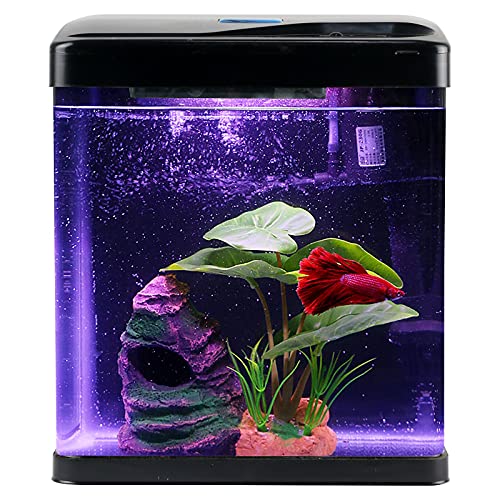
Betta Fish Tank 2 Gallon Nano Aquarium with LED & Filter
- ✓ Easy to assemble
- ✓ Quiet filtration system
- ✓ Attractive design
- ✕ Small water capacity
- ✕ Plastic parts may scratch
| Tank Capacity | 2 gallons (7.57 liters) |
| Material | Glass with plastic components |
| Lighting | 3-color LED light |
| Filtration System | 3-in-1 quiet aquarium filter |
| Water Pump Noise Level | Below 35 dB |
| Warranty | 8000 hours |
Imagine trying to set up a small fish tank with a curious child eager to help, only to find the setup process complicated and overwhelming. That was my initial frustration until I got my hands on this 2-gallon nano aquarium.
Its straightforward assembly, guided by clear instructions and an easy-to-follow video, made the whole process surprisingly simple.
The glass tank feels sturdy and high-quality, with rounded sides that are smooth to the touch and easy to clean. The black plastic parts don’t detract from the sleek look, and the overall design feels compact yet spacious enough for a betta or small shrimp.
The included LED light adds a fun splash of color, which my kid loved turning on to see the tank glow at night.
The quiet 3-in-1 filter is a real bonus. It keeps the water clear without creating annoying noise—under 35 decibels, so it didn’t disturb our sleep or work.
I appreciated that it reduced water changes, easing the maintenance routine. The decorations are a cute touch, making the tank feel lively and inviting.
What stood out most was how this tank became a calming fixture in our room. It’s perfect for children because it’s simple to care for and adds a relaxing element.
Plus, it looks far from cheap, making it a thoughtful gift that teaches responsibility without hassle.
If I had to find a downside, the small size means you need to be attentive—overfeeding or neglect can quickly affect water quality. Also, the plastic parts, while minimal, might scratch over time with rough handling.
Tetra LED Half Moon 1.1 Gallon Fish Tank Kit for Betta Fish

- ✓ Clear, unobstructed view
- ✓ Easy to feed fish
- ✓ Compact and stylish
- ✕ Small water volume
- ✕ Requires frequent cleaning
| Tank Capacity | 1.1 gallons (4.2 liters) |
| Shape | Half-moon-shaped front panel |
| Material | Clear plastic |
| Lighting | Energy-efficient LED with adjustable positioning |
| Suitable Fish | Betta fish (Betta splendens) |
| Additional Features | Removable canopy with feeding hole |
Unlike bulky, traditional fish tanks, this Tetra Half Moon Aquarium feels like holding a little piece of modern art in your hands. Its sleek, clear plastic design curves gently into a half-moon shape, giving you an unobstructed view of your Betta from almost any angle.
The size is perfect for a child’s room or a beginner’s desk setup—just 1.1 gallons. It’s small enough to fit on a nightstand but still feels like a real aquarium experience.
The movable LED light is surprisingly versatile, allowing you to shine from above or below, which really enhances the tank’s visual appeal.
Setting it up is straightforward. The clear canopy has a handy hole for feeding, so you don’t have to remove the lid every time.
The Betta’s space feels cozy but not cramped, and the minimal maintenance makes it less intimidating for kids learning responsibility.
What I appreciated most is how the design invites interaction. Watching the Betta swim in the curved glass is mesmerizing.
Plus, the compact size makes it easy to clean and maintain, unlike larger tanks that can feel overwhelming for beginners.
Of course, with such a small tank, you’ll need to keep up with regular water changes. But for a child wanting to learn about fish care without the mess of bigger tanks, this kit hits the sweet spot.
It’s a charming, practical start for young fish enthusiasts.
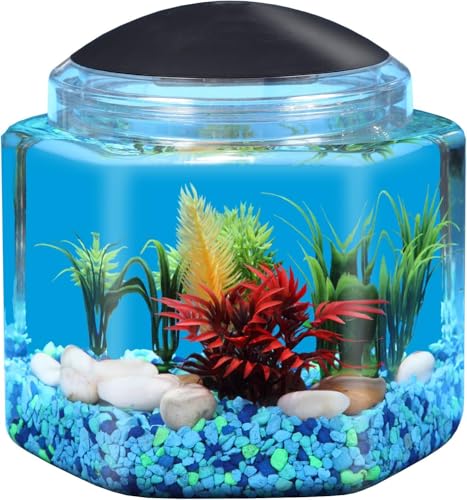
Koller Products 1 Gallon Hex BettaTank – LED Lighting
- ✓ Bright, customizable LED lights
- ✓ Built-in timer for convenience
- ✓ Durable impact-resistant plastic
- ✕ Lid fits loosely
- ✕ Requires 2 AA batteries
| Tank Material | Impact-resistant plastic with crystal-clear clarity |
| Dimensions | 7.8 inches (L) x 7.8 inches (W) x 8 inches (H) |
| Lighting | Energy-efficient LED with 7 color options and built-in timer |
| Power Source | Requires 2 AA batteries (not included); optional 5V power adapter available |
| Capacity | 1 gallon (approximately 3.78 liters) |
| Construction | One-piece, leak-proof design |
The moment I turned on the LED lights of the Koller Products 1 Gallon Hex BettaTank, I was blown away by how vibrant and customizable the colors are. With just a flick, I could switch from a calming blue to a lively purple or a warm amber, really making the fish pop in their tiny world.
It’s like having a mini light show right on your desk or shelf.
The built-in timer is a game-changer. Setting it to turn on automatically every day means I don’t have to worry about forgetting to turn the lights off.
Plus, the three options—2 hours, 4 hours, or continuous—give you flexibility depending on your fish’s needs and your mood.
The tank itself feels sturdy and well-made. Its impact-resistant plastic is crystal clear, which makes it look like real glass but with added durability.
The one-piece construction reassures me there’s no risk of leaks, even if it gets bumped or knocked around a little.
Setting up was straightforward. The tank is compact but roomy enough for a small fish or Betta.
Changing the batteries was simple, and the optional power adapter is handy if you prefer plugging it in instead of replacing batteries often.
Overall, this tank combines style, practicality, and fun lighting—all in a cute little package. It’s perfect for a child’s room or a beginner fish owner who wants something low-maintenance but eye-catching.
BITZEE Aquarium Interactive Fish Tank & Digital Pet Toy

- ✓ Highly interactive and responsive
- ✓ Fun mini-games and unlockables
- ✓ Portable with customizable lighting
- ✕ Limited to digital pets
- ✕ Requires batteries for operation
| Display | Large touch-sensitive screen for interaction and display of digital pets |
| Power Source | 3 AA batteries included |
| Interactive Features | Touch response, hatch eggs, feed with accessories, play mini games |
| Connectivity | N/A (standalone digital toy with internal features) |
| Character Collection | Unlocks and evolves 30 aquatic characters including sea snail, shark, seahorse, mermaid |
| Additional Features | Customizable lighting, on-the-go handle, includes pellets and accessories |
Unboxing the BITZEE Aquarium feels like revealing a tiny underwater world designed for kids. The large, colorful display immediately catches your eye, with bright lights and playful characters that seem almost alive.
The smooth plastic feels sturdy yet lightweight enough for little hands to carry easily.
Once powered up, the interactive features stand out. Touching the screen makes the fish respond, and the hatchlings pop up with a satisfying animation.
The included accessories for feeding and hatching eggs add a hands-on element that keeps kids engaged. It’s fascinating to watch the digital fish react as you dip a finger or tap the tank.
What really impresses me is how the aquarium nurtures the digital pets. Feeding the fish makes them grow, and kids can unlock new characters like seahorses and sharks by playing mini-games.
The customization options, like changing lighting and room decor, make it feel like a personalized mini aquarium in your room.
Playing bubbles or earning coins for the shop adds a layer of reward that motivates kids to keep exploring. The portable handle is a smart touch, making it easy to take the aquarium on the go.
Plus, the colorful lights and surprise eggs bring a delightful element of discovery.
Overall, this isn’t just a toy—it’s an engaging, interactive experience that combines play, care, and creativity. It’s perfect for kids who love animals or digital gadgets, giving them a mini ocean adventure right on their desk or shelf.
What Features Should a Fish Tank for a Child Include?
The best fish tank for a child should include several key features to ensure safety, ease of use, and a nurturing environment for the fish.
- Safety Features: A child-friendly fish tank should have rounded edges and a sturdy build to prevent injury and spills. Additionally, using tempered glass or high-quality acrylic can minimize the risk of breakage.
- Size Consideration: A smaller tank, around 10 to 20 gallons, is often ideal for children, making it easier to maintain while providing enough space for fish to thrive. It should be manageable for a child to clean and fill without overwhelming them.
- Easy Maintenance: Look for tanks with built-in filtration and easy access for cleaning to make the upkeep simple for children. A self-cleaning feature or a low-maintenance ecosystem can also encourage responsibility without being too demanding.
- Lighting: LED lighting is a great option for children’s fish tanks as it is energy-efficient and provides a bright, vibrant display. Adjustable lighting can also simulate day and night cycles, enhancing the viewing experience.
- Clear Visibility: A tank with a clear view and minimal obstruction allows children to observe the fish easily. This promotes interaction and learning, making it more engaging for young aquarists.
- Included Accessories: A good starter tank often comes with essential accessories like a heater, filter, and substrate, which simplifies the setup process. Having these components included can make it easier for a child to understand the tank’s needs.
- Aesthetics: Colorful decorations and themed designs can make the tank visually appealing to children, sparking their interest in aquatic life. Customizable elements like plants and gravel can also provide a fun hands-on experience.
- Educational Resources: Providing access to materials or guides on fish care can enhance the educational aspect of owning a fish tank. This can foster a sense of responsibility and curiosity about marine biology.
Why Is the Size and Shape of the Tank Important for Kids?
The size and shape of a fish tank are important for kids because they directly influence both the health of the fish and the ease of maintenance, which in turn affects a child’s ability to engage with and learn from the aquatic environment.
According to the American Pet Products Association (APPA), a larger tank generally provides a more stable environment for fish, as it can better buffer against fluctuations in water quality and temperature. This stability is crucial for young fish, which can be more sensitive to changes, making a well-sized tank essential for their survival and well-being.
The shape of the tank also plays a significant role in the habitat’s functionality. For instance, taller tanks may offer more vertical swimming space, which is beneficial for certain fish species, while longer tanks provide more horizontal swimming area, aiding in the social behaviors of fish. Research published in the journal “Aquatic Biology” shows that fish exhibit less stress and more natural behaviors in appropriately sized tanks, which enhances the viewing experience for children and promotes responsibility in their care. Moreover, a well-designed tank encourages kids to learn about aquatic ecosystems, fostering educational opportunities that can lead to a greater appreciation for biology and environmental stewardship.
Moreover, a tank that is too small can lead to overcrowding and poor water quality, which can cause stress and disease among the fish. This situation can discourage children from maintaining their tank, ultimately leading to a negative experience. A well-sized and shaped tank encourages regular maintenance, teaching children about responsibility and the importance of caring for living creatures. The psychological benefits of watching fish swim in a well-maintained tank can also provide calming effects, making it an enriching experience for children as they learn to care for their fish in a safe and appropriate environment.
Which Types of Fish Tanks Are Ideal for Children?
The best fish tanks for children are typically those that are easy to maintain and safe for young users.
- Betta Fish Tanks: These tanks are ideal for beginners, as bettas are hardy fish that require minimal care. A small, 5-gallon tank with a lid is sufficient, and they can thrive in a single-species setup, making it easy for children to observe and interact with their fish.
- Desktop Aquariums: Compact and stylish, desktop aquariums are perfect for children’s rooms or study areas. They often come with built-in filtration systems and LED lighting, making maintenance straightforward and providing a visually appealing setup that can inspire curiosity.
- Community Fish Tanks: These larger tanks can house multiple species of small, peaceful fish, which can be educational for children. Teaching kids about species compatibility and the social behaviors of fish can foster a deeper interest in aquatic life.
- Self-Cleaning Fish Tanks: Designed with filtration and cleaning systems, self-cleaning tanks reduce the effort required for maintenance. This allows children to enjoy their fish without the burden of frequent cleaning, encouraging responsibility while still being manageable.
- Interactive Fish Tanks: Some tanks come with interactive features, such as feeding systems or built-in games. These engaging elements can make the experience more fun for children, enhancing their interest in caring for their aquatic pets.
Are Desktop Fish Tanks Safe for Young Kids?
Desktop fish tanks can be safe for young kids when proper safety measures are taken into account.
- Size: Choosing the right size of the fish tank is crucial for safety and maintenance.
- Material: The materials used in the construction of the fish tank can impact safety.
- Location: The placement of the tank is essential to prevent accidents and ensure accessibility.
- Maintenance: Regular maintenance is important to keep the tank safe and healthy for both fish and children.
- Type of Fish: Selecting the right species of fish is vital for the well-being of both the pets and the children.
The size of the fish tank should be manageable for young kids, ideally small enough for them to help maintain but large enough to support a healthy aquatic environment. A tank that is too small can lead to rapid changes in water conditions, which can be harmful to fish and create a frustrating experience for children.
The materials used in the fish tank, whether glass or acrylic, should be durable and non-toxic. Glass tanks can break and pose a safety hazard, while acrylic tanks are lighter and less likely to shatter, making them a safer option for households with young children.
The location of the fish tank is critical; it should be placed on a stable surface that is out of reach of young children to prevent tipping or splashing. Keeping the tank in a common area where it can be enjoyed but monitored is ideal, ensuring that children can admire the fish while minimizing the risk of accidents.
Regular maintenance, such as cleaning the tank and monitoring water quality, is necessary to prevent any health risks associated with dirty water or decaying food. Teaching children how to help with basic maintenance can also instill a sense of responsibility while ensuring that the environment remains safe.
Choosing the right type of fish is also important, as some species are more suitable for young kids due to their hardiness and behavior. Fish that are gentle and easy to care for can make the experience enjoyable, while aggressive or delicate species may not be appropriate for a household with children.
How Do Larger Aquariums Benefit Children’s Learning?
Larger aquariums can significantly enhance children’s learning in various ways.
- Enhanced Observation Skills: A larger tank provides a more dynamic environment for children to observe aquatic life, fostering keen observation skills.
- Understanding Ecosystems: With more space, larger aquariums can support diverse species, allowing children to learn about ecosystems and biodiversity.
- Responsibility and Care: Managing a larger aquarium teaches children about responsibility, as they must regularly maintain the tank and care for its inhabitants.
- Scientific Inquiry: A larger setup encourages children to engage in scientific inquiry, promoting curiosity about water chemistry, fish behavior, and environmental impacts.
- Creativity and Design: Children can express their creativity by designing the layout of the tank, choosing decorations, and planning the aquascape.
Enhanced observation skills are cultivated as children watch fish interact, noting their colors, movements, and behaviors in a more spacious environment, which can lead to increased interest in biology and nature.
Understanding ecosystems becomes easier when children see different species cohabiting, learning how each contributes to the ecosystem’s health and stability, thus fostering an appreciation for ecological balance.
Responsibility and care are integral lessons, as children learn the importance of routine maintenance, monitoring water quality, and feeding schedules, which instills a sense of duty and accountability.
Scientific inquiry is sparked as children explore concepts like the nitrogen cycle, the effects of overpopulation, and water temperature on fish health, encouraging critical thinking and experimentation.
Creativity and design flourish when children have the freedom to arrange their aquarium, selecting plants and decorations that reflect their personality while also considering the needs of the fish, which promotes problem-solving skills.
What Safety Measures Should Be Taken When Setting Up a Fish Tank for a Child?
When setting up a fish tank for a child, several safety measures should be considered to ensure a safe and enjoyable experience.
- Tank Size: Choose an appropriately sized tank that is easy for a child to maintain and manage.
- Secure Placement: Ensure the fish tank is placed in a stable location where it is less likely to be bumped or knocked over.
- Childproof Accessories: Use childproof lids and covers to prevent accidental spills and ensure the safety of curious little hands.
- Non-toxic Materials: Select decorations and equipment made from non-toxic materials to ensure the safety of both the child and the fish.
- Regular Maintenance Schedule: Establish a routine for tank maintenance that includes cleaning and monitoring water parameters, involving the child as age-appropriate.
- Supervision: Always supervise children when they are near the fish tank to prevent accidents and ensure they do not disturb the fish unnecessarily.
Choosing an appropriately sized tank is crucial because a smaller tank may be harder for a child to maintain and can lead to water quality issues, while a larger tank can be more stable and forgiving. Consider tanks that are 20 gallons or larger as they are easier to manage and provide a healthier environment for fish.
Secure placement of the tank is essential to avoid accidents. Position the fish tank on a sturdy stand or table that is out of reach of small children to prevent it from being easily knocked over or disturbed.
Using childproof accessories, such as lids that lock or secure covers, can help prevent spills and ensure that the child cannot accidentally open the tank or remove items that could harm the fish or the child.
Selecting non-toxic materials for decorations and equipment is vital to ensure that nothing harmful can leach into the water. This includes using fish-safe plants, rocks, and gravel that do not contain harmful chemicals.
Establishing a regular maintenance schedule not only helps keep the tank healthy but also teaches the child responsibility and care for living creatures. Involve the child in age-appropriate tasks to foster a sense of ownership and learning.
Finally, supervision is key when children are near the fish tank. This ensures their safety and helps them learn how to interact appropriately with the environment, reducing the risk of accidents or injury to both the child and the fish.
What Maintenance Responsibilities Do Parents Need to Consider for a Children’s Fish Tank?
Parents need to consider several maintenance responsibilities when managing a children’s fish tank.
- Regular Water Changes: Performing regular partial water changes is crucial to maintaining a healthy environment for the fish. This process helps remove toxins, excess nutrients, and waste products while replenishing essential minerals and maintaining water quality.
- Filtration System Maintenance: Ensuring the filtration system is functioning properly is vital for keeping the tank clean and the fish healthy. Parents should regularly check and clean the filter media and replace it as needed to ensure optimal filtration performance.
- Water Testing: Regularly testing the water for parameters such as pH, ammonia, nitrites, and nitrates is essential to monitor the tank’s health. This practice helps identify any imbalances early on, allowing for timely interventions to prevent fish stress or illness.
- Temperature Control: Maintaining the appropriate temperature for the fish species is critical for their well-being. Parents should monitor the tank’s temperature regularly and make adjustments using heaters or chillers as necessary to provide a stable environment.
- Cleaning Tank Surfaces: Regular cleaning of the tank’s glass and decorations is necessary to prevent algae buildup and ensure a clear view of the fish. This can involve gently scrubbing surfaces with an algae scraper or using special cleaning tools designed for aquarium use.
- Feeding Schedule: Establishing a proper feeding routine is key to ensuring fish receive the right amount of food without overfeeding, which can pollute the tank. Parents should educate their children on portions and feeding times to promote responsible care.
- Monitoring Fish Health: Keeping an eye on the fish for any signs of illness or distress is an important responsibility. Parents should teach children how to identify common health issues and the importance of seeking advice from a veterinarian specializing in aquatic animals when necessary.
How Frequently Should the Tank Be Cleaned?
The frequency of cleaning a fish tank depends on several factors, including the tank size, the number of fish, and the type of filtration system used.
- Small Tanks (5-10 gallons): These tanks usually require cleaning every week to maintain water quality due to their limited space.
- Medium Tanks (20-50 gallons): For medium-sized tanks, a bi-weekly cleaning schedule is often sufficient, although weekly inspections for debris are recommended.
- Large Tanks (over 50 gallons): Larger tanks can typically go up to a month between cleanings, but regular monitoring of water parameters is essential.
- Heavily Stocked Tanks: Tanks with a high number of fish will require more frequent cleaning, often on a weekly basis, to manage waste accumulation.
- Low-Tech Tanks with Live Plants: These tanks can often go longer without cleaning, as plants help filter the water, but regular checks for algae and debris are still necessary.
Small tanks, typically under 10 gallons, can quickly accumulate waste and toxins, necessitating weekly cleanings to ensure the health of the fish. Regular water changes help maintain stable water conditions and prevent harmful buildups.
Medium tanks, ranging from 20 to 50 gallons, benefit from bi-weekly cleanings, allowing for more stable water conditions compared to smaller tanks. However, it’s crucial to perform weekly checks to keep an eye on water clarity and filter performance.
Large tanks, those over 50 gallons, can often be cleaned once a month, but this depends heavily on fish stocking levels and filtration systems. While they can handle waste better, regular monitoring remains vital to prevent any sudden water quality issues.
Heavily stocked tanks, regardless of size, will require more frequent maintenance due to increased waste production. Establishing a routine cleaning schedule can help manage these challenges effectively.
Low-tech tanks that incorporate live plants can often sustain longer intervals between cleanings, as the plants can assist in filtering and oxygenating the water. Nonetheless, routine inspections are essential to prevent algae growth and ensure a healthy environment for both fish and plants.
Which Fish Are Most Suitable for A Child’s Aquarium?
The main options for fish that are suitable for a child’s aquarium include:
- Betta Fish: Known for their vibrant colors and flowing fins, Betta fish are hardy and low-maintenance, making them ideal for beginners.
- Goldfish: A classic choice for children’s aquariums, goldfish are easy to care for and can be very interactive, especially when fed.
- Guppies: These small, colorful fish are not only beautiful but also very resilient, thriving in a variety of water conditions.
- Zebra Danios: Active and playful, Zebra Danios are a great choice as they are social and can tolerate different water conditions, making them perfect for a child’s tank.
- Neon Tetras: With their striking blue and red coloration, Neon Tetras are peaceful fish that do well in schools, adding vibrancy to a child’s aquarium.
Betta Fish: Betta fish are solitary creatures that require minimal care and can thrive in smaller tanks, making them convenient for children. They are also known for their unique personalities and can be quite interactive, which can be engaging for kids.
Goldfish: Goldfish are one of the most recognizable aquarium fish and are often the first choice for children. They can grow quite large and require a larger tank over time, but they are generally hardy and respond well to feeding, making them fun to watch as they swim around.
Guppies: Guppies are small, friendly fish that come in a variety of colors and patterns, making them visually appealing for children. They are very easy to care for and breed quickly, which can be an exciting learning experience for kids interested in fishkeeping.
Zebra Danios: Zebra Danios are lively fish that enjoy swimming in schools, thus providing an entertaining display in the aquarium. They are very adaptable and can survive in a range of water temperatures, making them a great choice for novice aquarists.
Neon Tetras: Neon Tetras are small and peaceful fish that thrive in groups, creating a stunning visual effect with their bright colors. They are ideal for community tanks and can help teach children about aquatic ecosystems and the importance of schooling behavior in fish.
Related Post: