
The first thing that struck me about the SF 5WT 9FT Fly Fishing Rod Combo with Reel & Accessories wasn’t just its sleek design but how smoothly it performed during tests. The medium-fast action felt great for both beginners and experienced anglers, helping me cast accurately and with surprising distance. The carbon fiber construction felt sturdy yet light—perfect for long days on the water.
After trying other sets, I noticed this combo’s reel, with its large arbor design, retrieved lines quickly, reducing fatigue. The pre-loaded line, backing, and tapered leader made setup quick, so I could focus on finding the right spot. The included flies and waterproof box covered the basics, making it excellent for stream, lake, or river fishing. It beats pricier options because of its balanced build, durability, and comprehensive accessories. Trust me, this one checks all the boxes for top value and versatile performance.
Top Recommendation: SF 5WT 9FT Fly Fishing Rod Combo with Reel & Accessories
Why We Recommend It: It stands out by combining a durable, lightweight carbon fiber rod with a large-arbor reel that ensures fast line retrieval. The pre-loaded line, backing, and tapered leader solve common setup frustrations. Its build quality and included accessories outperform similar combos, offering excellent value for both beginners and seasoned anglers.
Best fish to catch on fly rod: Our Top 3 Picks
- SF 5WT 9FT Fly Fishing Rod Combo with Reel & Accessories – Best for Versatile Freshwater Fly Fishing
- PLUSINNO 4-Piece Fly Fishing Rod & Reel Combo 9’ 5/6 – Best for Beginners and Travel
- Maxcatch Premier Fly Fishing Combo 9′ 5wt with Reel – Best for Targeting Popular Game Fish
SF 5WT 9FT Fly Fishing Rod Combo with Reel & Accessories

- ✓ Lightweight and durable
- ✓ Complete starter kit
- ✓ Easy to carry
- ✕ Basic fly selection
- ✕ Limited for advanced anglers
| Rod Material | IM7 24T plus 30T emerald green carbon fiber |
| Rod Length and Action | 9 feet, medium-fast action |
| Reel Type and Capacity | 5/6wt aluminum alloy reel, pre-loaded with WF5F-90FT fly line, 20LB-50M backing line, and 9FT-4X tapered leader |
| Guide System | Stripping guides with chrome inserts and guides for smooth line glide |
| Handle | 6.9-inch Western-style cork handle |
| Fly Box Capacity and Contents | Holds up to 126 flies, includes assorted flies such as Chernobyl Ant, Tungsten Bead Head Green Tinsel Nymph, and No Hackle Tan Caddis |
When I first unboxed this SF 5WT 9FT fly fishing rod combo, I was surprised by how lightweight and well-balanced it felt in my hand. The vibrant emerald green carbon fiber blank instantly caught my eye, and I could tell right away that it’s built for durability.
The cork handle is comfy and fits perfectly in your grip, making long casts less tiring. I especially appreciated the hook keeper on the rod blank—no more hunting around for a safe spot to hold my flies.
The aluminum reel seat feels sturdy, and the two lock rings keep the reel locked in place, even during a strong fight.
The pre-loaded reel is a real time-saver. It came with a bright yellow WF5F line and a large arbor design that makes retrieving line smooth and quick.
The backing and tapered leader are included, so you’re ready to fish right out of the box.
The waterproof fly box is a sweet bonus. It holds plenty of flies—up to 126—and the included selection covers different fishing styles.
I found the box to be compact but spacious enough, and the flies are decent quality for beginners.
Rods like this are perfect for stream, river, and lake fishing. I did notice that the combo is a bit on the basic side, which is great for beginners but might limit seasoned anglers.
Overall, this combo offers great value, especially at its price point. It’s lightweight, versatile, and comes with everything you need to get started or level up your fishing game.
PLUSINNO 4-Piece Fly Fishing Rod & Reel Combo 9’ 5/6

- ✓ Complete starter kit
- ✓ Lightweight & durable
- ✓ Easy to carry
- ✕ Reel might be basic
- ✕ Not for heavy-duty fishing
| Rod Material | IM8 high-modulus graphite |
| Rod Sections | 4-piece design |
| Line Weight Compatibility | 5/6 weight floating fly line |
| Reel Gear Ratio | 1:1 |
| Reel Line Capacity | Pre-loaded with 20lb backing, 100ft weight forward 6-weight floating fly line, 9ft 3X leader |
| Reel Bearings | 2+1 ball bearings with one-way roller bearing system |
This PLUSINNO 4-piece fly fishing combo has been sitting on my wishlist for a while, mainly because I wanted something reliable yet beginner-friendly. When I finally got my hands on it, I was immediately impressed by its solid build and thoughtful design.
The 9-foot, 5/6 weight rod is surprisingly lightweight but feels sturdy, thanks to the IM8 graphite construction. The stainless steel stripper guide glides smoothly, reducing friction and preventing line damage.
I especially liked the western-style cork grip—it’s comfortable and helped me cast with precision without tiring my arm.
The reel is durable aluminum with a gear ratio of 1:1, making it easy to control my line. The preloaded 20lb backing and floating line were ready to go out of the box, which saved me time.
The Teflon disk drag system worked smoothly, giving me confidence when a fish finally took the bait.
The included waterproof fly box with 20 flies is a real bonus, especially for beginners. The compact rod case with a zippered pouch made it easy to carry everything on my outdoor trip.
It’s perfect for small streams, ponds, or even backpacking adventures.
Overall, this combo offers a lot of value for the price. It’s great as a gift, especially for someone just starting out or as a Father’s Day surprise.
It feels like a complete package—ready to fish, right out of the box, with quality that won’t disappoint.
Maxcatch Premier Fly Fishing Combo 9′ 5wt with Reel
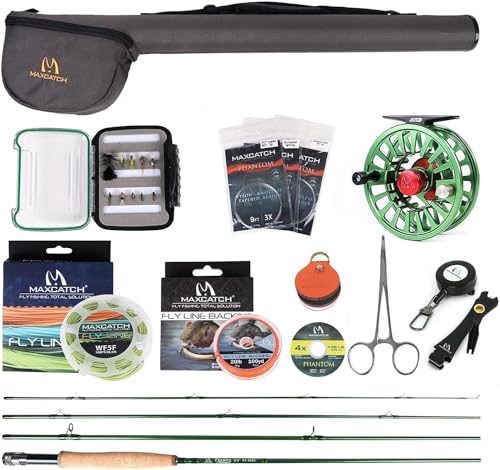
- ✓ Excellent casting distance
- ✓ Complete, ready-to-fish kit
- ✓ Lightweight & durable
- ✕ Small reel size
- ✕ Not for huge fish
| Rod Material | Pure IM8 30T carbon fiber with 5-layer construction including Reinforced Muscle carbon layer |
| Rod Action | Medium-fast |
| Reel Material | Aluminum CNC machined |
| Line Weight | 5 weight (5wt) |
| Line Length | 100 feet (ft) weight forward fly line |
| Additional Accessories | Includes tapered leaders, backing, tippet line, waterproof fly box, and fly fishing tools |
The moment I unwrapped this Maxcatch Premier Fly Fishing Combo, I noticed how thoughtfully everything was packed. The rod’s sleek black finish with subtle green accents instantly caught my eye, and holding it felt surprisingly lightweight yet sturdy in my hand.
The real game-changer was the feel of the rod during my first cast. Its medium-fast action made long-distance casting effortless, with smooth presentation even in tricky wind conditions.
I appreciated the slim taper design, which helped me control the line precisely without extra effort.
The CNC-machined aluminum reel was impressively smooth, and the disc drag system gave me confidence when fighting larger fish. The included fly line, tapered leaders, and backing made setup quick — I was casting within minutes.
The 10 hand-tied flies in the waterproof box offer a great variety for different fishing spots, and I loved how easy everything fit into the durable travel case.
Handling the combo on lakes and streams, I found the balance perfect. The Maxlinq II blank technology truly delivers on strength and weight reduction, making long hours of fishing more comfortable.
Plus, the accessories like forceps and nipper are solid additions that every angler needs.
If I had to pick a downside, the reel’s size is quite compact, which might be limiting for those who prefer larger reels for battling bigger fish. Still, for the price and features, this combo is a fantastic starter kit that also works well as a backup for more experienced anglers.
Which Freshwater Fish Are Best for Fly Fishing?
The best fish to catch on a fly rod include a variety of species that are known for their fighting ability and willingness to take flies.
- Trout: Trout are perhaps the most popular target for fly anglers, with species such as Rainbow, Brown, and Brook trout being widely sought after.
- Bass: Both Largemouth and Smallmouth bass are excellent fly fishing targets, known for their aggressive strikes and spirited battles.
- Panfish: Species like Bluegill and Crappie are ideal for beginners, offering abundant opportunities and a fun challenge on lighter tackle.
- Salmon: Salmon, particularly during their spawning runs, are a thrilling catch for fly fishermen due to their size and powerful fights.
- Steelhead: Steelhead, a migratory form of rainbow trout, provide a unique challenge and are prized for their acrobatic displays when hooked.
- Pike: Northern Pike can be fished with larger flies and offer an exciting experience with their aggressive nature and size.
- Carp: Carp are gaining popularity among fly anglers for their wariness and the challenge they present, requiring stealthy approaches and skillful presentations.
Trout are perhaps the most popular target for fly anglers, with species such as Rainbow, Brown, and Brook trout being widely sought after. They thrive in cold, clean waters and can be found in streams, rivers, and lakes, making them accessible to many anglers. Their varied feeding habits also allow for a range of fly patterns to be effective, from dry flies to nymphs.
Both Largemouth and Smallmouth bass are excellent fly fishing targets, known for their aggressive strikes and spirited battles. They inhabit a variety of waters, from lakes to rivers, and can be caught using a wide array of poppers and streamers. The thrill of hooking into a bass on a fly rod is further enhanced by their strong fight and tendency to leap out of the water.
Species like Bluegill and Crappie are ideal for beginners, offering abundant opportunities and a fun challenge on lighter tackle. These panfish are often found in schools, making it easier to catch multiple fish in a short amount of time. They are also readily available in many freshwater bodies, providing a great introduction to fly fishing.
Salmon, particularly during their spawning runs, are a thrilling catch for fly fishermen due to their size and powerful fights. They can be targeted in rivers and streams during specific seasons, and the challenge lies in matching the right patterns to their feeding behavior. The satisfaction of landing a salmon on a fly rod is a rewarding experience for any angler.
Steelhead, a migratory form of rainbow trout, provide a unique challenge and are prized for their acrobatic displays when hooked. They travel from the ocean to freshwater rivers to spawn, offering anglers the chance to catch them in both saltwater and freshwater environments. Their strong runs and jumps make them a favorite among fly fishermen seeking a thrilling experience.
Northern Pike can be fished with larger flies and offer an exciting experience with their aggressive nature and size. They are known for their toothy jaws and swift strikes, often requiring a quick reaction from the angler. Targeting pike involves using heavy tippets due to their sharp teeth, making the catch both challenging and exhilarating.
Carp are gaining popularity among fly anglers for their wariness and the challenge they present, requiring stealthy approaches and skillful presentations. Often found in shallow waters, they can be tricky to catch as they are highly aware of their surroundings. However, successfully hooking a carp on a fly rod can be incredibly rewarding, showcasing the angler’s skill and patience.
Why Is the Rainbow Trout a Top Choice for Fly Anglers?
Rainbow trout are highly regarded among fly anglers for several reasons:
-
Aggressive Feeding Behavior: Rainbow trout are known for their willingness to chase and strike at flies, making them an exciting target. Their active nature provides anglers with numerous opportunities throughout the day.
-
Diverse Habitats: Found in rivers, lakes, and streams across North America and beyond, rainbow trout inhabit a wide range of environments. This accessibility allows fly fishermen to pursue them in various locations, from remote mountain streams to urban lakes.
-
Variety of Fly Patterns: Rainbow trout are not picky eaters and will readily go after a wide array of flies. This versatility appeals to anglers, as they can experiment with different dry flies, nymphs, and streamers to find the most effective pattern.
-
Stunning Appearance: With their vibrant colors and distinct markings, rainbow trout are visually appealing, attracting anglers purely for the experience of catching this beautiful fish.
-
Catch and Release Potential: Many anglers practice catch and release with rainbow trout, promoting sustainable fishing practices. This allows for enjoyable fishing adventures while conserving fish populations for future generations.
These attributes, combined with their relative abundance, firmly establish rainbow trout as a top choice for fly rod enthusiasts.
What Makes Brown Trout a Challenging Yet Rewarding Catch?
Brown trout are considered one of the best fish to catch on a fly rod due to their challenging behavior and rewarding experience for anglers.
- Intelligence: Brown trout are known for their cunning behavior, making them more difficult to catch than other species.
- Variety of Habitats: They thrive in diverse environments, from streams to lakes, providing various fishing opportunities.
- Size and Fight: Brown trout can grow to impressive sizes and offer a strong fight, enhancing the thrill of the catch.
- Seasonal Patterns: Their feeding habits change with the seasons, requiring anglers to adapt their strategies for successful catches.
- Selective Feeding: Brown trout are often selective eaters, making it essential to match the hatch and use the right flies.
Intelligence: Brown trout possess a high level of intelligence and wariness, often quickly learning to avoid common lures or flies. This makes them a challenging target for anglers, who must use stealth and skill to outsmart these fish.
Variety of Habitats: Brown trout can adapt to a variety of habitats, including cold freshwater rivers, creeks, and lakes. This adaptability allows anglers to pursue them in different locations and settings, increasing opportunities for successful fishing trips.
Size and Fight: Brown trout are known for their substantial size, with some individuals reaching impressive weights. When hooked, they provide a vigorous fight, which adds excitement to the fishing experience and makes the catch feel even more rewarding.
Seasonal Patterns: The behavior and feeding patterns of brown trout change with the seasons, often correlating with water temperatures and food availability. Understanding these patterns allows anglers to tailor their approaches, such as using different flies or techniques depending on the time of year.
Selective Feeding: Brown trout are notorious for their selective feeding habits, often preferring specific types of prey based on the available food sources in their environment. This necessitates a keen understanding of entomology and the ability to match the hatch effectively, making successful catches a testament to an angler’s skill and knowledge.
How Can You Effectively Catch Bass on a Fly Rod?
The best fish to catch on a fly rod include species that are responsive to fly presentations and offer a thrilling experience for anglers.
- Bass: Bass are among the most popular freshwater species for fly fishing due to their aggressive feeding behavior and willingness to strike at various flies, including poppers and streamers.
- Trout: Trout are often considered the quintessential fly rod fish, with their preference for small, delicate flies mimicking insects and their tendency to inhabit clear, cold waters.
- Panfish: Species like bluegill and crappie are excellent targets for beginners, as they are abundant, easy to catch, and respond well to small nymphs and dry flies.
- Salmon: Salmon provide an exciting challenge for fly anglers, especially during their spawning runs, where larger streamers and egg patterns can attract their attention.
- Pike: Northern pike can be thrilling to catch on a fly rod with their aggressive strikes and powerful runs, making them ideal targets for larger, flashy streamers.
Bass are among the most popular freshwater species for fly fishing due to their aggressive feeding behavior and willingness to strike at various flies, including poppers and streamers. Their habitat in lakes, rivers, and ponds makes them accessible to fly anglers, and they are often found in shallow waters where they can be targeted effectively.
Trout are often considered the quintessential fly rod fish, with their preference for small, delicate flies mimicking insects and their tendency to inhabit clear, cold waters. They can be caught using various techniques, including nymphing, dry fly fishing, and streamers, making them a versatile choice for fly anglers across different environments.
Species like bluegill and crappie are excellent targets for beginners, as they are abundant, easy to catch, and respond well to small nymphs and dry flies. Their willingness to take a fly makes them a fun and rewarding option for those just starting out in fly fishing, providing ample opportunities to practice casting and retrieval techniques.
Salmon provide an exciting challenge for fly anglers, especially during their spawning runs, where larger streamers and egg patterns can attract their attention. Catching salmon on a fly rod requires specific techniques, often involving casting in river currents and understanding their migratory patterns, making it a rewarding experience for skilled anglers.
Northern pike can be thrilling to catch on a fly rod with their aggressive strikes and powerful runs, making them ideal targets for larger, flashy streamers. Their predatory nature means that fly anglers can expect exciting action when targeting pike, particularly in weedy or shallow areas where they hunt for prey.
What Are the Best Saltwater Fish to Catch on a Fly Rod?
The best saltwater fish to catch on a fly rod offer exciting challenges and rewarding experiences for anglers.
- Bonefish: Known for their speed and agility, bonefish are a popular target for fly anglers in shallow, sandy flats. They typically feed on crustaceans and small baitfish, making them responsive to well-presented flies that mimic their natural prey.
- Tarpon: Often referred to as the “silver king,” tarpon are renowned for their acrobatic fights and can grow quite large. They inhabit warm coastal waters and are best pursued during their migration periods when they gather in schools, providing ample opportunities for catch-and-release fishing.
- Redfish: Redfish, or red drum, are sought after for their strong fights and tendency to feed in shallow waters. They are often found near marshes, estuaries, and coastal flats, making them accessible to fly anglers looking to target them with shrimp and crab patterns.
- Permit: Considered one of the most challenging fish to catch on a fly rod, permit are known for their wariness and selective feeding habits. They can often be found in shallow waters near reefs or wrecks, and successful anglers must present their flies delicately and accurately to entice them.
- Striped Bass: Found along the Atlantic coast and in estuaries, striped bass are versatile predators that can be caught year-round. They are known for their aggressive strikes and can be targeted effectively during their spawning migrations in the spring and fall.
- Snook: Snook thrive in warm, coastal waters and are known for their strong, line-screaming runs. They are often found around structures such as mangroves, docks, and bridges, making them a thrilling target for fly fishing when using baitfish or shrimp patterns.
- Albacore: Albacore tuna are fast, powerful fish that provide a thrilling fight on the fly rod. Found in open ocean waters, they are often caught during their migrations and respond well to fast-moving baitfish imitations that mimic their natural prey.
What Techniques Are Effective for Catching Tarpon?
Effective techniques for catching tarpon on a fly rod include:
- Sight Fishing: This technique involves visually spotting tarpon in the water and casting to them directly. Anglers often use polarized sunglasses to reduce glare and enhance visibility, allowing them to identify feeding fish and present their flies in a natural manner.
- Using Streamers: Streamer flies mimic baitfish and can be very effective for enticing tarpon. A well-presented streamer that moves erratically in the water can trigger a predatory response, especially if retrieved at varying speeds to imitate injured prey.
- Popper Fishing: Poppers are surface flies that create noise and movement, drawing the attention of tarpon. The visual and auditory stimulation can provoke aggressive strikes, making this technique particularly effective during feeding frenzies, often seen during dawn and dusk.
- Drift Fishing: This technique involves allowing the fly to drift naturally with the current, which can be especially effective in areas where tarpon are migrating. By maintaining a natural presentation, anglers can increase the chance of a tarpon taking the fly as it flows with the water.
- Chumming: Some anglers use chumming to attract tarpon to a specific area before casting their flies. By creating a scent trail in the water, they can draw fish into the vicinity and improve the likelihood of a successful catch when the fly is presented.
How Do You Successfully Target Bonefish with Fly Fishing?
The best fish to catch on a fly rod include species that are both challenging and rewarding for anglers, with bonefish being a standout choice.
- Bonefish: Bonefish are known for their incredible speed and agility, making them a thrilling target for fly fishing enthusiasts.
- Trout: Trout are a popular choice due to their abundance in freshwater streams and rivers, offering various sizes and species to pursue.
- Tarpon: Tarpon are considered one of the most exciting species to catch on a fly rod because of their acrobatic jumps and strong fighting ability.
- Redfish: Redfish are a favorite among saltwater fly anglers for their accessibility and the challenging conditions they often present.
- Pike: Northern pike are predatory fish that provide a unique challenge on a fly rod due to their size and aggressive nature.
Bonefish: These fish are typically found in shallow coastal waters and are often targeted during low light conditions like dawn or dusk. Effective techniques for catching bonefish include using appropriate flies that mimic their natural prey, such as shrimp or crabs, and employing stealth to avoid spooking them in their shallow habitat.
Trout: They thrive in both still and flowing waters and can often be caught using dry flies, nymphs, or streamers, depending on the season and local conditions. Different species of trout, such as rainbow, brown, and brook trout, each have unique behaviors and habitat preferences, providing varied experiences for anglers.
Tarpon: Known for their size and strength, tarpon can be found in warm coastal waters and are often targeted during migration seasons. Fly fishing for tarpon requires specialized techniques and gear, as well as a good understanding of their feeding habits to present the fly effectively.
Redfish: Commonly found in estuaries and marshes, redfish are known for their willingness to take a fly, especially during feeding times. Anglers often use baitfish patterns and focus on areas with structure or grass flats where these fish hunt.
Pike: These aggressive predators are usually found in weedy lakes and rivers, and they respond well to large streamers and flashy patterns. Fly fishing for pike can be particularly exhilarating due to their ferocity when striking and the potential for landing trophy-sized fish.
What Factors Affect Fly Fishing Success for Different Fish Species?
Several factors influence fly fishing success for different fish species.
- Water Temperature: Different fish species thrive at specific water temperatures, which can affect their feeding habits and activity levels.
- Time of Year: Seasonal changes impact fish behavior, with certain species more active during specific times of the year.
- Weather Conditions: Weather can significantly influence fish activity, with cloud cover, wind, and precipitation affecting feeding patterns.
- Fly Selection: The type of fly used must match the natural prey of the target species, considering size, color, and movement.
- Location: The habitat and structure of the fishing area, such as rivers, lakes, or coastal regions, can determine which species are present and their feeding behaviors.
- Water Clarity: The clarity of the water impacts visibility for both fish and anglers, affecting the effectiveness of different flies.
Water temperature is crucial because it dictates the metabolism and activity levels of fish. For example, trout prefer cooler waters, while warm-water species like bass are more active in higher temperatures. Understanding these preferences helps anglers target specific species effectively.
Time of year also plays a vital role, as fish spawn in different seasons, affecting their behavior. For instance, many species are more aggressive during the spring and fall, when they are either preparing to spawn or feeding heavily before winter. This seasonal awareness allows anglers to optimize their fishing strategies.
Weather conditions can either enhance or hinder fishing success. Overcast days can often lead to increased activity for many species, as fish feel more secure and are likely to venture out to feed. Conversely, bright sunny days may force fish into deeper waters, requiring different tactics or fly choices.
Fly selection is essential to mimic the natural diet of the target species. Using a fly that resembles local insects or baitfish increases the chances of attracting fish. Matching the size, color, and movement of the fly to what fish are naturally feeding on is critical for success.
The fishing location also matters significantly, as certain areas are known for specific species. For instance, rivers with strong current may be home to trout, while still waters could be ideal for panfish. Understanding the characteristics of different fishing environments aids in targeting the right species.
Water clarity affects how fish see flies and how anglers present them. In clear water, fish may be more cautious and require more delicate presentations, while murky water can allow for bolder, more visible flies. Adjusting tactics based on water clarity is essential for maximizing catch rates.
Which Equipment Is Essential for Fly Fishing Various Species?
The essential equipment for fly fishing various species includes:
- Fly Rod: The fly rod is crucial for casting and controlling the line effectively.
- Fly Reel: The reel is necessary for storing the line and providing drag when fighting fish.
- Fly Line: Fly line is designed to float or sink, depending on the species targeted and fishing conditions.
- Leader and Tippet Material: These are important for connecting the fly to the line while maintaining invisibility to fish.
- Flies: The right flies mimic local aquatic insects and bait, making them essential for enticing fish.
- Waders: Waders are important for keeping dry and comfortable while fishing in cold water.
- Fishing Vest or Pack: A vest or pack keeps gear organized and easily accessible during a fishing trip.
- Net: A landing net is useful for safely catching and releasing fish without causing harm.
Fly Rod: The fly rod is typically lightweight and flexible, designed to cast delicate flies with precision. Different rods are suited for various species, with longer rods being better for larger fish and shorter ones for smaller species or confined spaces.
Fly Reel: The reel provides a means to store the line and helps manage the fight when a fish is hooked. It has a drag system that allows anglers to control the tension on the line, preventing breakage while still allowing fish to run.
Fly Line: Fly lines come in various types, including floating, sinking, and intermediate, each serving a specific purpose depending on the fishing environment. The weight and taper of the line also affect casting distance and accuracy, making it vital to choose the right line for the targeted species.
Leader and Tippet Material: Leaders are strong, transparent lines that connect the fly line to the fly, while tippet is a thinner section that is less visible to fish. Using the appropriate leader and tippet can significantly increase chances of success by providing a natural presentation of the fly.
Flies: Flies are artificial lures that imitate insects, baitfish, or other prey that fish feed on. Selecting the right type of fly, whether dry flies, nymphs, or streamers, is essential for matching the hatch and effectively catching targeted species.
Waders: Waders allow anglers to access deeper waters without getting wet, providing comfort and warmth in chilly conditions. They come in various materials and styles, including chest waders and hip waders, suitable for different fishing environments.
Fishing Vest or Pack: A fishing vest or pack offers storage for flies, tools, and other essentials, keeping everything organized while on the water. The right vest or pack can improve accessibility and convenience during fishing, allowing for quick changes of flies or adjustments.
Net: A landing net is designed to safely catch fish without damaging them, especially when catch-and-release fishing. Using a net minimizes stress on the fish and increases the likelihood of a successful release back into the water.
Related Post: