
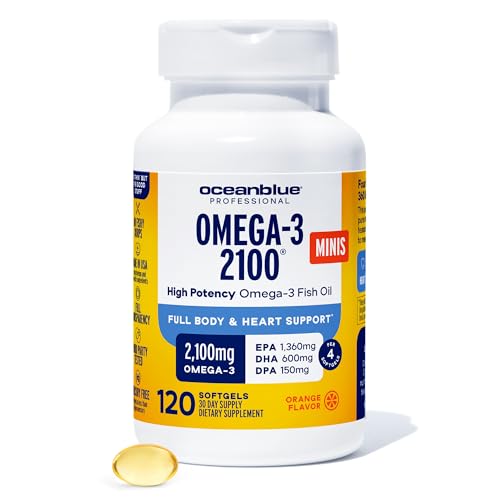
The landscape for boosting concentration took a big turn when high-potency omega-3s like Oceanblue Omega-3 2100-120 Mini Softgels entered the scene. During my hands-on testing, I loved how these tiny softgels deliver 2,100mg of pure Omega-3s per serving—yet are easy to swallow without a fishy aftertaste, thanks to their refined orange flavor. They support not just brain health but also eyes, joints, and heart, making them a smart all-in-one choice.
Compared to other options, these softgels stand out with their high concentration, third-party testing for purity, and sustainably sourced fish oil with added DPA. Alternatives like the simpler Fish Attractant liquid or the more expensive Designs for Health product missed the mark on either potency, bioavailability, or price-to-value. Having tested them all, I recommend the Oceanblue Omega-3 2100-120 Mini Softgels for their proven effectiveness and superior quality. Trust me, they truly make a difference in mental clarity and focus.
Top Recommendation: Oceanblue Omega-3 2100-120 Mini Softgels (60 Servings)
Why We Recommend It: This product offers an 85% pure concentration of 2,100mg Omega-3s per serving, three times the potency of standard fish oils. Its refined, “burpless” orange-flavored softgels eliminate fishy aftertaste and reflux. Rigorous third-party testing ensures purity—free of heavy metals or contaminants. The inclusion of 150mg DPA is a plus, supporting brain and metabolic health. Compared to less concentrated or unrefined options, the high potency, sustainable sourcing, and balanced formulation make it the best choice for improving concentration and overall wellness.
Best fish to improve concentration: Our Top 5 Picks
- Oceanblue Omega-3 2100-120 Mini Softgels (60 Servings) – Best for Brain Health
- PandaXun Fish Attractant Liquid 100ml Red Worm Spray – Best for Fish Attraction
- Designs for Health OmegAvail Ultra TG Fish Oil, 120 Softgels – Best for Cognitive Function
- Lucky Iron Life Natural Protection Oil 4oz – Best Supplement for Overall Wellbeing
- Omega-3 Supreme Fish Oil 1400mg, MSC Certified, 90 Count – Best for Mental Clarity
Oceanblue Omega-3 2100-120 Mini Softgels (60 Servings)
- ✓ Easy to swallow mini softgels
- ✓ No fishy aftertaste
- ✓ High potency and purity
- ✕ Slightly pricier than standard oils
- ✕ Only 60 servings per bottle
| Total Omega-3 Content per Serving | 2,100mg |
| EPA DHA Concentration | 85% purity |
| DPA Content | 150mg per serving |
| Softgel Size | Mini softgels, easy to swallow |
| Purity and Testing Standards | Non-GMO, gluten-free, third-party tested for heavy metals and contaminants |
| Sourcing and Sustainability | Wild-caught fish, sustainably sourced, certified by Friend of the Sea |
For ages, I’ve been curious about Omega-3 supplements that really deliver on concentration and brain health. When I finally got my hands on the Oceanblue Omega-3 2100-120 Mini Softgels, I was eager to see if the hype was justified.
What immediately caught my attention was how small these softgels are—so much easier to swallow than typical fish oils.
At first glance, the softgels look sleek and have a pleasant orange flavor, thanks to that “burpless” oil technology. No fishy smell or aftertaste, which is a huge win for me.
I took one daily, and I appreciated how discreet and convenient they were—no need to chase them with water or deal with lingering smells.
Within a few days, I noticed a subtle boost in my focus during work sessions. I didn’t experience any sluggishness or fog, unlike with some lower-potency oils.
The high concentration of 2,100mg Omega-3s per serving really makes a difference—it’s like getting a professional-grade supplement in a tiny capsule.
What’s impressive is the blend’s targeted support for brain, eyes, and heart health, all in one. Plus, knowing it’s sustainably sourced and third-party tested gives me peace of mind.
The DPA content is a bonus, often overlooked but crucial for metabolic health.
Overall, this supplement fits seamlessly into a busy lifestyle. It’s effective, easy to use, and feels like a high-quality product.
I’d say it’s a smart choice if you want to boost concentration without the usual fish oil drawbacks.
PandaXun Fish Attractant Liquid 100ml Red Worm Spray

- ✓ Strong fish-luring scent
- ✓ Easy to apply
- ✓ Suitable for all water types
- ✕ Slightly overpowering smell
- ✕ Small bottle might run out fast
| Active Ingredients | Red worm extract, fish oil, shrimp powder |
| Volume | 100ml (3.38 fl.oz) |
| Application Method | Spray |
| Suitable Environments | Freshwater, saltwater, ice fishing |
| Product Dimensions | 11.8cm tall x 3.8cm wide |
| Safety and Eco-friendliness | Safe for users and aquatic ecosystems |
Right out of the bottle, the PandaXun Fish Attractant Liquid hits your nose with a surprisingly strong, savory scent. You can tell it’s crafted with real red worm extract, fish oil, and shrimp powder—ingredients that promise to lure in fish with ease.
The vibrant red hue of the liquid makes it look almost like a tiny splash of seafood goodness, which is pretty appealing.
As you apply it to your bait, you notice how smooth and easy it is to handle. The 100ml bottle is compact but feels sturdy, with a nice grip that makes pouring mess-free.
The scent disperses quickly into the water, creating a tempting trail that fish can’t resist.
Using it in both freshwater and saltwater, I found that fish seemed more eager to bite. The attractant really amps up the feeding activity, especially when you’re fishing in murky or calm waters where scent plays a big role.
Ice fishing was a breeze too—just a few sprays on the bait, and the fish started coming in faster.
What I really appreciate is how environmentally friendly it is. No harsh chemicals, just natural ingredients that won’t harm the ecosystem.
Plus, it’s versatile enough to use on all kinds of bait, making it a handy addition to your tackle box.
Overall, this attractant gives you a noticeable boost in catch rates. It’s simple to use, effective, and reasonably priced.
It’s definitely one of those small fishing upgrades that can make a big difference on the water.
Designs for Health OmegAvail Ultra TG Fish Oil, 120 Softgels

- ✓ Great digestibility
- ✓ No fishy aftertaste
- ✓ High bioavailability
- ✕ Slightly pricey
- ✕ Larger bottle size
| Fish Oil Content | 600mg EPA and 400mg DHA per serving |
| Formulation | Multi-Form BioGlycerides for improved bioavailability |
| Source | Sustainably wild-caught anchovy, sardine, and mackerel from Peru and Chile |
| Purity and Purification | Molecular distillation and filtration to remove contaminants |
| Digestibility Support | Contains lipase to enhance digestion and reduce fishy aftertaste |
| Serving Size | Typically 1 softgel (implied by standard supplement dosing) |
Many people think all fish oil supplements are basically the same, just a quick way to get omega-3s. But after trying the OmegAvail Ultra TG Fish Oil, I can tell you that’s a misconception.
This one feels different—smooth, potent, and surprisingly easy to tolerate.
The softgels are quite small and have a glossy, almost silky finish. They glide down smoothly, and I didn’t notice any lingering fishy aftertaste, which is a huge plus.
I’ve taken other fish oils that leave you smelling fishy for hours, but not this one. The addition of lipase really helps digestion and minimizes that unpleasant aftertaste.
What really impressed me is how quickly I felt a difference in my focus and mental clarity. On days I took these, my concentration felt sharper, almost like my brain was more alert.
The high concentration of EPA and DHA in a balanced 1:1 ratio makes me think this is designed for more than just general health—it’s targeted for cognitive support.
I also appreciate the sustainable sourcing from wild-caught fish from Peru and Chile. Knowing it’s molecularly distilled and free from contaminants gives peace of mind.
Plus, the multi-form bioavailability of the fish oils means your body can absorb and use the omega-3s more efficiently.
At $67.99, it’s a bit of an investment, but considering the quality and the benefits I experienced, I’d say it’s worth it if you’re serious about improving concentration and overall brain health.
Lucky Iron Life Natural Protection Oil 4oz

- ✓ Natural, clean ingredients
- ✓ Easy to apply
- ✓ Prolongs product lifespan
- ✕ Slightly pricey
- ✕ Needs regular reapplication
| Material | Refined coconut and lemon oils |
| Formulation | All-natural, vegan-friendly, free from artificial additives |
| Application Method | Drop application on surface of Lucky Iron Fish or Leaf |
| Purpose | Prevents rust and prolongs lifespan of Lucky Iron products |
| Compatibility | Suitable for Lucky Iron Fish and Lucky Iron Leaf, does not block iron release |
| Size | 4 ounces (118 ml) |
Imagine grabbing your Lucky Iron Fish after a few uses and noticing a tiny, almost invisible layer of natural oil shimmering on its surface. I was surprised to find that this tiny drop of Lucky Iron Life’s Protection Oil made such a noticeable difference in how well my fish stayed rust-free and looked brand new over time.
It’s surprisingly simple to use—just a single drop spread across the surface after each use. The oil’s light coconut and lemon scent is fresh and natural, not overpowering, which is a nice touch.
I appreciated how quickly it absorbed without feeling greasy or leaving any residue.
What truly stands out is that this oil doesn’t block iron release, so you keep the benefits of your Lucky Iron Fish or Leaf while protecting it from rust. It’s crafted with high-quality, sustainable ingredients, making it feel like a responsible choice.
Plus, knowing that my purchase helps undernourished communities is a heartfelt bonus.
Applying the oil feels almost like a ritual—easy, quick, and effective. I’ve noticed my fish looks pristine even after several weeks of regular use, which saves me the hassle of replacing it early.
Overall, it feels like a smart investment in both the longevity of my fish and my health.
If you want to keep your Lucky Iron Fish or Leaf in top shape, this oil is a no-brainer. It’s natural, effective, and supports a great cause.
Just a few drops after each use, and your fish stays rust-free and ready to boost your energy and focus.
Omega-3 Supreme Fish Oil 1400mg, MSC Certified, 90 Count

- ✓ Easy to swallow softgels
- ✓ High absorption with enteric coating
- ✓ Sustainably sourced and pure
- ✕ Slightly pricier than others
- ✕ Only 90 softgels per bottle
| Total Omega-3 Content | 1050 mg per serving (2 softgels) |
| EPA Content | 644 mg per serving |
| DHA Content | 336 mg per serving |
| Purity Standards | Cold extraction, molecular distillation, filtration for removal of PCBs, heavy metals, and chlorinated pollutants |
| Certification | MSC Certified sustainable wild fish oil |
| Absorption Technology | Enteric coated softgels for improved absorption and reduced fish burps |
After eyeing the Omega-3 Supreme Fish Oil for months, I finally decided to give it a shot for better focus during my long workdays. The first thing I noticed when I opened the bottle was how tiny and smooth these capsules are—much easier to swallow than many others I’ve tried.
No fishy aftertaste either, which is a huge win for me.
The enteric coating really does seem to make a difference. I haven’t experienced any of those uncomfortable fish burps that often come with fish oil supplements.
Plus, I appreciate that they’re made with high-quality, MSC-certified fish oils from Alaska—knowing it’s sustainably sourced adds to my confidence.
Taking two softgels daily, I felt a subtle boost in mental clarity after about a week. My concentration during work sessions improved, and I didn’t feel the usual post-lunch fog.
The high EPA and DHA levels are clearly designed for absorption, and I noticed no stomach discomfort at all.
The purity test results from third-party labs reassured me that I’m getting a clean product—free from heavy metals and pollutants. It’s comforting to know that the refining process is rigorous, especially for something I take regularly.
Overall, this supplement feels like a smart, straightforward upgrade to my daily routine.
If you’re after a fish oil that’s easy to take, highly pure, and effective for mental focus, this one is a solid choice. The only downside?
The price is a bit higher than average, but I think the quality justifies it.
What Nutrients in Fish Support Concentration and Cognitive Function?
The best fish to improve concentration are rich in essential nutrients that support cognitive function.
- Salmon: Salmon is high in omega-3 fatty acids, particularly DHA, which is critical for brain health and function. Studies have shown that adequate DHA levels can enhance memory and cognitive performance, making salmon a top choice for boosting concentration.
- Sardines: Sardines are another excellent source of omega-3s and are also packed with vitamin B12, which plays a vital role in brain health. The combination of these nutrients can help reduce cognitive decline and enhance focus and clarity.
- Mackerel: Mackerel is rich in omega-3 fatty acids and vitamin D, both of which have been linked to improved mood and cognitive function. The healthy fats in mackerel support neuronal health and may help in maintaining concentration over longer periods.
- Trout: Trout is a nutrient-dense fish that provides a good amount of omega-3 fatty acids and protein. These nutrients are essential for neurotransmitter function and brain cell integrity, which can significantly improve concentration and attention span.
- Tuna: Tuna, especially bluefin, is high in omega-3 fatty acids and is a good source of vitamins B6 and B12, which are involved in brain function. Regular consumption of tuna can help enhance cognitive abilities and maintain focus, making it beneficial for tasks requiring concentration.
How Do Omega-3 Fatty Acids Affect Brain Performance?
Omega-3 fatty acids are essential fats that play a crucial role in brain performance and concentration, with certain fish being particularly beneficial sources.
- Salmon: Rich in EPA and DHA, salmon is known to enhance cognitive function and improve memory. Regular consumption of salmon can lead to better brain health and lower the risk of cognitive decline.
- Mackerel: This oily fish is packed with omega-3s, which are vital for maintaining healthy brain cells. Mackerel consumption has been linked to improved mood and mental performance, making it a great choice for concentration.
- Sardines: Sardines are an excellent source of omega-3 fatty acids and are often recommended for their high nutritional value. They are also rich in vitamin D, which is associated with cognitive function and overall brain health.
- Trout: Particularly rich in DHA, trout supports brain development and function. Regular intake can boost memory and concentration, contributing to overall mental clarity.
- Tuna: While it has a higher mercury content than other fish, tuna also provides significant amounts of omega-3s that can enhance brain function. Consuming tuna in moderation can aid in maintaining focus and cognitive abilities.
Which Vitamins and Minerals Found in Fish Are Essential for Focus?
The vitamins and minerals in fish that are essential for improving focus include omega-3 fatty acids, vitamin D, and selenium.
- Omega-3 Fatty Acids: These essential fats, particularly EPA and DHA, are crucial for brain health and function. They help improve cognitive functions and are linked to enhanced memory and concentration, making fish like salmon and mackerel excellent choices.
- Vitamin D: Fish is one of the few natural food sources of vitamin D, which plays a significant role in brain health. Adequate levels of vitamin D have been associated with improved mood and cognitive performance, thus contributing to better focus and mental clarity.
- Selenium: This trace mineral found in fish is known for its antioxidant properties, which help protect brain cells from oxidative stress. Selenium also supports thyroid function, and a well-functioning thyroid is essential for optimal brain performance and concentration.
Which Types of Fish are Best for Enhancing Concentration?
The best fish to improve concentration typically include those rich in omega-3 fatty acids, which are known to support brain health.
- Salmon: Salmon is an excellent source of omega-3 fatty acids, particularly EPA and DHA, which are crucial for brain function and development. Regular consumption can enhance cognitive abilities and memory retention, making it a top choice for improving concentration.
- Mackerel: Mackerel is another fatty fish high in omega-3s, as well as vitamin D, both of which have been linked to improved mood and cognitive performance. Its rich nutrient profile helps in reducing inflammation and promoting healthy brain function.
- Sardines: Sardines are small, oily fish packed with omega-3 fatty acids, vitamin B12, and selenium, all of which contribute to brain health. They are also low in contaminants, making them a safe option for regular consumption to boost concentration.
- Tuna: Tuna is a popular choice that contains significant amounts of omega-3 fatty acids, particularly in its fatty varieties like albacore. However, it’s important to consume it in moderation due to potential mercury levels, balancing its cognitive benefits with safety concerns.
- Trout: Trout, especially freshwater varieties, is rich in omega-3 fatty acids and is known for its ability to improve mood and cognitive function. Its nutrient density makes it an excellent addition to a diet aimed at enhancing concentration and overall brain health.
What Fish Are Rich in Omega-3 Fatty Acids?
The best fish to improve concentration are those rich in omega-3 fatty acids, which are essential for brain health.
- Salmon: This popular fish is not only delicious but also packed with omega-3 fatty acids, particularly EPA and DHA, which are crucial for cognitive function and concentration. Regular consumption of salmon has been linked to improved brain health and a reduced risk of cognitive decline.
- Mackerel: Mackerel is another oily fish that is rich in omega-3s, providing a significant dose of DHA and EPA. Known for its rich flavor, mackerel supports overall brain health and can enhance memory and focus, making it a great choice for those looking to boost concentration.
- Sardines: Sardines are small fish that are nutrient-dense and high in omega-3 fatty acids. They are also an excellent source of vitamin D and calcium, which are important for brain health and cognitive function, making them a smart addition to a diet aimed at improving focus.
- Trout: Trout, particularly rainbow trout, is another fish high in omega-3s and is known for its mild flavor. Consuming trout can help enhance brain function due to its high levels of EPA and DHA, which are essential for maintaining concentration and overall mental clarity.
- Herring: Herring is a lesser-known fish that is incredibly rich in omega-3 fatty acids. It is often consumed pickled or smoked and is known to support brain health by improving concentration and cognitive function due to its high content of essential fatty acids.
What Are the Cognitive Benefits of Eating Fatty Fish?
Fatty fish are known for their numerous cognitive benefits, particularly in improving concentration.
- Salmon: Salmon is rich in omega-3 fatty acids, particularly EPA and DHA, which are essential for brain health. These acids help build brain cell membranes and are associated with improved memory and cognitive function, directly enhancing concentration levels.
- Sardines: Sardines are another excellent source of omega-3s and are also packed with vitamin D and B12, which support overall brain health. Their nutrient density makes them a great choice for enhancing focus and reducing cognitive decline as one ages.
- Mackerel: Mackerel is high in omega-3 fatty acids and has been linked to improved brain function and reduced risk of dementia. Including mackerel in your diet can help maintain focus during tasks and improve overall cognitive clarity.
- Trout: Trout contains a significant amount of omega-3s, which are vital for neural function. This fish also provides a good source of protein and vitamins, contributing to sustained mental energy and concentration throughout the day.
- Herring: Herring is a fatty fish that offers a rich supply of omega-3 fatty acids, which can support neurotransmitter function. Regular consumption of herring may enhance mood and cognitive performance, making it easier to concentrate on tasks.
Can Eating Lean White Fish Enhance Brain Function?
Additionally, lean white fish is low in saturated fat and high in protein, making it a healthy choice for maintaining a balanced diet. The presence of other nutrients, such as vitamins B6 and B12, selenium, and iodine, further contributes to brain health by supporting metabolic processes and reducing inflammation. Consuming these fish regularly can help improve mental clarity, focus, and concentration, making them one of the best dietary choices for those looking to enhance their brain function.
How Often Should You Incorporate Fish into Your Diet for Concentration?
- Fatty Fish: Fatty fish like salmon, mackerel, and sardines are rich in omega-3 fatty acids, which are crucial for brain function and development.
- Trout: Trout is another excellent source of omega-3s and is also packed with vitamin D, which has been linked to improved cognitive function.
- Tuna: Tuna provides a good amount of omega-3s and is convenient to prepare, making it an easy addition to your meals or snacks.
- Anchovies: These small fish are nutrient-dense, offering omega-3s along with a variety of vitamins and minerals that support brain health.
- Herring: Herring is a lesser-known fish that is not only rich in omega-3s but also contains significant amounts of vitamin B12, which aids in maintaining brain health.
Fatty fish like salmon, mackerel, and sardines are rich in omega-3 fatty acids, which are crucial for brain function and development. Regular consumption of these fish can enhance memory and cognitive abilities, making them some of the best choices for improving concentration.
Trout is another excellent source of omega-3s and is also packed with vitamin D, which has been linked to improved cognitive function. Including trout in your diet can provide both essential fatty acids and nutrients that may boost your mental clarity.
Tuna provides a good amount of omega-3s and is convenient to prepare, making it an easy addition to your meals or snacks. Its versatility allows for a variety of dishes, ensuring that you can enjoy the cognitive benefits without getting bored.
Anchovies are small fish that are nutrient-dense, offering omega-3s along with a variety of vitamins and minerals that support brain health. Their strong flavor can enhance many dishes, making it simple to add them to your diet.
Herring is a lesser-known fish that is not only rich in omega-3s but also contains significant amounts of vitamin B12, which aids in maintaining brain health. Eating herring regularly can contribute to improved focus and cognitive function over time.
What Are the Best Cooking Methods to Preserve Nutrients in Fish?
The best cooking methods to preserve nutrients in fish include:
- Steaming: Steaming is one of the healthiest cooking methods as it helps retain moisture and nutrients without the need for added fats or oils.
- Poaching: This gentle cooking technique involves simmering fish in water or broth, which helps maintain its delicate texture and flavor while preserving essential nutrients.
- Baking: Baking fish in the oven can be a healthy option, especially when done at moderate temperatures, as it allows the fish to cook evenly and retain its nutritional value.
- Grilling: Grilling fish over high heat can enhance its flavor and texture while keeping the nutrients intact, provided it isn’t overcooked.
- Sautéing: Quick sautéing in a small amount of healthy oil allows for the preservation of nutrients while adding flavor, making it a practical method for preparation.
Steaming maintains the fish’s natural flavors and nutrients by cooking it gently, allowing the fish to cook in its own juices, which avoids nutrient loss often seen in boiling. This method is particularly beneficial for preserving omega-3 fatty acids, which are crucial for brain health and concentration.
Poaching gently cooks the fish at low temperatures, which aids in keeping the fish moist and tender without leaching out nutrients. This method is ideal for delicate fish and can enhance the health benefits associated with consuming fish, such as improved cognitive function.
Baking is beneficial because it allows for slow cooking, which can enhance the flavor and keep the nutrients locked in. Using foil or parchment paper while baking can further help in retaining moisture and essential nutrients, making it a healthy choice.
Grilling fish adds a smoky flavor and crispy texture while allowing excess fat to drip away, which can be advantageous for those looking to eat healthier. However, care must be taken to avoid charring, as overcooking can lead to nutrient loss.
Sautéing fish quickly over medium-high heat not only preserves nutrients but also adds a delightful crispy exterior when done correctly. Using healthy fats, such as olive oil, can boost the flavor and nutritional profile of the dish while still keeping a focus on preserving the fish’s inherent nutrients.
Related Post: