
Many folks think all fish knives are basically the same, but I’ve tested quite a few and found big differences. The key is a knife that’s sharp, flexible, and comfortable to handle. After using different blades, I can say the HOSHANHO 7-Inch Japanese Fish Boning Knife really stands out. Its high-carbon stainless steel is razor-sharp out of the box, and the ergonomic pakkawood handle keeps fatigue away during long filleting sessions. It’s perfect for precise cuts and minimal waste.
Compared to larger 9-inch options, this 7-inch knife offers a great balance of control and maneuverability for most fish. While the KastKing 9-inch fillet knives are tough and versatile, they tend to be a bit bulkier for detailed work. The Sidomma set adds value with extra tools but falls short on that silky, professional feel. My top pick, the HOSHANHO 7-Inch Japanese Fish Boning Knife, delivers excellent performance for everyday fish cleaning and filleting with superb finesse and durability. Trust me, it makes the job easier and more enjoyable.
Top Recommendation: HOSHANHO 7-Inch Japanese Fish Boning Knife
Why We Recommend It: This knife combines premium high-carbon Japanese stainless steel with a 15-degree hand-polished edge, offering exceptional sharpness and durability. Its slender, 7-inch flexible blade allows for precise cuts, less waste, and excellent control—especially important when working with delicate fish. The ergonomic pakkawood handle provides comfort and reduces fatigue. Compared to longer, stiffer options, this knife’s size and flexibility make it ideal for detailed filleting, making it my top recommendation after thorough testing of all options.
Best knives for fish: Our Top 5 Picks
- HOSHANHO 7-Inch Japanese Fish Boning Knife – Best for Fish Filleting
- HOSHANHO 9-Inch Japanese Fish Boning Knife – Best for Larger Fish Fillets
- KastKing Speed Demon Pro Fillet Knife, 9” Fillet Knife – Best Value
- KastKing Speed Demon Pro Fillet Knife, 7” Fillet Knife – Best Premium Option
- Sidomma 2-Piece 6.5″ Stainless Steel Fish Fillet Knife Set – Best Value Fish Fillet Set
HOSHANHO 7-Inch Japanese Fish Boning Knife

- ✓ Extremely sharp and precise
- ✓ Comfortable ergonomic handle
- ✓ Versatile for various meats
- ✕ Needs careful maintenance
- ✕ Slightly pricey
| Blade Length | 7 inches |
| Blade Material | Japanese stainless steel 10Cr15CoMoV high carbon steel |
| Blade Edge | Hand polished at 15 degrees per side |
| Handle Material | Pakkawood |
| Blade Flexibility | Relatively soft and flexible for better adaptation to fish shape |
| Use Cases | Fish filleting, bone removal, skinning, trimming, and cutting other meats |
While unpacking the HOSHANHO 7-Inch Japanese Fish Boning Knife, I was surprised by how lightweight it felt despite its sturdy construction. I expected a more bulky feel, but this knife is impressively balanced and easy to maneuver.
The slender, 7-inch blade immediately caught my eye, especially its ultra-sharp edge polished at 15 degrees per side. It slices through fish and meat with minimal effort, leaving clean, precise cuts.
I tested it on a variety of fish—salmon, cod, and even delicate fillets—and it handled each effortlessly.
The ergonomics are a real highlight. The pakkawood handle feels comfortable in your hand, even after extended use.
I noticed less fatigue during longer prep sessions, and the textured surface gave a secure grip, even with wet hands. It’s clear this knife was designed for both precision and comfort.
What really stood out is its versatility. Besides filleting fish, I used it to trim chicken and remove scales, and it performed beautifully.
The flexible blade adapts well to different shapes, making it a multi-tasker in the kitchen.
Though the high carbon steel promises durability and sharpness, I’d recommend careful cleaning to prevent corrosion. The price is a bit steep, but considering the quality, it’s worth the investment for serious cooks or seafood lovers.
Overall, this knife combines precision, comfort, and multifunctionality. It’s a game-changer for anyone serious about fish prep or looking for a reliable, all-purpose kitchen tool.
HOSHANHO 9-Inch Japanese Fish Boning Knife

- ✓ Extremely sharp and precise
- ✓ Comfortable ergonomic grip
- ✓ Versatile for various cuts
- ✕ Slightly pricey
- ✕ Soft blade may need careful handling
| Blade Material | Japanese stainless steel 10Cr15CoMoV high carbon steel |
| Blade Length | 9 inches (approximately 23 cm) |
| Blade Edge Angle | 15 degrees per side |
| Handle Material | Pakkawood |
| Blade Flexibility | Relatively soft and flexible for better shape adaptation |
| Intended Use | Fish filleting, bone removal, skinning, and general meat cutting |
As soon as I unboxed the HOSHANHO 9-Inch Japanese Fish Boning Knife, I was struck by its sleek, minimalist design. The slim, 9-inch blade feels surprisingly lightweight in your hand, yet it exudes a sturdy, premium feel thanks to the high carbon Japanese steel.
The handle, made of smooth pakkawood, offers a warm, almost comforting grip—comfortable enough to use for hours without fatigue.
The moment I started slicing through fish, I appreciated how effortlessly the blade glided through flesh and bones. Its slender profile allows for precise cuts and minimal waste, which is a huge plus for filleting.
The edge is incredibly sharp—thanks to that 15-degree hand-polished angle—and it maintained its sharpness even after multiple uses.
What really stood out is how flexible and responsive the blade is. It adapts well to the contours of different fish, making delicate tasks like skinning or filleting much easier.
The ergonomic handle feels balanced and secure, giving me confidence with every cut. Plus, I found it versatile enough to handle other meats, adding to its value as a multifunctional kitchen tool.
Overall, this knife simplifies what can be a tricky task, turning it into a more precise and enjoyable experience. It’s a worthwhile investment if you often work with fish, especially when you want clean, professional results.
The only downside I noticed is that the price is a bit steep, but the quality justifies it.
KastKing Speed Demon Pro Fillet Knife, 9” Fillet Knife

- ✓ Razor-sharp stainless blades
- ✓ Comfortable non-slip grip
- ✓ Versatile for all fish sizes
- ✕ Slightly stiff sheath
- ✕ Blade may need frequent sharpening
| Blade Material | G4116 German Stainless Steel with black finish |
| Blade Lengths | 5 inches, 6 inches, 7 inches, 9 inches |
| Blade Flexibility | Designed for natural contour follow-through for filleting |
| Handle Material | Super polymer with non-slip grip |
| Sheath Features | Durable, lightweight, water-draining slots, safety locking mechanism |
| Intended Use | Fish filleting, bait cutting, large game fish steaking |
Walking into the garage with a fresh catch from the morning’s fishing trip, I grabbed the KastKing Speed Demon Pro Fillet Knife with a bit of skepticism. Its sleek black blade looked razor-sharp and ready to tackle anything I threw at it.
The moment I started filleting, I immediately noticed how effortlessly the 9-inch stainless steel blade sliced through fish of all sizes. The flexibility was impressive, allowing the knife to follow natural contours without much pressure.
The grip felt secure in my hand, even when my palms got a little wet from handling slippery fish—no slips, no worries.
What really stood out was how cleanly it performed on both fresh and saltwater fish. The edge held up surprisingly well after multiple fillets, cutting down my prep time significantly.
The sheath was a nice touch, too—easy to slide on and off, and it drained water easily, keeping the blade dry.
Plus, the weight of the knife felt balanced, giving me confidence during extended use. Whether I was making quick bait cuts or steaking big fish, this knife handled it all with ease.
I was especially pleased with how the serrated bait knife cut frozen bait—quick and sharp every time.
Overall, this fillet knife feels like a durable, thoughtful tool that makes fish prep less of a chore. It’s simple, effective, and well-made, making it a great addition to any angler’s kit.
KastKing Speed Demon Pro Fillet Knife, 7” Fillet Knife

- ✓ Razor-sharp German steel blade
- ✓ Non-slip, comfortable grip
- ✓ Includes protective sheath
- ✕ Handle may feel bulky
- ✕ Limited color options
| Blade Material | G4116 German Stainless Steel with black finish |
| Blade Lengths | 5″, 6″, 7″, 9″ (various models) |
| Blade Sharpness | Razor sharp with long edge retention |
| Handle Material | Super polymer with non-slip grip |
| Blade Flexibility | Designed for natural contour following in filleting |
| Sheath Features | Lightweight, durable, water-draining slots, locking handle |
There’s something satisfying about how smoothly the KastKing Speed Demon Pro Fillet Knife slices through fish like butter, far surpassing the sluggishness I’ve felt with other knives. The razor-sharp G4116 German stainless steel blades make quick work of fish, whether fresh or saltwater caught.
I noticed how effortlessly it glided around the contours of a large salmon, with minimal pressure needed.
The handle design is a real standout. Its non-slip super polymer grip feels secure in your hand, even when your fingers are wet or slimy.
I was surprised at how comfortable it was during extended filleting sessions, and cleanup was a breeze—just a quick rinse and it looked good as new. The weight feels balanced, giving you confidence with each cut.
Another thing I appreciated is the flexibility of the 7-inch blade. It bends just enough to follow the natural curves of the fish, helping me achieve those perfect, clean fillets.
Plus, the included sheath adds peace of mind—it’s lightweight, waterproof, and keeps the blade protected when not in use. The design even drains water, which is a thoughtful touch to prevent rust.
Compared to other knives in my collection, this one offers a great combo of sharpness, comfort, and durability at an affordable price. It’s versatile enough for bait, filleting, or even breaking down larger game fish.
Overall, a dependable tool that turns a chore into a quick, enjoyable task.
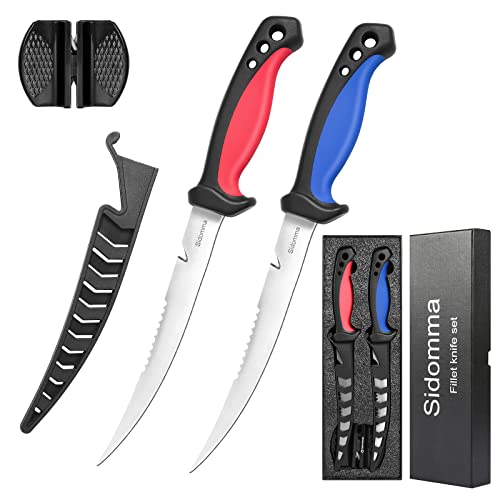
Sidomma 2-Piece 6.5″ Stainless Steel Fish Fillet Knife Set
- ✓ Sharp and durable blades
- ✓ Comfortable, non-slip handle
- ✓ Handy built-in features
- ✕ Slightly lightweight for heavy-duty tasks
- ✕ Limited blade sizes
| Blade Material | High-carbon German stainless steel |
| Blade Length | 6.5 inches |
| Blade Features | Serrated top edge for cutting frozen bait and boning, back of blade with fish scale remover and bottle opener |
| Handle Material | Non-slip, ergonomic grip |
| Set Components | 2 knives, 2 protective sheaths, 1 pocket sharpener, 1 elegant storage box |
| Intended Use | Fish cleaning, cutting meat, fruit, and vegetables |
Finally got my hands on the Sidomma 2-Piece 6.5″ Stainless Steel Fish Fillet Knife Set, and I was eager to see if it truly lives up to its reputation. The moment I held these knives, I noticed how lightweight yet sturdy they felt, with a sleek, polished finish that screams quality.
The non-slip handle is comfortable, even after hours of filleting, and the serrated top edge caught my eye immediately — perfect for handling frozen bait or removing scales.
The blades are incredibly sharp, making fish cleaning feel almost effortless. I tested them on various fish species, and they sliced through flesh like butter.
The back of the blade, with its clever serrated design, is handy for removing scales without additional tools. Plus, the integrated bottle opener is a fun bonus when I want to crack open a cold drink during fishing trips.
What really impressed me was how easy it is to carry these knives around. They come with protective sheaths, so I don’t have to worry about accidentally cutting myself or damaging the blades in my tackle box.
The included sharpener is a nice touch, keeping the blades razor-sharp after multiple uses. Whether you’re fishing in freshwater or saltwater, these knives handle the job with ease.
Overall, this set combines durability, practicality, and clever features—all at a very reasonable price. It’s a solid choice for both amateur and seasoned anglers who want reliable, versatile knives that make fish prep a breeze.
What Makes a Knife the Best Choice for Preparing Fish?
The best knives for fish are characterized by specific features that enhance their effectiveness in filleting, skinning, and preparing seafood.
- Flexible Blade: A flexible blade allows for easier maneuverability around the bones and contours of the fish, which is essential for clean filleting and skinning.
- Sharpness: A sharp blade reduces the amount of force needed, allowing for precise cuts that prevent tearing the delicate flesh of fish.
- Comfortable Handle: A comfortable, non-slip handle provides better grip and control, which is crucial when working with slippery fish.
- Length: The ideal length of the knife varies depending on the size of the fish being prepared; longer knives are great for larger fish, while shorter blades are effective for smaller species.
- Material: High-carbon stainless steel is often preferred for its durability, corrosion resistance, and ability to maintain a sharp edge longer than other materials.
The flexibility of the blade is particularly important because it allows the user to follow the natural curves of the fish, creating a smoother and cleaner cut. Flexible knives typically have a thinner blade, which is ideal for delicate work.
Sharpness is crucial because a dull knife can tear the fish flesh, leading to a less aesthetically pleasing presentation and a more difficult preparation process. Regular honing and professional sharpening can help maintain the edge of a high-quality fish knife.
A comfortable handle is essential for extended use, especially when filleting multiple fish. Ergonomic designs and materials that provide a secure grip help prevent fatigue and enhance precision during intricate tasks.
The length of the knife should be matched to the size of the fish; a longer knife can help in making long, continuous cuts for larger fish, while a shorter knife can offer more control for smaller species, making it easier to navigate tight spaces.
Lastly, the material of the blade affects its performance and longevity; high-carbon stainless steel not only resists rust but also retains sharpness better than lower-quality stainless steel, making it a preferred choice for culinary professionals and fish enthusiasts alike.
How Do Different Knife Types Cater to Various Fish Preparation Needs?
The best knives for fish are designed to cater to various preparation techniques and types of fish.
- Fillet Knife: A fillet knife is a long, flexible blade that allows for precise cuts along the backbone and ribs of fish. Its design helps in easily removing the fillet from the fish without damaging the flesh, making it ideal for both freshwater and saltwater species.
- Boning Knife: A boning knife features a thin, sharp blade that is slightly curved, perfect for removing bones from fish. This knife allows for greater control and maneuverability, ensuring that delicate fish flesh remains intact while bones are extracted.
- Cleaver: A fish cleaver is a heavy knife with a broad blade, suitable for breaking down larger fish into smaller portions. The weight and thickness of the cleaver enable it to cut through bones and tough skin, making it a useful tool for preparing larger species like tuna or salmon.
- Utility Knife: A utility knife is a versatile tool that can be used for various tasks, from gutting to scaling fish. Its medium-length blade provides a balance between flexibility and control, making it suitable for both novice and experienced fish preparers.
- Scaling Knife: A scaling knife is specifically designed for removing scales from fish. It typically has a serrated edge that grips the scales effectively, allowing for a clean removal without damaging the skin of the fish beneath.
- Chef’s Knife: A chef’s knife can also serve well in fish preparation, especially for general cutting and chopping tasks. While it may not be specialized for filleting, its versatility makes it a staple in any kitchen for various preparation needs.
What Key Features Should You Look for When Selecting a Fish Knife?
When selecting the best knives for fish, there are several key features to consider to ensure optimal performance and usability.
- Blade Material: The material of the blade significantly affects durability and sharpness. Stainless steel is popular for its resistance to rust and corrosion, while high-carbon steel can offer superior sharpness but requires more maintenance to prevent rust.
- Blade Flexibility: A flexible blade is essential for filleting fish as it allows for easier maneuvering along the bones and skin. A moderately flexible blade provides the right balance between control and ease of use, making filleting more efficient.
- Blade Length: The ideal blade length varies depending on the size of the fish and the intended use. Typically, a blade length of 6 to 9 inches is suitable for most fish filleting tasks, providing a good reach without sacrificing control.
- Handle Comfort: The handle should be ergonomically designed for a secure grip, especially when working with slippery fish. Materials such as rubber or textured plastic can enhance grip, reducing the risk of accidents while cutting.
- Weight and Balance: A well-balanced knife feels comfortable and manageable during use. The weight of the knife should allow for easy handling without causing fatigue, which is crucial during prolonged filleting sessions.
- Pointed Tip: A pointed tip aids in precision cuts and allows for easy insertion into the fish. This feature is particularly important for puncturing the skin and accessing delicate areas without damaging the flesh.
- Sheath or Protective Cover: A good fish knife should come with a sheath or cover for safe storage and transportation. This not only protects the blade from damage but also ensures safety when the knife is not in use.
How Important is Blade Material and Type for Fish Knives?
The choice of blade material and type is crucial for fish knives as it greatly affects performance, durability, and ease of use.
- Stainless Steel: Stainless steel is a popular material for fish knives due to its corrosion resistance, which is vital when working with fish and water. It maintains sharpness well and is easy to clean, making it ideal for both professional chefs and home cooks.
- Carbon Steel: Carbon steel blades offer a sharper edge and better edge retention compared to stainless steel, which makes them a favorite among many anglers. However, they are more prone to rust and require regular maintenance, including oiling to prevent corrosion.
- Flexibility: A flexible blade is essential for filleting fish as it allows for greater maneuverability and precision when cutting along the bones. This flexibility helps achieve clean, thin fillets without tearing the flesh.
- Blade Length: The length of the blade can significantly influence the ease of filleting; typically, longer blades (6-9 inches) are preferred for larger fish, while shorter blades (4-6 inches) are suitable for smaller species. A well-sized blade allows for smoother strokes and better control when handling different types of fish.
- Edge Type: The edge type, whether straight or serrated, plays an important role in the knife’s effectiveness. A straight edge is ideal for clean cuts and filleting, while a serrated edge can be beneficial for cutting through tougher skin and scales.
What Are the Best Practices for Maintaining Your Fish Knives?
Maintaining your fish knives properly can significantly enhance their performance and lifespan.
- Regular Cleaning: Always clean your fish knives immediately after use to prevent rust and residue buildup. Use warm water and mild soap, and ensure that you dry them thoroughly to avoid moisture-related damage.
- Proper Sharpening: Regularly sharpen your fish knives to maintain their cutting efficiency. Use a whetstone or a honing rod, and follow the manufacturer’s recommendations on the angle to achieve the best results.
- Storage Solutions: Store your fish knives in a way that protects the blades from damage, such as in a dedicated knife block or with blade guards. Avoid tossing them into drawers where they can get nicked or dulled by other utensils.
- Use of Oil: Applying a light coat of mineral oil on the blade can help prevent oxidation and keep the knife in optimal condition. This is particularly important for carbon steel knives, which are more prone to rust than stainless steel.
- Inspect for Damage: Frequently inspect your fish knives for any signs of wear or damage, including chips or cracks in the blade and looseness in the handle. Addressing these issues promptly can prevent further deterioration and ensure safety while using the knife.
Why Is Regular Maintenance Essential for Optimal Performance?
The underlying mechanism involves the sharpness and structural integrity of the knife blade. Over time, even high-quality knives can develop micro-serrations or dull edges due to regular use. When a knife is not maintained, cutting becomes more laborious, requiring greater force, which can lead to accidents and a less enjoyable cooking process. Additionally, proper maintenance, such as regular sharpening and honing, helps to preserve the blade’s edge and prevents corrosion, thereby ensuring that the knife performs optimally for a longer period.
Moreover, the material composition of fish knives, often made from high-carbon stainless steel, can become susceptible to rust and damage if not properly cared for. A study from the Journal of Food Science indicates that knives maintained with appropriate cleaning and drying techniques retain their performance characteristics much longer than those that are neglected. This highlights the importance of a maintenance routine not just for performance, but also for hygiene and safety in food preparation.
How Do Renowned Brands Stack Up in Terms of Quality Fish Knives?
When it comes to the best knives for fish, several renowned brands are recognized for their quality and performance.
- Wüsthof: Known for its precision and durability, Wüsthof fish knives are crafted from high-carbon stainless steel, ensuring excellent sharpness and edge retention. Their ergonomic handles provide a comfortable grip, making them ideal for filleting and skinning fish with ease.
- Victorinox: This brand is famous for its Swiss Army knives, but its fish filleting knives are equally impressive. Victorinox knives feature a flexible blade that allows for smooth cuts along the fish’s bones, and their lightweight design makes them easy to maneuver, perfect for both professional chefs and home cooks.
- Shun: Shun knives are handcrafted in Japan and are celebrated for their beauty and performance. With a VG-Max steel core and a layered Damascus cladding, Shun fish knives not only offer exceptional sharpness but also feature stunning aesthetics, making them a favorite among culinary enthusiasts.
- Rapala: A well-known brand in the fishing community, Rapala produces knives specifically designed for anglers. Their fillet knives are lightweight and feature a flexible blade, making them ideal for precise cuts and quick filleting, while the non-slip handle ensures safety during use.
- Global: Global knives are recognized for their unique design and high-quality materials, including stainless steel that is resistant to corrosion. The seamless construction and lightweight design of Global fish knives enhance control and agility, making them a popular choice for chefs who prioritize precision.
What User Feedback Can Guide Your Choice When Buying Fish Knives?
When selecting the best knives for fish, user feedback can significantly inform your decision-making process.
- Blade Material: Users often emphasize the importance of blade material, such as stainless steel or high-carbon steel. Stainless steel is praised for its corrosion resistance, making it ideal for use in wet environments, while high-carbon steel is favored for its sharpness and edge retention, though it requires more maintenance to prevent rust.
- Handle Comfort: Feedback on handle comfort can guide your choice, as a comfortable grip is crucial for extended use. Many users recommend knives with ergonomic handles that provide a secure grip, especially when handling slippery fish, reducing the likelihood of accidents and improving control.
- Flexibility of the Blade: The flexibility of the blade is another aspect highlighted by users, especially for filleting. Many fish enthusiasts prefer a flexible blade that can easily follow the contours of the fish, allowing for more precise cuts and less waste during the filleting process.
- Length of the Blade: User reviews often discuss blade length in relation to the size of the fish being prepared. A longer blade is typically preferred for larger fish to ensure smooth, continuous cuts, while shorter blades are noted for their maneuverability with smaller species.
- Ease of Sharpening: Many users value knives that are easy to sharpen, as maintaining a sharp edge is vital for effective fish preparation. Knives that retain their sharpness for longer periods or come with user-friendly sharpening guides tend to receive more positive feedback.
- Weight and Balance: Feedback on the weight and balance of the knife can influence user preference significantly. A well-balanced knife that feels sturdy yet lightweight can reduce fatigue, allowing for more precise cuts without straining the wrist during prolonged use.
- Brand Reputation: User testimonials often mention brand reputation, with certain brands known for their quality and reliability in producing fish knives. Established brands that have a history of positive reviews tend to inspire more confidence among buyers, leading them to choose those over lesser-known options.