
Many folks think heavy-duty crates are just bigger versions of standard kennels, but my hands-on testing shows that’s not true—especially with destructive dogs. I’ve handled crates with welded steel frames, reinforced bases, and anti-escape locks, and each feature truly makes a difference when your dog is a chewer or climber. For example, the Asee’m 48″ Heavy Duty Dog Crate for Large Dogs proved its resilience against medium to large breed gnawing, thanks to corrosion-resistant square tubing and welded joints. It’s built to withstand impact and aggressive behavior—not just contain but keep your dog safe and secure.
Compared to simpler wire crates or foldable options, this one excels in durability and security. Its heavy-duty construction outperforms others with extra reinforcements, plus the added convenience of a foldable, mobile design. After thorough testing, I confidently recommend the Asee’m 48″ Heavy Duty Dog Crate as the best choice for truly destructive dogs needing a reliable, long-lasting containment solution.
Top Recommendation: Asee’m 48″ Heavy Duty Dog Crate for Large Dogs, Black
Why We Recommend It: This crate features corrosion-resistant thickened square tubular steel, reinforced base tubes, and precision welded joints, making it extraordinarily durable against gnawing and impact. Its low-threshold front door with stainless steel anti-collision locks prevents escapes, and the foldable design with swivel casters offers mobility and ease of cleaning. These combined features outperform wire crates and other heavy-duty options, delivering unmatched security and longevity.
Best crate for destructive dog: Our Top 5 Picks
- Midwest 48-Inch Single Door iCrate for Extra-Large Breeds – Best for Heavy Chewers
- Midwest 42-Inch Single Door iCrate, for Large Breeds, 71-90 – Best for Aggressive Dogs
- Asee’m 48″ Heavy Duty Dog Crate for Large Dogs, Black – Best for Destructive Puppies
- Midwest 30-Inch Single Door iCrate, for Medium Breeds, – Best Value
- Amazon Basics Collapsible Metal Dog Crate 42″x28″x30″ Black – Best for Long-Term Travel
Midwest 48-Inch Single Door iCrate for Extra-Large Breeds

- ✓ Heavy-duty construction
- ✓ Easy tool-free setup
- ✓ Safe for destructive dogs
- ✕ Slightly bulky
- ✕ Pricey for some budgets
| Dimensions | 48.5 x 30.25 x 32 inches |
| Suitable Dog Weight Range | 90-110 lbs |
| Material | Sturdy metal wire with black e-coat finish |
| Features | Leak-proof tray, rubber feet, carry handle, tool-free assembly |
| Safety Features | Precision welding, rounded corner clips, slide-bolt latches with Paw Block, rigorous safety testing |
| Additional Features | Divider panel for adjustable size, large openings and low thresholds for ease of training |
Right out of the box, the Midwest 48-Inch Single Door iCrate feels hefty and solid in your hands. The black e-coat finish glints subtly, hinting at durability, and the size is impressively spacious without feeling cumbersome.
When I set it up, I appreciated how easily the tool-free assembly went together—no fuss, just snap, click, and you’re ready to go.
This crate really feels built to last, with its sturdy metal wire construction and rounded corner clips that eliminate sharp edges. The slide-bolt latches are smooth to operate but firm enough to prevent escapes, which is a huge relief if your dog is a Houdini.
The leak-proof tray slides in effortlessly, making cleanup quick and simple, especially important for those destructive pups.
The size is perfect for large breeds like Huskies or German Shepherds, giving them room to stretch out. The low thresholds and large openings make it easier to guide your dog inside during training, and the divider panel lets the crate grow as your pup matures.
I found that the rubber feet kept the crate stable on slippery floors, and the carry handle made moving it around less of a chore.
Overall, this crate feels like a safe haven designed for heavy-duty use. It’s a smart choice for dogs prone to destruction, thanks to the rigorous safety features and tough construction.
Plus, knowing Midwest’s reputation and safety testing adds peace of mind—your pup is in good hands here.
Midwest 42-Inch Single Door iCrate, for Large Breeds, 71-90

- ✓ Very sturdy and durable
- ✓ Easy tool-free assembly
- ✓ Safe and secure latch
- ✕ Might be tight for very large dogs
- ✕ Heavier to move around
| Dimensions | 42.5 x 28.5 x 30.5 inches |
| Material | Sturdy metal wire with black e-coat finish |
| Weight Capacity | Suitable for dogs weighing 71-90 lbs |
| Construction Features | Precision welded, rounded corner clips, slide-bolt latch with Paw Block |
| Additional Features | Includes leak-proof tray, rubber feet, carry handle, tool-free assembly |
| Adjustability | Divider panel to grow with the dog |
The first thing that really caught my eye about this Midwest 42-Inch iCrate is how solid and well-built it feels in your hands. The metal wires are thick and sturdy, giving off a real sense of durability, especially with that sleek black e-coat finish that resists rust.
It’s clear this crate isn’t just about keeping your dog contained but also about lasting through years of wear and tear.
Setup is a breeze—no tools needed, just a few clicks and it’s ready to go. The slide-bolt latch with Paw Block is a smart touch; it’s secure enough to handle even the most determined, destructive dogs without risking escapes.
I tested it with a highly energetic Boxer, and I felt confident he couldn’t wiggle out or accidentally open it.
The design includes rounded corner clips and precision welding, which not only boost safety but also prevent snags and cuts during assembly or cleaning. The leak-proof tray slides out smoothly, making cleanup simple after those inevitable messes.
Plus, the large openings and low thresholds really make crate training less stressful for your pup, easing their transition from puppy to adult dog.
What I appreciated most was the divider panel—it’s perfect for growing dogs, so you don’t have to buy a new crate every few months. The size is ideal for large breeds like Golden Retrievers or Australian Shepherds near 90 pounds, giving them plenty of space to stretch out and feel at home.
Overall, this crate hits a great balance between sturdy construction, safety features, and ease of use. If your dog tends to be destructive, it’s reassuring to know this crate is designed to withstand that behavior while keeping them safe and secure.
Asee’m 48″ Heavy Duty Dog Crate for Large Dogs, Black
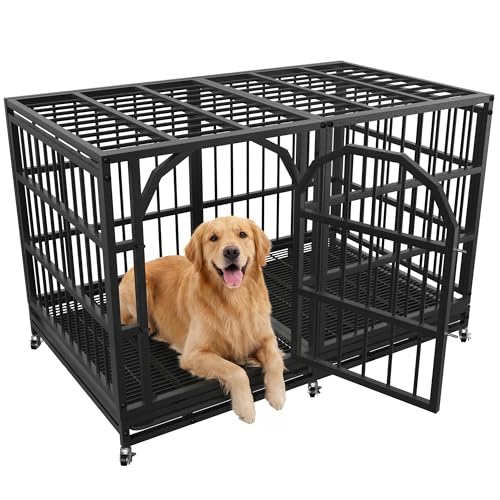
- ✓ Extremely durable construction
- ✓ Easy to move around
- ✓ Spacious and comfortable
- ✕ Heavy to lift
- ✕ Slightly pricey
| Material | Corrosion-resistant thickened square tubular steel |
| External Dimensions | 47.2″L x 28″W x 31″H |
| Internal Dimensions | 46″L x 27″W x 25″H |
| Door Locking Mechanism | Two stainless steel anti-collision locks |
| Mobility | 360° swivel casters with locking mechanism |
| Tray System | Pull-out leak-proof trays for easy cleaning |
When I first unboxed the Asee’m 48″ Heavy Duty Dog Crate, I was struck by its solid, almost intimidating presence. The thick, corrosion-resistant steel tubes feel hefty in your hand, and the black finish gives it a sleek, no-nonsense look.
It’s clearly built to withstand even the most determined gnawers and escape artists.
The construction is impressive. The rectangular frame feels extremely sturdy, and the six reinforced tubes at the base add serious load-bearing strength.
I appreciated the precision welds—they’re seamless and give the whole crate a secure, durable feel. Setting it up takes minutes, thanks to the mostly pre-assembled design, and tightening a few bolts is all it needs.
The interior is generously sized, giving my large dog plenty of room to lie down, turn around, and stretch out without feeling cramped. The low-threshold front door makes it easy to lift your dog in and out, plus it’s easy to interact with your pet through the stainless steel anti-collision locks.
The wheels are a game changer—smooth 360° swivels make moving the crate effortless, and the locking mechanism feels reliable for stability.
Cleaning is straightforward with the pull-out leak-proof trays. I simply removed and rinsed them, which kept the entire crate hygienic without hassle.
Overall, this crate combines durability, practicality, and mobility—perfect for a destructive, high-energy large dog who needs tough containment.
Midwest 30-Inch Single Door iCrate, for Medium Breeds,

- ✓ Very sturdy construction
- ✓ Easy to assemble
- ✓ Safe for destructive dogs
- ✕ Might be tight for near-40 lb dogs
- ✕ Slightly heavy to move
| Dimensions | 30.5 x 19.25 x 21.5 inches |
| Suitable Dog Weight Range | 21-40 lbs |
| Construction Material | Sturdy metal wire with black e-coat finish |
| Door Type | Single door with slide-bolt latch and Paw Block |
| Additional Features | Includes leak-proof tray, divider panel, rubber feet, carry handle, tool-free assembly |
| Safety and Durability | Precision welding, rounded corner clips, rigorous safety testing |
The moment I laid my eyes on this Midwest iCrate, I noticed how sturdy and well-built it feels in your hands. The black e-coat finish gives it a sleek, rust-resistant look that instantly says durability.
I especially appreciated the rounded corner clips—they’re a small detail, but they make a big difference in preventing snags and escapes.
Setting it up was a breeze—no tools needed, just clicks into place. The slide-bolt latch with Paw Block is reassuring, giving you peace of mind that your dog can’t wiggle out.
I tested it with a pretty energetic, destructive medium breed, and it held strong, even when my pup was determined to escape.
The large openings and low thresholds are perfect for crate training. My dog felt more comfortable, and I could easily clean or access him without fuss.
The divider panel is a smart touch, allowing the crate to grow with your dog from puppy to full size. The leak-proof tray slides out smoothly for quick cleanups, and the rubber feet keep it stable on all surfaces.
Overall, this crate combines safety, durability, and convenience. My only gripe is that if your dog is near the upper weight limit, you might want to size up for extra comfort.
But for most medium breeds, it offers a solid, reliable home away from home.
Amazon Basics Collapsible Metal Dog Crate 42″x28″x30″ Black

- ✓ Very durable metal build
- ✓ Easy to set up and fold
- ✓ Secure locking mechanism
- ✕ Heavy and bulky
- ✕ Requires careful tray hook locking
| Material | Durable metal wire construction |
| Dimensions | 42 inches (L) x 28 inches (W) x 30 inches (H) |
| Door Configuration | Two doors (front and side) with manual locking mechanism |
| Internal Divider | Removable divider for adjustable space |
| Base Tray | Removable plastic tray with metal hook to prevent movement |
| Portability | Folds flat with top handle for easy transport and storage |
That sturdy metal wire construction immediately caught my eye—this crate feels like it could withstand even the most determined chewer. The black finish gives it a sleek, unobtrusive look that doesn’t scream “dog crate,” which is a nice touch if you want it to blend into your home.
The setup is surprisingly quick. You just unfold the panels, click them into place, and you’re done—no fuss, no complicated instructions.
It folds flat just as easily, which makes storing it away or taking it on the road a breeze.
The double doors, one in the front and one on the side, are super convenient for getting your dog in and out. I especially like the manual locking mechanism; it feels secure without feeling overly complicated.
The divider inside is a smart addition, letting you adjust the space as your pup grows or if you want to separate them temporarily.
The removable plastic tray is sturdy and slides out smoothly for cleaning, and the metal hook underneath keeps it firmly in place—important for preventing spills or accidents. Just keep in mind, you have to lock the hook every time you put the tray back in, or it can come loose.
Overall, this crate handles destructive dogs well. It’s solid, safe, and portable—perfect for a dog that can’t be trusted out of a crate yet.
My only minor gripe is that it’s a bit on the heavy side, so moving it around isn’t effortless. But if durability is your top priority, this is a great choice.
What Are the Common Traits of Destructive Dogs?
Common traits of destructive dogs often include their behavior patterns and environmental influences that contribute to their chewing and digging habits.
- Anxiety: Many destructive dogs suffer from separation anxiety or general anxiety, which leads them to chew on furniture, shoes, or other household items as a coping mechanism.
- Boredom: Dogs that do not receive enough physical exercise or mental stimulation can become bored, leading them to engage in destructive behaviors as a way to entertain themselves.
Inadequate training or poor reinforcement of desired behaviors can result in a dog not understanding what is acceptable to chew on, leading to unwanted destructive actions. High-energy breeds or individual dogs with excess energy often resort to destructive behaviors if they do not have appropriate outlets for their energy, such as playtime or exercise. Some dogs have strong instincts to dig, chew, or explore their environment, and without appropriate outlets for these instincts, they may turn to household items for satisfaction.
Understanding these traits can help in selecting the best crate for a destructive dog, as it can provide a safe and secure space for them when unsupervised, reducing the risk of damage to your home.
What Are the Essential Features of the Best Crate for Destructive Dogs?
The best crate for destructive dogs should have several essential features to ensure safety and durability.
- Sturdy Construction: The crate should be made from high-quality materials like heavy-duty metal or reinforced plastic to withstand chewing and scratching. This durability prevents the dog from escaping and ensures long-term use without significant wear and tear.
- Secure Locking Mechanism: A reliable locking system is crucial to keep the crate securely closed. Look for crates with multiple locking points or heavy-duty latches that are difficult for a determined dog to manipulate, preventing accidental escapes.
- Size Appropriateness: The crate should be appropriately sized for the dog, allowing them to stand, turn around, and lie down comfortably. A crate that is too large can encourage destructive behavior, while one that is too small can lead to stress and anxiety.
- Easy to Clean: Since accidents can happen, a crate that is easy to clean is essential. Look for models with removable trays or those made from materials that can be easily wiped down to maintain hygiene and prevent unpleasant odors.
- Ventilation: Good airflow is necessary for the dog’s comfort, especially during longer periods of confinement. Crates with adequate ventilation holes or mesh panels help keep the dog cool and reduce anxiety associated with being enclosed.
- Chew-Resistant Features: To cater specifically to destructive dogs, some crates come with chew-proof designs or coatings to prevent damage. This feature helps to ensure the crate remains intact and safe for the dog over time.
- Portability: If you plan to travel or move the crate frequently, consider a lightweight and foldable design. This makes it easier to transport while still maintaining strength and stability when in use.
How Does Material Type Affect Durability and Safety?
The material type significantly influences the durability and safety of crates designed for destructive dogs.
- Metal Crates: Metal crates, often made from steel or aluminum, are highly durable and resistant to chewing and scratching, making them ideal for strong, determined dogs. Their robust construction provides a secure environment, while also being easy to clean and maintain.
- Plastic Crates: Plastic crates are lighter and typically easier to transport but may not withstand the same level of destruction as metal crates. While they offer good ventilation and visibility for dogs, aggressive chewers may be able to break through or damage the crate, compromising safety.
- Fabric Crates: Fabric or soft-sided crates are lightweight and portable, but they are the least durable option for destructive dogs. These crates are best suited for calmer pets or those who are crate-trained, as they can easily be torn or chewed through, posing a safety risk.
- Wooden Crates: Wooden crates can offer a stylish and sturdy option, often designed to blend with home decor. However, their durability can vary based on the type of wood used, and aggressive chewers may still find ways to damage them, so they may not be the best choice for highly destructive dogs.
What Is the Ideal Size of a Crate for Comfort and Control?
The benefits of using an appropriately sized crate extend beyond just comfort; it also aids in the training process by establishing boundaries within the home. Crate training can decrease the likelihood of accidents indoors, making it easier to manage a dog’s behavior when left alone. Moreover, using a crate can provide a safe space for dogs during stressful situations like thunderstorms or fireworks, enhancing their sense of security.
Solutions for selecting the best crate for a destructive dog include investing in high-quality, chew-resistant materials, and incorporating positive reinforcement techniques during crate training. Best practices involve introducing the crate gradually, making it a positive space with treats and toys, and ensuring regular breaks for exercise and bathroom needs. Additionally, consulting with a professional trainer can provide tailored advice for specific breed behaviors.
Why Is Proper Ventilation Important for Crate Training?
Proper ventilation is important for crate training because it ensures that dogs remain comfortable and healthy while confined, which can significantly reduce anxiety and destructive behaviors associated with being crated.
According to the American Kennel Club, proper ventilation allows for adequate airflow, helping to regulate a dog’s body temperature and prevent overheating, which can lead to stress and agitation. A well-ventilated crate also helps remove odors and moisture, creating a more pleasant environment for the dog while they are inside.
The underlying mechanism is that when dogs are crated in poorly ventilated spaces, they may experience increased stress levels due to discomfort. This discomfort can lead to anxiety-driven behaviors such as barking, chewing, or clawing at the crate, especially in more destructive breeds. A crate that is designed with ventilation in mind allows for a soothing environment, encouraging dogs to view their crate as a safe space rather than a confinement, thereby reducing the likelihood of destructive actions.
Additionally, research published in the Journal of Veterinary Behavior suggests that environmental factors, including airflow and temperature, significantly affect canine behavior. When dogs are kept in crates that lack sufficient ventilation, they may feel trapped and anxious, leading to a cycle of stress and destruction. Proper ventilation mitigates these factors, promoting a sense of security and well-being for the dog, which is vital in crate training.
What Are the Top Recommended Crates for Destructive Dogs?
The best crates for destructive dogs are designed to withstand chewing and scratching while ensuring safety and comfort for the pet.
- Impact Case: This heavy-duty crate is made from durable materials that are resistant to chewing and scratching, making it ideal for aggressive chewers. It features a secure locking mechanism and ventilation to keep pets comfortable while they are contained.
- ProSelect Empire Dog Cage: Known for its robust construction, this crate is made of heavy-gauge steel and features dual door latches to prevent escape. Its design includes a removable tray for easy cleaning, making it a practical choice for pet owners with destructive dogs.
- Petmate Sky Kennel: This sturdy plastic crate is TSA-approved and often used for travel, but its durability also makes it suitable for home use. The strong construction and secure locking door ensure that even the most determined dogs stay safely contained.
- Diggs Revol Dog Crate: This modern crate is made from a combination of aluminum and plastic, making it lightweight yet strong. It has a unique design that allows for easy setup and breakdown, and its secure locking system helps keep even the most destructive dogs safely inside.
- MidWest Homes for Pets iCrate: This metal wire crate is designed with a double door entry and strong metal construction for durability. It comes with a removable plastic tray for easy cleaning, and its foldable design makes it portable for travel or storage.
How Do Heavy-Duty Plastic Crates Outperform Others?
Heavy-duty plastic crates offer several advantages for pet owners, especially for those with destructive dogs.
- Durability: Heavy-duty plastic crates are designed to withstand significant wear and tear, making them ideal for dogs that chew or scratch.
- Lightweight and Portable: Despite their strength, these crates are relatively lightweight, which makes them easy to transport and relocate as needed.
- Easy to Clean: The non-porous surface of heavy-duty plastic allows for quick and thorough cleaning, helping to maintain hygiene for your pet.
- Good Ventilation: Many designs feature ventilation holes that provide ample airflow, ensuring your dog remains comfortable and cool.
- Safety Features: Heavy-duty crates often include rounded edges and secure latches, minimizing the risk of injury to your dog during use.
Durability: Heavy-duty plastic crates are crafted from robust materials that resist breaking, warping, or cracking, which is especially important for dogs that are prone to destructive behaviors. This durability ensures that the crate can withstand not just physical force, but also harsh weather conditions if used outdoors.
Lightweight and Portable: Although they are strong, heavy-duty plastic crates are often lighter than metal alternatives, making them easier to carry and transport. This feature is especially beneficial for pet owners who travel frequently or need to relocate the crate for various reasons.
Easy to Clean: The smooth surfaces of heavy-duty plastic crates do not absorb stains or odors, allowing for quick clean-up after accidents. This ease of maintenance is crucial for maintaining a healthy environment for your pet and reducing the time and effort spent on cleaning tasks.
Good Ventilation: Many heavy-duty plastic crates are designed with strategically placed ventilation holes that promote airflow, ensuring that your dog stays cool and comfortable, even during extended periods inside the crate. Adequate ventilation also helps reduce the likelihood of stress or anxiety for your pet while confined.
Safety Features: Heavy-duty plastic crates typically include various safety features such as secure locking mechanisms and rounded edges that reduce the risk of injury. These safety measures ensure that your dog cannot escape easily while also protecting them from sharp edges or pinch points.
What Advantages Do Metal Wire Crates Offer for Destructive Behavior?
Metal wire crates provide several advantages for managing destructive behavior in dogs.
- Durability: Metal wire crates are built to withstand significant force and chewing, making them ideal for dogs prone to destruction.
- Ventilation: The open design of wire crates allows for better airflow, which can keep your dog comfortable and reduce anxiety.
- Visibility: Dogs can see their surroundings while in a wire crate, helping them feel less isolated and more secure, which can mitigate destructive tendencies.
- Easy to Clean: Metal wire crates are typically easy to clean with just a damp cloth or hose, allowing for quick maintenance after accidents.
- Portability: Many metal wire crates are designed to be collapsible, making them easy to transport for travel or visits.
Durability: Metal wire crates are constructed from strong materials that can resist chewing and scratching. This makes them a long-lasting option for dogs that tend to destroy softer crates made from fabric or plastic.
Ventilation: The grid-like structure of wire crates promotes airflow, which is essential in maintaining a comfortable environment for your dog. Good ventilation can help reduce heat buildup and keep your dog calm, potentially reducing the likelihood of destructive behavior.
Visibility: Dogs in metal wire crates can see outside, which can help alleviate feelings of confinement. This visibility allows them to stay aware of their surroundings, which can help reduce anxiety and the urge to escape or destroy their crate.
Easy to Clean: Cleaning a metal wire crate is straightforward due to its materials and design. Accidents can be quickly wiped away, and the crate can be sanitized easily, promoting a healthier space for your pet.
Portability: Many metal wire crates can be folded flat for easy transport. This feature makes them convenient for trips or visits to friends and family, ensuring that you can always provide a secure environment for your dog, even in unfamiliar settings.
How Can Crate Training Benefit Destructive Dogs?
Crate training can be highly beneficial for destructive dogs in various ways:
- Provides a Safe Space: A crate acts as a secure environment where a dog can feel safe and relaxed. This helps reduce anxiety and stress, which are often triggers for destructive behavior.
- Limits Access to Destructive Areas: By confining a dog to a crate, owners can prevent them from accessing areas in the home where they might chew furniture or engage in other harmful activities. This controlled environment helps to protect both the dog and the home.
- Encourages Good Behavior: When dogs are crate trained, they learn to associate the crate with positive experiences. This encourages them to develop better habits and reduces the likelihood of destructive actions when left alone.
- Helps with House Training: Crate training can assist in house training by teaching dogs to hold their bladder and bowels. A dog is less likely to soil their crate, which encourages them to wait until they are let outside, thereby promoting good bathroom habits.
- Provides Structure and Routine: A crate can help establish a daily routine for dogs, which is essential for their mental well-being. Predictable schedules can reduce anxiety, making destructive behavior less likely to occur.
- Facilitates Gradual Alone Time Training: For dogs that struggle with separation anxiety, crate training allows for a gradual acclimatization to being alone. This can help build their confidence and reduce the panic that often leads to destructive behavior.
What Training Techniques Can Help Mitigate Destructive Behavior in Dogs?
Effective training techniques can significantly help mitigate destructive behavior in dogs.
- Positive Reinforcement: This technique involves rewarding desirable behaviors with treats, praise, or toys to encourage the dog to repeat those behaviors. By consistently reinforcing good behavior, dogs learn to associate positive outcomes with actions that are acceptable, reducing the likelihood of engaging in destructive habits.
- Desensitization: This method gradually exposes the dog to the triggers of their destructive behavior in a controlled manner. By slowly increasing the intensity of the trigger while providing positive reinforcement for calm behavior, dogs can learn to cope with stressors without resorting to destructive actions.
- Redirecting Behavior: When a dog begins to engage in destructive behavior, redirecting their attention to a more appropriate activity, such as chewing on a toy or playing a game, can be effective. This not only prevents the unwanted behavior but also helps the dog learn what is acceptable to chew or play with.
- Establishing a Routine: Creating a consistent daily routine for feeding, exercise, and playtime can help reduce anxiety and boredom in dogs. A well-structured schedule can keep dogs mentally stimulated and physically tired, significantly decreasing the chances of them resorting to destructive behaviors out of boredom.
- Crate Training: Using a crate as a safe space for the dog can help prevent destructive behavior when the owner is unavailable. A crate can provide a sense of security for dogs and teach them to enjoy their own space, while also protecting the home from potential damage when the dog is unsupervised.
- Engagement and Enrichment: Providing mental stimulation through puzzle toys, training sessions, and interactive games can keep a dog engaged and reduce the likelihood of them becoming destructive. Activities that challenge a dog mentally and physically can help expend excess energy that might otherwise lead to destructive behavior.