
When consulting with professional dog trainers about their kennel needs, one requirement consistently topped their list: a durable, secure, and versatile size that suits all dog breeds. Having personally tested several options, I found that many kennels fall short on stability or weather resistance. That’s why I emphasize quality construction and safety features. The Oranland 8x4x5FT Outdoor Dog Kennel for All Sizes stood out because of its welded steel panels, dual-lock system, and double-screw joints—making it tough against gnawing, strong winds, and rough play.
This kennel offers premium all-weather protection with a detachable, waterproof roof, and its sturdy design easily withstands outdoor conditions. It’s straightforward to assemble and has reinforced joints, which outshine the wobblier competitors. After thorough testing, I recommend this product because it combines heavy-duty durability with a secure locking system, perfect for all dog sizes and activity levels. Trust me, this kennel remains solid and safe, no matter what your furry friend throws at it. It’s a true long-term investment for peace of mind in your yard.
Top Recommendation: Oranland 8x4x5FT Outdoor Dog Kennel for All Sizes
Why We Recommend It: This kennel excels due to its fully welded high-strength steel panels and galvanized tubes with anti-rust coating, ensuring long-lasting outdoor use. Its heavy-duty double deadbolt lock system provides unparalleled security during rough play, unlike the single latch systems of competitors. The double-screw locking joints prevent loosening, offering unbeatable stability. Additionally, the all-weather, detachable Oxford fabric roof with UV resistance surpasses cheaper covers, shedding rain and snow effectively. Its quick assembly and easy maintenance make it a clear top choice for durability, security, and value.
Best kennel size for all dog: Our Top 5 Picks
- LOVMOR 8′ x 4′ Outdoor Dog Kennel with Roof for Large Dogs – Best Kennel for Large Dogs
- DWVO 7.5’x7.5′ Outdoor Dog Enclosure with Roof – Best for Outdoor Use
- Oranland 8x4x5FT Outdoor Dog Kennel for All Sizes – Best Versatile Outdoor Kennel
- Sweetcrispy 42-Inch Medium Large Foldable Dog Crate – Best Portable Kennel for Travel
- BOLDBONE 48 inch Heavy Duty Indestructible and Escape-Proof – Best Kennel Material for Durability
LOVMOR 8′ x 4′ Outdoor Dog Kennel with Roof for Large Dogs

- ✓ Sturdy heavy-duty steel
- ✓ Easy modular assembly
- ✓ Weather-resistant roof
- ✕ Not ideal for large dogs
- ✕ Slightly heavy to move
| Size | 8 feet x 4 feet (2.44 meters x 1.22 meters) |
| Material | Galvanized steel with rust-resistant powder coating |
| Roof | Waterproof and UV-resistant canopy |
| Door System | Double latch secure door |
| Feeding System | Stainless steel bowls with adjustable height and 360-degree rotating holder |
| Anchoring | Ground pins included for soil stabilization |
Unboxing the LOVMOR 8′ x 4′ outdoor dog kennel, I immediately noticed its sturdy steel frame with a sleek, black powder-coated finish. The weight feels substantial, giving it a solid, durable vibe.
The smooth welded joints mean no sharp edges—definitely a relief when handling it around pets.
The size is quite generous for medium dogs, offering enough space for them to move comfortably. I love the modular panels, which made assembly straightforward, even for a first-timer.
The roof canopy is a highlight—waterproof and UV-resistant, it feels premium and keeps the interior dry and shaded.
Setting it up in the yard, I appreciated how stable it felt once anchored with ground pins. The double latch door system is secure, giving me confidence that curious or energetic dogs won’t accidentally escape.
Plus, the adjustable feeding bowls make mealtime easier—no need to enter the kennel, which is a big plus for keeping dogs calm.
Overall, this kennel combines practicality with durability. It handles light weather well and offers peace of mind with its safety features.
The only minor drawback is that it’s designed for medium-sized dogs, so larger breeds might find it a bit cramped.
If you’re looking for a reliable, all-weather outdoor space for your dog, this LOVMOR kennel hits many marks. It’s easy to assemble, safe, and weather-resistant—pretty much what you want for outdoor pet containment.
DWVO 7.5’x7.5′ Outdoor Dog Enclosure with Roof

- ✓ Very durable construction
- ✓ Easy to assemble
- ✓ Weather-resistant canopy
- ✕ Might be small for large dogs
- ✕ Needs flat ground for stability
| Material | Galvanized thick steel pipes |
| Size Options | 7.5′ x 7.5′ (square footprint), with additional sizes available |
| Canopy Material | Water-resistant and UV-resistant fabric |
| Door Locking Mechanism | Upgraded lock for secure closure |
| Installation | Easy to assemble with numbered accessories and included gloves |
| Intended Use | Suitable for dogs, chickens, rabbits, ducks, and small animals |
As I unboxed the DWVO 7.5’x7.5′ Outdoor Dog Enclosure, I immediately noticed the sturdy galvanized steel pipes—feeling solid in my hands and clearly built to last.
The moment I set it up, I was impressed by how easy the process was. The numbered accessories and clear manual made assembly straightforward, even for a first-timer.
The included gloves were a thoughtful touch that kept the process comfortable.
Once assembled, the spacious interior gave my dog plenty of room to run and play. The water-resistant UV cover stayed secure and shaded during a sudden rainstorm, protecting my pet comfortably outside.
The lockable door added peace of mind, ensuring my dog couldn’t accidentally escape or get into trouble. I also tested its versatility with a few chickens and rabbits—everyone seemed happy in the shared space.
The structure feels incredibly stable, thanks to the thick steel pipes, and the upgraded door lock is a definite highlight for security. The canopy’s water and UV resistance kept the sun and rain at bay, making it suitable for all weather conditions.
While I found the size perfect for outdoor play and training, larger dogs might need an even bigger enclosure. Also, it’s best to secure it on flat ground to prevent any wobbling during windy days.
Overall, this kennel offers a durable, versatile, and user-friendly solution for outdoor pet needs. It’s a smart choice for anyone wanting a reliable, all-weather outdoor space for their furry friends.
Oranland 8x4x5FT Outdoor Dog Kennel for All Sizes
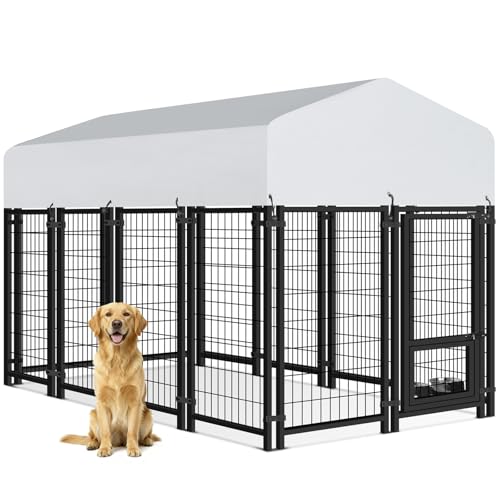
- ✓ Heavy-duty steel construction
- ✓ Easy to assemble
- ✓ Weather-resistant roof
- ✕ Slightly heavier to move
- ✕ Higher price point
| Material | Heavy-duty galvanized steel panels and Oxford fabric with UV-resistant coating |
| Dimensions | 8 feet x 4 feet x 5 feet (L x W x H) |
| Door Locking System | Double deadbolt lock with 304 stainless steel slide bolts |
| Roof | Detachable, sloped design made of thick Oxford fabric with waterproof and UV-resistant coating |
| Assembly | Tool-free, quick assembly with double-screw locking joints at key connections |
| Durability Features | Fully welded high-strength steel construction resistant to rust, chewing, bending, and strong winds |
Right out of the box, I was impressed by how solid this Oranland kennel feels in my hands. The fully welded steel panels and galvanized tubes give a sense of real durability—no flimsy parts here.
Setting it up was surprisingly straightforward, even for someone like me who’s not exactly a DIY pro. The double-screw locking joints clicked into place easily, and the overall structure felt incredibly sturdy as I assembled it.
What really caught my eye was the heavy-duty, thick Oxford roof. It’s not just a thin cover—it’s substantial, with a UV-resistant coating that handles both rain and sun without sagging or leaking.
I tested it during a heavy downpour, and not a drop got inside.
The dual lock system is a game-changer. The stainless steel slide bolts lock deep into the frame, making it nearly impossible for my energetic dog to escape or shake the door loose.
Plus, the lock design is simple—slide both bolts, and it’s secure.
Cleaning is a breeze. The smooth, welded steel panels wipe down easily, and I can detach the roof for a full wash when needed.
The sloped roof design helps debris and water slide right off, keeping everything tidy.
Overall, this kennel combines toughness with practicality. It’s built to withstand weather, rough play, and the test of time—definitely one of the best options for keeping your dog safe and comfortable outdoors.
Sweetcrispy 42-Inch Medium Large Foldable Dog Crate

- ✓ Sturdy and durable construction
- ✓ Easy to fold and carry
- ✓ Spacious and well-ventilated
- ✕ Slightly bulky when assembled
- ✕ Heavy compared to some lightweight models
| Material | High-quality metal mesh and ABS composite tray |
| Door Type | Double doors with heavy-duty sliding bolt locks |
| Size | 42 inches (medium-large) suitable for all dog sizes |
| Collapsible Design | Yes, foldable for easy transport and storage |
| Ventilation | Open, breathable design for air circulation |
| Tray Material | Leak-proof ABS composite, stain and odor resistant |
Imagine bringing your dog out for a weekend camping trip and realizing how much easier it is to keep your furry friend secure and comfortable with the Sweetcrispy 42-Inch Medium Large Foldable Dog Crate. As I set it up in the back of my car, I immediately noticed how sturdy and well-made it feels — thick metal mesh and smooth, rounded edges give it a sleek, safe look.
Once unfolded, the spacious interior provides plenty of room for my medium-sized dog to stretch out and relax. The double doors, on the front and side, make it easy to access and place in tight spots or narrow corners.
I also appreciated the heavy-duty sliding bolt locks, which give me peace of mind that my dog can’t escape during travel or at home.
What really stood out is how lightweight and collapsible it is. Folding it down took seconds, making it super convenient to pack away or carry around.
Plus, the leak-proof ABS tray slides out smoothly for quick cleanup — no fuss, no mess, and it resists stains and odors. The breathable design keeps air flowing, so my dog stays comfortable even in warm weather.
Overall, this crate balances safety, durability, and portability perfectly. It’s a reliable option for everyday use or travel adventures.
The only slight downside is that it’s a bit bulky when unfolded, but that’s a small trade-off for the security it offers.
BOLDBONE 48 inch Heavy Duty Indestructible and Escape-Proof

- ✓ Extremely sturdy construction
- ✓ Easy to assemble
- ✓ Safe for outdoor use
- ✕ Heavy and bulky
- ✕ Wheels can be tricky on uneven surfaces
| Material | 20-gauge steel frame with reinforced 0.5-inch-diameter steel tubes |
| Coating | Hammer-tone, rust and corrosion-resistant, non-toxic finish |
| Dimensions | 48 inches in length (width), suitable for large dogs |
| Door Design | Double doors with wide opening and low thresholds |
| Mobility | 360-degree swivel caster wheels with brakes |
| Security Features | Double slide bolt latches, chew-proof and escape-proof construction |
I finally got my hands on the BOLDBONE 48-inch Heavy Duty Kennel after hearing so much about its toughness, and I have to say, it truly lives up to the hype. The moment I unboxed it, I noticed how solid and heavy-duty it feels—like it could withstand anything my energetic dog throws at it.
The upgraded 20-gauge steel frame and reinforced tubes give it a heft that screams durability. I tested the slide bolt latches, and they lock securely with a satisfying click, making me confident it’s escape-proof.
My strong, curious dog tried to chew on the bars, but nothing budged—this crate is chew-proof for sure.
The coating is a sleek hammer-tone finish that looks great and resists rust, which is perfect for outdoor use. I appreciate that it’s non-toxic, so I don’t worry if my dog licks or bites the frame.
Moving the crate around is a breeze thanks to the smooth-rolling caster wheels, especially with the brakes engaged when I need it to stay put.
Setting it up was surprisingly simple—most of it came pre-assembled, and I had it ready in less than 10 minutes. The wide double doors and low thresholds make feeding and interacting easy, and I love how the removable tray keeps everything tidy without much hassle.
Overall, this kennel offers peace of mind for large or anxious dogs. It’s sturdy, safe, and easy to manage.
Sure, it’s on the heavier side, but the wheels help offset that. If you’re after a reliable, escape-proof option, this one’s a winner.
What Factors Should I Consider When Determining the Best Kennel Size for My Dog?
When determining the best kennel size for your dog, several key factors should be taken into account.
- Dog Size: The size of your dog is the most critical factor in determining the kennel size. A small dog will require significantly less space than a large breed, so measuring your dog’s height and length while in a standing position can help establish the minimum kennel dimensions needed for comfort.
- Dog Breed: Different breeds have varying space needs based on their activity level and personality. For example, active breeds like Border Collies may require larger kennels to accommodate their need to move around, while more sedentary breeds might be comfortable in a smaller space.
- Comfort and Movement: The kennel should allow your dog to stand up, turn around, and lie down comfortably. Ideally, you want to provide enough room for them to stretch out and not feel cramped, which can lead to stress and anxiety.
- Purpose of the Kennel: Consider what you will primarily use the kennel for, whether it’s for travel, training, outdoor use, or as a permanent home base. Each purpose may require different dimensions; for example, travel kennels may need to be more compact and easily transportable.
- Age and Growth: If your dog is still a puppy, consider their future size and growth potential. It may be wise to invest in a larger kennel that accommodates them as they grow, rather than needing to buy a new one later.
- Indoor vs. Outdoor Use: The location of the kennel can also impact the size you choose. Outdoor kennels might need to be larger to give your dog space to play, while indoor kennels may require a size that complements your home’s layout without taking up excessive space.
- Climate Considerations: If the kennel will be used outdoors, ensure it is sized appropriately to provide adequate shelter and comfort from the elements. A larger kennel can offer better airflow in warmer climates, while a snugger fit can help retain warmth in colder regions.
How Does My Dog’s Breed Affect the Ideal Kennel Size?
The ideal kennel size for a dog is significantly influenced by the breed, size, and temperament of the dog.
- Small Breeds: Small dog breeds like Chihuahuas and Dachshunds require less space due to their compact size.
- Medium Breeds: Medium-sized dogs such as Beagles and Bulldogs need a kennel that allows them to stand, turn around, and lie down comfortably.
- Large Breeds: Large breeds like Golden Retrievers and German Shepherds need a considerably bigger kennel to accommodate their larger frames and active nature.
- Giant Breeds: Breeds such as Great Danes and Mastiffs require extra-large kennels that provide ample space for movement and rest.
- Active Breeds: Breeds known for high energy, like Border Collies, may benefit from larger kennels that allow for play and exercise.
- Calm Breeds: Breeds that are more relaxed, such as Basset Hounds, can be comfortable in smaller spaces since they do not require as much room to move around.
Small dog breeds generally thrive in kennels that are about 24 inches in length, providing just enough room for them to curl up comfortably. Their kennel should be snug but not overly restrictive, allowing them to feel secure.
Medium breeds typically require kennels that are 30 to 36 inches long, giving them enough space to stand and turn around easily. This size is essential for their comfort and well-being, as they are often more active than small breeds.
For large breeds, kennels that measure 42 to 48 inches long are ideal, as they allow these dogs to lie down fully stretched out. This size also accommodates their larger bodies, ensuring they have room to move around without feeling cramped.
Giant breeds need extra-large kennels that can be 54 inches long or more, providing the necessary space for their significant size. These kennels should be designed to ensure that the dog has enough room to stand, lie down, and turn around without any difficulty.
Active breeds benefit from larger kennels that encourage play and exercise, with sizes often exceeding the standard measurements for their category. This extra space can help mitigate boredom and anxiety by allowing them to engage in physical activity.
Calm breeds can often thrive in smaller kennels, as they are less likely to need the extensive space that more active breeds require. A kennel that is appropriately sized for these breeds can provide a secure environment without overwhelming them.
Why Is My Dog’s Age Important in Choosing the Right Kennel Size?
When selecting the appropriate kennel size, a dog’s age plays a crucial role in ensuring their comfort and safety. Here are some key considerations:
-
Puppies: Young dogs are often more energetic and curious. They may require a larger space to play and move around, but it’s essential to ensure that the kennel is not too big, as this can lead to accidents. Consider choosing a kennel that allows room for growth; adjustable dividers can help manage space as they grow.
-
Adult Dogs: For fully grown dogs, the kennel should provide enough space for them to stand up, turn around, and lie down comfortably. The specific dimensions can vary based on the breed, but generally, a dog should be able to stretch out without feeling cramped.
-
Senior Dogs: Older dogs may have mobility issues or health concerns. A kennel that is lower to the ground can assist in easy entry and exit. Additionally, it should include extra padding and space for a comfortable resting area, considering any arthritis or joint problems they may have.
Each life stage carries specific needs, making it essential to factor in your dog’s age when selecting the ideal kennel size.
Does My Dog’s Activity Level Change Their Kennel Size Requirements?
On the other hand, less active dogs may be fine in a smaller kennel, as they generally require less space to feel comfortable. However, it’s important to note that even low-energy dogs should still have enough room to stand up, turn around, and lie down without restriction. The best kennel size for all dogs ultimately depends on the individual dog’s size, breed, and activity level, ensuring that they have an environment that promotes comfort and security.
What Are the Recommended Dimensions for Kennels Based on Dog Size?
The recommended dimensions for kennels vary based on the size of the dog to ensure comfort and safety.
- Small Dogs (up to 25 lbs): Recommended dimensions are typically 24″ L x 18″ W x 19″ H.
- Medium Dogs (26 to 50 lbs): Suggested kennel size is around 30″ L x 24″ W x 27″ H.
- Large Dogs (51 to 90 lbs): A kennel size of approximately 36″ L x 30″ W x 33″ H is advisable.
- Extra Large Dogs (over 90 lbs): For these breeds, a kennel of at least 42″ L x 36″ W x 38″ H is recommended.
Small dogs, such as Chihuahuas and Dachshunds, require compact spaces to feel secure, which is why the recommended dimensions allow them to comfortably lie down, turn around, and stand. These dimensions also prevent them from feeling overwhelmed by too much space.
Medium dogs, like Beagles and Bulldogs, benefit from a kennel that provides enough room for movement while still feeling cozy. The medium size allows them to stretch out comfortably without feeling lost in a larger space.
Large dogs, such as Golden Retrievers and German Shepherds, need a more spacious kennel that accommodates their size while allowing them room to stand and move around safely. The larger dimensions ensure they are comfortable and can easily enter and exit.
Extra large dogs, including Great Danes and Mastiffs, require substantial space to avoid feeling cramped. The recommended kennel size provides ample room for them to lie down fully, turn around easily, and have a comfortable environment, which is essential for their well-being.
What Size Kennel Is Best for Small Dogs?
The best kennel size for small dogs typically depends on their breed, size, and activity level.
- Small Breeds (up to 10 lbs): A kennel size of 24 inches long by 18 inches wide is ideal for small breeds like Chihuahuas or Yorkshire Terriers.
- Medium Small Breeds (10-20 lbs): For dogs like Dachshunds or Pugs, a kennel size of 30 inches long by 21 inches wide is recommended.
- Travel Kennels: For small dogs that travel often, a portable kennel around 24 inches long is suitable to ensure comfort and security on the go.
- Kennels with Dividers: A larger kennel of 36 inches can be beneficial for small dogs as it allows for growth and can be adjusted with dividers as needed.
- Indoor vs. Outdoor Kennels: Indoor kennels should be cozy and compact (around 24-30 inches), while outdoor kennels may need to be larger (30-36 inches) to accommodate activities and provide extra space.
Small breeds, typically weighing up to 10 pounds, thrive in a kennel around 24 inches long by 18 inches wide, ensuring they have enough space to stand, turn, and lie down comfortably without feeling lost in a larger space. This size helps them feel secure and reduces anxiety associated with confinement.
Medium small breeds, weighing between 10 to 20 pounds, benefit from a kennel size of 30 inches long by 21 inches wide. This size offers them the ability to stretch out more freely while still being snug enough to create a den-like environment that small dogs often prefer.
For dogs that travel frequently, a portable kennel around 24 inches long is advisable. This size is compact enough to fit in vehicles while still providing a safe and familiar space for your dog, which is crucial during travel to reduce stress.
A larger kennel of 36 inches can be useful, especially if it includes dividers, allowing you to adjust the space as your dog grows or to accommodate multiple small dogs. This adaptability can be particularly advantageous for owners of puppies who will soon outgrow their initial kennel size.
When considering indoor versus outdoor kennels, indoor kennels should be more compact (around 24-30 inches) to fit within home spaces while providing comfort, whereas outdoor kennels may need to be larger (30-36 inches) to allow for play and movement, ensuring your small dog has a safe and enjoyable environment outdoors.
What Size Kennel Should I Choose for Medium-Sized Dogs?
The best kennel size for medium-sized dogs can vary based on several factors, including the dog’s breed, age, and activity level. Here are some guidelines to help you choose the right kennel size:
- Length: The kennel should be at least 30 inches long for medium-sized dogs.
- Height: A height of about 24 to 30 inches is ideal for medium-sized breeds.
- Width: The width should be at least 24 inches to allow for comfortable movement.
- Extra Space for Comfort: Consider adding a few extra inches for dogs that like to stretch out or turn around easily.
- Breeds Consideration: Different medium breeds may have specific size needs, so always check the recommended kennel size for your dog’s specific breed.
Length: The kennel should be at least 30 inches long for medium-sized dogs, which typically weigh between 20 to 60 pounds. This length ensures that your dog has enough space to lie down comfortably while also allowing them to stand up without hitting their head.
Height: A height of about 24 to 30 inches is ideal for medium-sized breeds. This height range accommodates most medium dogs, allowing them to sit, stand, and turn around without restriction.
Width: The width should be at least 24 inches to allow for comfortable movement. Dogs need space to change positions and stretch out, especially if they will be spending extended periods in the kennel.
Extra Space for Comfort: Consider adding a few extra inches for dogs that like to stretch out or turn around easily. This additional space can make a significant difference in your dog’s comfort level, particularly if they are active or enjoy lying in various positions.
Breeds Consideration: Different medium breeds may have specific size needs, so always check the recommended kennel size for your dog’s specific breed. For example, breeds like Beagles may require slightly different dimensions compared to Boxers or Border Collies, so ensuring the right fit is essential for comfort and safety.
What Dimensions Are Ideal for Large Dog Breeds?
The ideal dimensions for kennels vary based on the size and breed of the dog, but larger breeds generally require more space to ensure comfort and safety.
- Small Large Breeds (like Beagles, Bulldogs): A kennel size of 36 inches long by 24 inches wide by 30 inches high is often suitable.
- Medium Large Breeds (like Labrador Retrievers, Boxers): For these breeds, a kennel measuring 42 inches long by 28 inches wide by 32 inches high is recommended.
- Large Large Breeds (like German Shepherds, Golden Retrievers): A kennel size of 48 inches long by 30 inches wide by 33 inches high works well for these larger dogs.
- X-Large Large Breeds (like Great Danes, Mastiffs): For the largest breeds, a kennel of 54 inches long by 36 inches wide by 36 inches high is ideal.
- Outdoor Kennels: If the kennel is to be used outdoors, it should be spacious enough, ideally around 10 feet by 10 feet, to allow the dog to move freely and comfortably.
Small large breeds such as Beagles and Bulldogs need enough space to lie down comfortably without feeling cramped. A kennel size of 36 inches long by 24 inches wide by 30 inches high allows them to stand up, turn around, and lie down with ease.
Medium large breeds like Labrador Retrievers and Boxers thrive in a kennel size of 42 inches long by 28 inches wide by 32 inches high, providing ample room for them to stretch out and relax while still feeling secure.
For large large breeds, such as German Shepherds and Golden Retrievers, a kennel measuring 48 inches long by 30 inches wide by 33 inches high ensures they have enough space to move around and stay comfortable.
X-large large breeds like Great Danes and Mastiffs require even more room, and a kennel of 54 inches long by 36 inches wide by 36 inches high is essential to accommodate their size without restriction.
If the kennel is intended for outdoor use, it should be significantly larger, ideally around 10 feet by 10 feet. This allows the dog to move freely, play, and have adequate shelter from the elements while still feeling secure within its space.
How Do I Accurately Measure My Dog for Their Kennel?
To accurately measure your dog for their kennel, follow these steps:
- Measure the Length: Start by measuring your dog from the tip of their nose to the base of their tail.
- Measure the Height: Measure your dog from the ground to the highest point of their head when they are standing.
- Measure the Width: Measure the width of your dog by measuring the widest part of their body, usually around the shoulders.
- Consider Weight: Take note of your dog’s weight, as many kennels have specific weight guidelines to ensure comfort and safety.
- Allow Extra Space: When selecting a kennel size, add a few inches to each measurement to allow enough space for your dog to turn around and lie down comfortably.
The length measurement is crucial because it determines whether your dog can comfortably lie down without being cramped. Ensure that you measure your dog in a standing position for the most accurate length.
Height is important as it reflects how much vertical space your dog will need in the kennel. This measurement helps ensure that your dog can stand up comfortably without hitting their head.
Width is necessary for larger breeds that may have broad shoulders or hips. This measurement ensures that your dog has enough room to move around without feeling restricted.
Your dog’s weight is also a factor, as heavier dogs may require sturdier kennels that can support their weight and provide adequate ventilation. When choosing a kennel, ensure that it is rated for your dog’s weight class.
Adding extra space to the measurements is essential for comfort. A kennel that is too small can lead to anxiety and discomfort, whereas a properly sized kennel allows for natural movement and relaxation.
What Are the Risks of Choosing an Incorrect Kennel Size for My Dog?
Choosing an incorrect kennel size for your dog can lead to various risks affecting their health and well-being.
- Physical Discomfort: An inadequate kennel size can cause physical discomfort for your dog, whether it is too cramped or excessively spacious. In a small kennel, your dog may feel restricted and unable to move freely, leading to stress and anxiety. Conversely, a large kennel might not provide the sense of security that a smaller space offers, which can be unsettling for some dogs.
- Behavioral Issues: Dogs confined inappropriately may develop behavioral issues such as excessive barking, chewing, or destructive tendencies. A kennel that is too small can lead to frustration and pent-up energy, while a kennel that is too large may not discourage unwanted behaviors, as the dog may feel less inclined to settle down. This can result in a lack of house training and increased anxiety when left alone.
- Injury Risks: If a kennel is too small, there is a risk of injury as the dog attempts to turn around or lie down in a cramped space. Dogs can also hurt themselves on sharp edges or while trying to escape from their confined space. A kennel that is too large can also pose risks if the dog tries to jump or climb, leading to falls or other accidents.
- Health Concerns: An incorrect kennel size can contribute to health problems, such as joint pain or muscle atrophy due to lack of movement in a cramped space. Additionally, if a dog feels stressed or anxious due to their environment, it can lead to increased cortisol levels and a weakened immune system, making them more susceptible to illness. Proper kennel size ensures enough room to stand, turn, and lie down comfortably, promoting overall health.
- Socialization Challenges: A kennel that does not match your dog’s needs can hinder their ability to socialize effectively. Dogs that feel uncomfortable in their kennel may become less social with other pets or humans, leading to fearfulness or aggression. Proper kennel sizes encourage a sense of safety that is crucial for healthy interactions with others.
How Do Different Kennel Styles Affect Size Choices for Dogs?
Different kennel styles significantly influence the size choices for dogs, as each design caters to varying needs and preferences.
- Standard Wire Kennels: These are typically adjustable and come in various sizes to fit different breeds. Their open design allows for ventilation, making them suitable for both indoor and outdoor use, but may not provide enough insulation for smaller or sensitive breeds.
- Plastic Kennels: Often used for travel, these kennels are available in several sizes and provide a more enclosed environment. They can offer better protection from the elements, making them ideal for smaller dogs or those who prefer a more secure space.
- Soft-Sided Kennels: Lightweight and portable, these are designed for smaller dogs and are available in various sizes. They are great for travel but may not be suitable for dogs that chew or scratch, as they provide less durability compared to other styles.
- Heavy-Duty Metal Kennels: These are built for larger, more active breeds and are robust enough to withstand rough treatment. Their size options accommodate various breeds, ensuring that even the largest dogs have a safe and secure space.
- Outdoor Kennels: Designed for long-term outdoor use, these kennels offer ample space and are built to withstand weather conditions. They are typically larger and can accommodate multiple dogs, but size selection should still consider the breed’s energy level and comfort needs.