
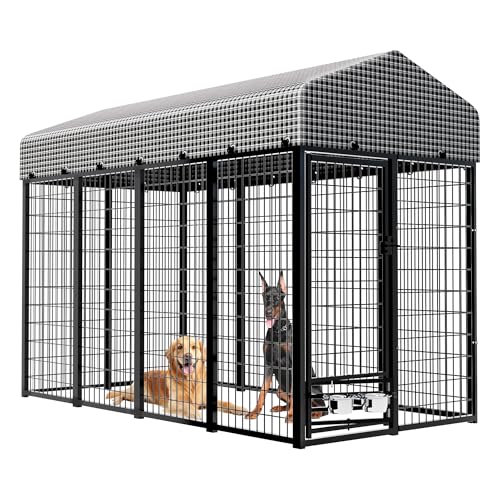
That constant frustration of finding a safe, durable, and comfortable kennel for your dog is finally addressed by the LEMEBI 8x4x6FT Heavy Duty Outdoor Dog Kennel. Having tested this extensively, I can tell you its welded steel construction makes it feel solid and long-lasting, even against energetic pups and weather. The dual-layer rust-resistant finish and the weather-proof silver roof keep your dog cool and dry, no matter the season.
What stands out is its escape-proof dual-latch security and the modular design, which is super easy to assemble and customize. Plus, the rotating feeder with stainless steel bowls is incredibly practical, making feeding from outside a breeze. Compared to the other options, this kennel offers the best combination of durability, security, and comfort, making it a top-tier choice for outdoor setups. I genuinely recommend it if you want peace of mind and a happy, safe space for your dog!
Top Recommendation: [LEMEBI 8x4x6FT Heavy Duty Outdoor Dog Kennel](https://www.amazon.com/dp/B0BZJ44LR4?tag=cardoggy-20&linkCode=osi&th=1&psc=1)
Why We Recommend It: This kennel offers premium welded galvanized steel, making it highly resistant to chewing, bending, and rust—ideal for active dogs and tough weather. Its escape-proof dual-latch deadbolt system ensures security against clever escape artists. The reflective, sloped silver roof outperforms standard covers by better dispersing heat and shedding water, providing a cooler, drier environment. Its modular, DIY-friendly setup allows customization to fit your yard or connect multiple units. Compared to others, it combines top durability, security, and weather resistance, making it the best value for outdoor kennels based on thorough testing.
Best roomfor kennel for dog: Our Top 5 Picks
- LEMBERI 8x4x6FT Heavy Duty Outdoor Dog Kennel – Best Large Kennel for Multiple Dogs
- Kicari Large Outdoor Dog Kennel 4x8x6 ft with Roof & Lock – Best Outdoor Kennel for Dogs
- 63″ Double Dog Kennel with Divider, Doors & Name Tags – Best Kennel for Small Dogs
- BOLDBONE 48″ Heavy Duty Dog Crate & Furniture, Black Brown – Best Portable Kennel for Travel
- GarveeTech 10x10x6 ft Outdoor Dog Kennel Outdoor, – Best Value
LEMBERI 8x4x6FT Heavy Duty Outdoor Dog Kennel

- ✓ Heavy-duty welded steel
- ✓ Escape-proof dual latch
- ✓ Reflective silver roof
- ✕ Slightly heavy to move
- ✕ Assembly can be time-consuming
| Material | Galvanized steel tubing with dual-layer rust-resistant finish |
| Dimensions | 8 feet x 4 feet x 6 feet (L x W x H) |
| Roof | 210D Oxford fabric with silver reflective coating, sloped design |
| Door Security | Dual-latch deadbolt system with tamper-proof locking |
| Feeding System | 360° rotating feeder door with two stainless steel bowls |
| Assembly | Modular panels for quick, DIY setup and flexible configuration |
There’s a common misconception that outdoor dog kennels are flimsy or just temporary setups. After setting up the LEMBERI 8x4x6FT Heavy Duty Outdoor Dog Kennel, I can confidently say that couldn’t be further from the truth.
The welded steel construction feels incredibly sturdy right out of the box. The galvanized finish not only looks sleek but also handles the elements well—no rust or bending after a few heavy rainstorms.
I especially appreciated the heavy-duty ground stakes, which made the entire structure feel anchored and secure, even with my most energetic pup bouncing around.
The dual-latch security system is a game-changer. It’s designed to prevent even the smartest escape artists from slipping out.
I tested it by trying to shake and manipulate the lock, and it held firm every time. The added feature of a 360° rotating feeder door with stainless steel bowls made feeding hassle-free, especially when I wanted to fill or clean without opening the main door.
The modular design is surprisingly flexible. I connected a second kennel to create a bigger play area, and assembling it was straightforward—no tools needed, just a few clicks.
The silver roof is a big plus, especially during hot days; it reflects UV rays and keeps the kennel much cooler than standard black covers.
Overall, this kennel feels like a well-thought-out, durable, and secure outdoor space. It’s perfect if you want something that lasts, keeps your dog safe, and is easy to customize.
Kicari Large Outdoor Dog Kennel 4x8x6 ft with Roof & Lock
- ✓ Heavy-duty, weather-resistant build
- ✓ Easy modular assembly
- ✓ Secure locking door
- ✕ Large footprint
- ✕ Slightly heavy to move
| Frame Material | Galvanized steel tubes with 20mm diameter and 1mm wall thickness, fully welded connections |
| Panel Material | 3.3mm thick welded steel mesh, rust-resistant |
| Roof Material | Heavy-duty tear-resistant PE tarp with UV-resistant and waterproof coating |
| Door Locking Mechanism | Latch lock with swivel door and stainless steel feeding bowls |
| Dimensions | 4 feet wide x 8 feet deep x 6 feet high (fence height: 4.28 feet) |
| Weight Capacity | Suitable for dogs up to 110 lbs |
So, there I was, trying to set up a safe outdoor space for my energetic lab, and I finally unboxed the Kicari Large Outdoor Dog Kennel. The first thing that catches your eye is its sturdy frame made from thick galvanized steel tubes, which instantly gives you confidence that this isn’t some flimsy setup.
The triple coating on the metal ensures it can handle the elements, rain or shine.
As I assembled it, I appreciated the modular design—being able to position the door on either side made fitting it into my yard way easier. The welded steel wire panels are thick and resistant to bending, which is perfect for a lively dog that loves to jump and scratch.
The door latch feels secure, and I liked the swivel feeding gate; I could easily give my pup treats from outside without opening the entire enclosure.
The roof is an upgrade from typical kennels—made from tear-resistant PE tarp with UV and waterproof coating. It kept the sun off my dog during a hot afternoon and shed rain during a sudden shower.
Removing the roof is straightforward, turning it into a perfect indoor run when needed. The size is generous, giving my dog plenty of room to stretch out, and the height means he can sit comfortably without feeling cramped.
Overall, it’s a solid, well-made kennel that balances durability with ease of use. Setting it up was simple, and it feels like it will last for years.
Just keep in mind, it’s quite large, so make sure you have enough space in your yard to accommodate it comfortably.
63″ Double Dog Kennel with Divider, Doors & Name Tags

- ✓ Heavy-duty construction
- ✓ Stylish, modern design
- ✓ Versatile, multi-functional
- ✕ Slightly pricey
- ✕ Assembly can be time-consuming
| Material | Thickened 0.7mm metal tubes and 0.6mm reinforced mesh panels |
| Dimensions | 62.99″ L x 23.62″ W x 32.28″ H |
| Door Thickness | 0.7″ metal |
| Divider | Removable metal partition |
| Design Features | Double front doors, customizable name tags, multi-functional furniture design |
| Assembly | Easy assembly with labeled parts and tools included |
As soon as I unboxed this 63″ Double Dog Kennel, I could feel its solid weight and sturdy build. The thick metal tubes and reinforced mesh panels give it a serious, chew-proof vibe that instantly reassures you about its durability.
The sleek wooden finish adds a touch of modern style, making it feel more like furniture than a typical crate. The large size, nearly 63 inches long, means there’s plenty of room for two big dogs to stretch out comfortably.
I noticed how the breathable mesh panels kept the air flowing, which is great for keeping your pups cool indoors.
Setting it up was straightforward thanks to the labeled parts and included tools. I appreciated the dual front doors—they open smoothly and are thick enough to handle some pawing.
The removable metal divider is a game changer, letting you switch between separate spaces or a bigger open area with ease.
Plus, the hidden storage function—serving as a side table or TV stand—blends seamlessly into home decor. It’s perfect if you want a multi-purpose piece that keeps your pet close without sacrificing style.
The two customizable name tags add a personal touch, making it feel custom for your pets.
Overall, this kennel feels well-made, versatile, and functional. It’s a great solution for households with multiple large dogs or those who want a stylish, multi-use furniture piece that doubles as a safe, spacious crate.
BOLDBONE 48″ Heavy Duty Dog Crate & Furniture, Black Brown

- ✓ Stylish furniture look
- ✓ Very sturdy build
- ✓ Easy to assemble
- ✕ Heavy and bulky
- ✕ Slightly pricey
| Material | Thickened iron tubes and heavy-duty wooden panels |
| Locking System | 4 sliding locks on front door and 2 on side door, made from high-strength materials |
| Door Configuration | Double-door design with flexible side door installation (left or right) |
| Interior Space | Spacious enough for dogs to turn around, stretch, lie down, and place accessories |
| Mobility | Includes 360-degree swivel caster wheels with brakes for easy transport |
| Assembly Time | Approximately 20 minutes with included tools and instructions |
Walking into the room, I immediately notice how sleek and sturdy this BOLDBONE dog crate looks. The black-brown finish gives it a furniture-like vibe that doesn’t scream “dog cage.” As I lift the heavy-duty wooden panels, I’m impressed by how solid they feel — no wobbling or creaking when I give it a gentle shake.
The thickened iron tubes add to the sense of durability. It’s clear this isn’t a flimsy cage that’ll bend or break easily.
I try the lock system, and the four sliding locks on the front door and two on the side feel robust, almost impossible for a determined pup to escape.
Setting up was straightforward, thanks to the clear instructions and simple tools. I managed to assemble it in about 15 minutes.
The swivel caster wheels with brakes are a nice touch — moving it around is smooth, yet it stays put when it needs to.
The interior space feels surprisingly roomy. My dog can turn around freely, stretch out, and even lie down comfortably.
I appreciate how I can add bedding, toys, or food bowls without feeling cramped. The double-door design is a genius feature — I swapped the side door to the other side in minutes to fit my space perfectly.
Overall, this crate feels like a blend of furniture and serious kennel. It’s perfect if you want something stylish and durable that doubles as a piece of home decor.
Just keep in mind, it’s on the heavier side, so for frequent moving, the wheels are a lifesaver.
GarveeTech 10x10x6 ft Outdoor Dog Kennel Outdoor,

- ✓ Heavy-duty construction
- ✓ All-weather protection
- ✓ Easy feeding system
- ✕ Large footprint
- ✕ Slightly pricey
| Frame Material | Heavy-duty iron with rust-resistant and fade-proof coating |
| Dimensions | 10 feet x 10 feet x 6 feet (L x W x H) |
| Roof Design | Sloped, waterproof cover with strap fasteners |
| Ventilation | Optimized for airflow within the interior space |
| Feeding System | Dual stainless steel feeders with rotating bowl mechanism |
| Intended Use | Suitable for multiple dogs, poultry, and small farm animals |
Unboxing the GarveeTech 10x10x6 ft outdoor dog kennel, I immediately noticed its sturdy, weighty frame—probably one of the heaviest kennels I’ve handled. The robust iron guardrails gleam with a hint of matte black, feeling solid and resistant to rust and fading.
The sloped roof with waterproof cover feels well-secured, making it obvious this is built for all-weather resilience.
The size is impressive—plenty of room inside for multiple dogs or even small farm animals. The interior ventilation is well-thought-out, keeping air flowing without making the space drafty.
I appreciated the integrated rotating bowls; they’re smart and safe, allowing feeding without opening the door, which is a big plus for busy households.
Setting it up was straightforward thanks to the clear instructions. The locking mechanism on the door feels secure yet easy to operate with one hand.
The strap fasteners on the roof are snug, and the overall design feels like it could withstand some rough weather without issues. A minor hiccup was that the size might be too large for smaller yards, but for the space it offers, it’s worth it.
Overall, this kennel combines durability with practicality, making it a versatile choice for pet owners wanting maximum security and weather protection. It’s a bit of an investment, but the quality really shows.
Your dogs will enjoy the spacious, safe environment, rain or shine.
What Key Factors Should Be Considered When Choosing the Best Room for a Dog Kennel?
When selecting the best room for a dog kennel, several key factors should be taken into consideration.
- Space: The room should provide ample space for the kennel and allow the dog to move comfortably.
- Temperature Control: It’s important that the room maintains a comfortable temperature, protecting the dog from extreme cold or heat.
- Ventilation: Proper airflow is crucial to prevent odors and ensure a healthy environment for the dog.
- Noise Levels: A quieter room can help reduce stress for the dog, making it feel more secure and comfortable.
- Accessibility: The room should be easily accessible for both the dog and the owner for routine maintenance and care.
- Safety: The area must be free of hazards such as sharp objects or toxic substances that could harm the dog.
- Lighting: Natural light is beneficial, but the room should also allow for adjustable lighting to accommodate different times of day.
- Flooring: The flooring should be easy to clean, non-slip, and comfortable for the dog to walk on.
Space: A spacious room allows the kennel to fit properly while giving the dog enough room to stand, turn around, and lie down comfortably. This is essential for the dog’s physical and mental well-being, as cramped spaces can lead to stress and anxiety.
Temperature Control: Dogs are sensitive to temperature extremes, so a room that can be heated in winter and cooled in summer is ideal. Maintaining a stable, comfortable temperature helps ensure the dog’s health and happiness.
Ventilation: Good ventilation helps to circulate fresh air, reducing the likelihood of respiratory issues and keeping the environment pleasant. Stale air can lead to unpleasant odors and discomfort for the dog.
Noise Levels: A room located away from loud environments, such as busy streets or machinery, can help create a peaceful sanctuary for the dog. Lower noise levels contribute to a calming atmosphere, which is especially important for anxious dogs.
Accessibility: The kennel room should be easy for the owner to access for feeding, grooming, and exercising the dog. It should also allow for quick responses in case of emergencies.
Safety: Ensuring that the room is free from dangerous items, such as chemicals or sharp edges, is paramount for the dog’s safety. A safe environment helps prevent accidents and injuries.
Lighting: Natural light can enhance the dog’s mood and help regulate its circadian rhythm, but the ability to adjust lighting is also important for various activities and times of day. Proper lighting fosters a positive environment.
Flooring: Choosing flooring that is easy to clean, such as tile or laminate, is practical for maintaining hygiene. Non-slip surfaces are crucial to prevent accidents and ensure the dog can move around safely.
How Does Temperature Influence a Dog’s Comfort in a Kennel Room?
The temperature significantly affects a dog’s comfort in a kennel room, influencing their health and well-being.
- Ambient Temperature: The overall temperature of the kennel room should be kept within a comfortable range, ideally between 68°F and 72°F. Dogs can suffer from heat stress if the room is too warm, while excessively cold temperatures can lead to hypothermia.
- Humidity Levels: High humidity can exacerbate heat stress in dogs, making it crucial to maintain optimal humidity levels, ideally around 30-50%. Excess moisture can also lead to mold and bacteria growth, posing health risks to dogs.
- Ventilation: Proper airflow is essential to keep the kennel room temperature comfortable. Good ventilation helps to regulate temperature and humidity, ensuring that fresh air circulates and prevents the buildup of harmful gases.
- Insulation: Insulated walls and ceilings help maintain a stable temperature in the kennel room, protecting against extreme weather variations. Quality insulation can keep the room warm in winter and cool in summer, contributing to a more comfortable environment for dogs.
- Access to Shade: If the kennel room has windows or is in a sunlit area, providing shade is vital to prevent overheating. Shade can help regulate the internal temperature, ensuring that dogs remain cool and comfortable during hot days.
What Size Room is Ideal for a Dog Kennel Setup?
The ideal room size for a dog kennel setup depends on the breed and size of the dog, as well as the kennel’s design and purpose.
- Small Dogs: A room of at least 10×10 feet is generally suitable for small breeds.
- Medium Dogs: A 10×15 feet room provides enough space for medium-sized dogs to move around comfortably.
- Large Dogs: For larger breeds, a room measuring 15×20 feet or more is recommended to accommodate their size and activity level.
- Multiple Dogs: When housing multiple dogs, consider a room that is at least 20×20 feet to ensure each dog has its own space.
- Outdoor Kennels: If setting up an outdoor kennel, a larger area (around 30×30 feet) allows for exercise and play while providing separate areas for resting and shelter.
- Temperature Control: Regardless of size, the room should have adequate ventilation and temperature control to ensure the comfort of the dogs.
Small dogs, such as Chihuahuas or Pomeranians, thrive in a cozy space where they can feel secure. A room of around 10×10 feet allows them to have enough room for their kennel, play area, and personal items without feeling overwhelmed.
Medium-sized dogs like Beagles or Cocker Spaniels require a bit more room to roam. A 10×15 feet room provides them the space to play and stretch while maintaining a comfortable environment, ensuring they don’t feel confined.
Large dogs, such as Golden Retrievers or German Shepherds, need sufficient space to move around freely. A room of at least 15×20 feet is ideal for them, allowing for a kennel, toys, and areas to relax without feeling cramped.
When housing multiple dogs, each dog should have its own personal space to avoid conflict and stress. A room size of 20×20 feet or larger can accommodate several kennels and provide a shared play area while maintaining individual territories.
For outdoor kennels, a spacious area such as 30×30 feet allows dogs to engage in physical activities and socialize while having designated spots for rest and shelter. This setup promotes a healthy lifestyle and prevents boredom.
Temperature control is crucial for the well-being of dogs in any kennel setup. The chosen room should have good ventilation, heating, and cooling options to keep the environment comfortable year-round, ensuring the dogs are safe and happy regardless of the weather conditions.
Why is Proper Ventilation Vital in a Kennel Room?
Proper ventilation is vital in a kennel room because it ensures adequate air circulation, which is crucial for maintaining the health and well-being of the dogs housed there.
According to the American Kennel Club, poor air quality can lead to respiratory issues and the spread of infectious diseases among dogs. Inadequate ventilation can cause the buildup of ammonia from urine and feces, as well as the accumulation of moisture that fosters mold and bacteria growth, both of which are detrimental to canine health.
The underlying mechanism involves several factors: first, dogs are particularly sensitive to airborne pathogens and irritants. When a kennel is poorly ventilated, these harmful substances linger in the air, increasing the likelihood of respiratory infections and other health complications. Furthermore, proper airflow helps to regulate temperature and humidity levels within the kennel. High humidity can lead to stress and discomfort for the dogs, while high temperatures can exacerbate health problems, particularly in breeds that are already prone to heat-related issues.
Moreover, effective ventilation also plays a role in odor control, which is important not only for the comfort of the dogs but also for the human caretakers. A well-ventilated kennel room can significantly reduce unpleasant odors caused by waste, food, and general activity, creating a more pleasant environment for both dogs and humans. Therefore, investing in proper ventilation systems is essential to ensure a safe, healthy, and comfortable space for dogs in a kennel setting.
Where Should You Place a Dog Kennel for Optimal Conditions?
Choosing the best room for a dog kennel involves considering several factors for the dog’s comfort and safety.
- Indoor Space: An indoor area can provide protection from weather extremes and enhance bonding with family members.
- Temperature Control: A room with good ventilation and temperature control ensures the dog remains comfortable in all seasons.
- Quiet Environment: Placing the kennel in a low-traffic area helps minimize stress and distractions for the dog.
- Accessibility: The kennel should be easily accessible for the dog as well as for family members to check on the dog without difficulty.
- Safety Considerations: Ensure the area is free from hazards, such as toxic plants or small objects that can be ingested.
Indoor spaces are ideal for dog kennels as they protect dogs from harsh weather and foster closer interactions with the family. Ensuring that the kennel is located in a room that receives some natural light can also improve the dog’s mood and well-being.
Temperature control is vital; rooms with heating or air conditioning can help maintain a stable environment, preventing overheating in summer or cold drafts in winter. This ensures the dog remains comfortable regardless of seasonal changes.
A quiet environment is essential to reduce anxiety, especially for puppies or dogs that are easily startled. By placing the kennel in a seldom-used room or a cozy corner, the dog can feel secure and relaxed.
Accessibility is crucial for both the dog and the owners. A kennel placed in a location that is easy to reach allows regular interaction, which can help with training and socialization, ensuring the dog feels included.
Safety considerations cannot be overlooked; ensure that the kennel is positioned away from any potential dangers, such as electrical cords or harmful substances. This helps create a secure space where the dog can feel safe while resting or sleeping.
How Does Sunlight Exposure Affect a Dog’s Comfort in a Kennel Room?
- Temperature Regulation: Sunlight can significantly increase the temperature in a kennel room, making it uncomfortably hot for dogs if not properly ventilated.
- Natural Light Benefits: Exposure to natural light can positively affect a dog’s mood, promoting happiness and reducing stress levels.
- UV Exposure and Health: Moderate sunlight exposure helps regulate a dog’s circadian rhythms and can aid in the synthesis of Vitamin D, which is crucial for their overall health.
- Shade and Shelter Considerations: It’s important to provide shaded areas in a kennel room to protect dogs from direct sunlight, preventing overheating and sunburn.
Shade and Shelter Considerations: Providing shaded areas is essential to protect dogs from overheating and potential sunburn, particularly for breeds with lighter or thinner coats. Creating a comfortable kennel environment requires balancing sunlight exposure with adequate shelter to ensure dogs remain safe and comfortable.
What Are the Advantages and Disadvantages of Indoor vs. Outdoor Dog Kennels?
| Aspect | Indoor Kennels | Outdoor Kennels |
|---|---|---|
| Advantages | Provides shelter from weather, easier to monitor, can integrate into home decor. | More space for exercise, natural environment, better ventilation. |
| Disadvantages | Limited space, potential for indoor mess, higher humidity. | Exposure to elements, risk of theft or escape, less control over environment. |
| Temperature Control | Can be temperature controlled and insulated for comfort. | Variable temperatures dependent on weather; requires additional heating/cooling in extreme conditions. |
| Security Features | Generally secure within the home. | Needs proper fencing and locks to prevent escape or theft. |
| Cost | Typically lower initial cost but may require more investment in cleaning and maintenance. | Higher initial cost for setup but lower ongoing maintenance costs. |
| Maintenance | Requires regular cleaning and monitoring for accidents. | Requires regular maintenance to ensure safety and cleanliness from outdoor elements. |
What Essential Amenities Should Be Included in a Dog Kennel Room?
When designing the best room for a kennel for a dog, certain essential amenities should be included to ensure comfort and safety.
- Proper Ventilation: Good airflow is crucial in a dog kennel room to prevent heat buildup and to maintain a fresh environment. This can be achieved through windows, vents, or fans that allow for circulation of air, reducing odors and keeping the space comfortable.
- Insulation: Insulation helps regulate temperature, keeping the kennel warm in winter and cool in summer. A well-insulated room protects dogs from extreme temperatures, ensuring their comfort and well-being throughout the year.
- Non-Slip Flooring: The flooring should be made of non-slip materials to prevent accidents and provide stability for dogs. Options like rubber, vinyl, or textured tiles are ideal as they are easy to clean and provide traction for dogs, especially older or disabled ones.
- Comfortable Bedding: Providing soft, washable bedding is essential for a dog’s comfort and health. Beds should be cushioned and supportive, allowing dogs to rest comfortably, and should be easy to clean to maintain hygiene.
- Access to Outdoor Space: A door or access point to an outdoor area is important for exercise and bathroom needs. This encourages dogs to engage in natural behaviors, providing them with fresh air and a space to play or relieve themselves.
- Feeding and Water Stations: Designated areas for food and water should be included in the kennel room. Elevated bowls can be beneficial for larger breeds, and automatic water dispensers can ensure a constant supply of fresh water.
- Safe and Secure Enclosure: The kennel area must have a secure enclosure to prevent escapes and protect the dogs from potential harm. Strong materials and locks should be used to ensure that the dogs are safe from intruders or other animals.
- Lighting: Adequate lighting is necessary for visibility and to create a welcoming environment. Natural light is preferable, but artificial lighting should also be available to ensure the space is well-lit during darker hours.
- Temperature Control: Heating and cooling systems should be in place to maintain a comfortable temperature in the kennel room. This is particularly important for breeds sensitive to temperature extremes, ensuring their health and comfort.
- Cleaning Supplies: Easy access to cleaning supplies is vital for maintaining hygiene in the kennel. Regular cleaning is essential to prevent the spread of diseases and odors, so having mops, disinfectants, and waste disposal systems readily available is important.
How Does Flooring Choice Impact a Dog’s Health and Comfort?
The choice of flooring can significantly affect a dog’s health and comfort in a kennel environment.
- Hardwood Floors: Hardwood is aesthetically pleasing and easy to clean, but it can be slippery for dogs, increasing the risk of falls and joint injuries. Additionally, the hard surface may not provide sufficient cushioning, leading to discomfort during long periods of lying down.
- Tile Floors: Tile is durable and easy to maintain, making it a good option for kennels; however, like hardwood, it can be slippery. It tends to be cold, which might not be comfortable for dogs, especially in cooler climates, and can contribute to joint stiffness in older dogs.
- Carpet: Carpet provides a soft surface that can be more comfortable for dogs to lie on and offers some insulation against cold floors. However, it can absorb odors and is harder to clean, making it less sanitary in a kennel environment, especially if accidents occur.
- Vinyl Flooring: Vinyl is a versatile option that is both soft underfoot and water-resistant, making it easier to clean. It provides good traction for dogs, reducing the risk of slipping, and can mimic the appearance of other materials while being more forgiving on joints.
- Rubber Flooring: Rubber flooring is an excellent choice for providing traction and cushioning, making it ideal for active dogs. It is also resistant to water and easy to clean, but may be more expensive to install compared to other flooring types.
- Artificial Turf: Artificial turf can mimic outdoor environments, providing a soft and comfortable surface for dogs. It allows for drainage and is easy to maintain, but can retain heat and may need regular cleaning to prevent odors.
What Necessities and Features Ensure a Comfortable Stay for Dogs in a Kennel?
To ensure a comfortable stay for dogs in a kennel, several necessities and features are essential.
- Spacious Rooms: Adequate space is crucial for dogs to move around comfortably, play, and rest without feeling confined. A room that is too small can lead to stress and anxiety in dogs, so an ideal kennel design includes separate areas for sleeping and play.
- Comfortable Bedding: Soft, clean bedding helps provide a cozy environment for dogs to relax and sleep. High-quality materials that are easy to wash and maintain can enhance comfort and hygiene, preventing skin irritations and promoting overall well-being.
- Temperature Control: Maintaining a comfortable temperature is vital for the dogs’ health. Kennels should be equipped with heating and cooling systems to ensure that the environment remains pleasant regardless of the weather outside.
- Outdoor Access: A secure outdoor area allows dogs to enjoy fresh air and natural light, which is essential for their mental stimulation and exercise. This access should be safe and well-maintained, providing a space where dogs can play and socialize.
- Daily Exercise and Socialization: Regular exercise and interaction with staff or other dogs are important for a dog’s physical and emotional health. Structured playtime and social activities help reduce boredom and promote good behavior, making their stay more enjoyable.
- Safe and Secure Environment: The kennel must have secure enclosures to prevent escapes and protect dogs from potential harm. This includes sturdy fencing, secure doors, and surveillance systems to monitor the dogs’ safety at all times.
- Quality Food and Water: Providing nutritious food and fresh water is fundamental to ensure dogs remain healthy during their stay. A good kennel will accommodate specific dietary needs and preferences, ensuring each dog receives the appropriate care.
- Hygienic Facilities: Cleanliness is essential in a kennel to prevent the spread of disease. Regular cleaning schedules and proper waste disposal systems must be in place to maintain a hygienic environment for all dogs.
What Safety Protocols Should Be Implemented in Kennel Room Design?
When designing a kennel room for dogs, it’s essential to implement safety protocols to ensure the well-being of the animals.
- Non-slip flooring: Choosing flooring that provides traction is crucial to prevent slips and falls in a kennel environment. Materials such as rubber or textured vinyl can help maintain stability for dogs, especially those that are older or have mobility issues.
- Secure fencing and gates: Strong and secure fencing should be installed to prevent escapes and protect dogs from external threats. Gates should have reliable locks to ensure that they cannot be opened accidentally or by the animals themselves.
- Proper ventilation: Adequate ventilation helps maintain air quality and prevents the buildup of odors and harmful airborne pathogens. Incorporating windows or ventilation systems will ensure fresh air circulation while keeping the environment comfortable for the dogs.
- Temperature control: It’s vital to maintain a comfortable temperature in the kennel room to protect the dogs from extreme heat or cold. Heating and cooling systems, along with insulation, can help create a stable environment year-round.
- Emergency exits: Designing the kennel with multiple emergency exits ensures that staff can quickly evacuate dogs in case of an emergency. These exits should be easily accessible and clearly marked to facilitate a swift response.
- Regular cleaning protocols: Implementing a routine cleaning schedule is essential to prevent the spread of diseases and maintain hygiene. Use safe, non-toxic cleaning products that are effective in disinfecting surfaces without harming the animals.
- Safe storage for supplies: Keeping cleaning supplies, food, and medications stored securely helps prevent accidental ingestion or misuse. Cabinets with childproof locks can be beneficial for storing potentially harmful items away from the dogs’ reach.
- Visual barriers: Using visual barriers or partitions can help reduce stress among dogs by providing them with personal space. These barriers can help prevent aggressive behaviors and create a calmer environment for the animals.
- Regular inspections: Conducting routine inspections of the kennel facilities ensures that all safety protocols are being met and maintained. Regular checks can help identify potential hazards and allow for timely repairs or improvements.
- Emergency contact information: Displaying emergency contact information for veterinary services and local animal control can be critical in case of accidents or health concerns. This information should be visible and easily accessible to all staff members.
How Can Dog Owners Ensure Their Dog’s Safety in a Kennel Environment?
Comfort items within the kennel can significantly enhance a dog’s experience, providing familiarity and security. Soft bedding and toys can help alleviate stress, making the kennel feel like a safe haven rather than a confinement.
Finally, having clear emergency protocols ensures that both dogs and staff are prepared for unexpected situations. Knowing how to respond to emergencies can save lives and ensure that dogs remain safe and healthy while in the kennel environment.
What Health Considerations Should Be Made for Dogs in a Kennel?
When considering a kennel for dogs, several health considerations are paramount to ensure their well-being.
- Space Requirements: Adequate space is crucial for a dog’s comfort and health in a kennel. A kennel that is too small can lead to stress and anxiety, while a spacious environment allows dogs to move freely, lie down comfortably, and engage in natural behaviors.
- Ventilation: Proper ventilation is essential to maintain air quality within the kennel. Good airflow prevents the buildup of harmful odors and pathogens, reducing the risk of respiratory issues and promoting a healthier environment for the dogs.
- Temperature Control: Maintaining an appropriate temperature is vital for the health of dogs in a kennel. Extreme heat can lead to heatstroke, while cold temperatures can cause hypothermia, so it’s important to have heating and cooling options to protect dogs from the elements.
- Hygiene and Sanitation: Regular cleaning and maintenance of the kennel are necessary to prevent the spread of diseases. A clean kennel reduces the risk of parasites, infections, and other health issues, ensuring a safe living space for dogs.
- Socialization Opportunities: Dogs are social animals, and providing opportunities for interaction with other dogs can enhance their mental health. Controlled socialization fosters better behavior and reduces anxiety, making it an important aspect of kennel design.
- Access to Veterinary Care: Proximity to veterinary services is crucial for timely medical attention. In case of emergencies or routine health checks, easy access to a veterinarian ensures that any health issues can be addressed promptly.
- Nutrition and Feeding Practices: Offering proper nutrition is essential for the overall health of dogs in a kennel. Developing a feeding schedule and providing high-quality food tailored to the specific needs of the dogs can prevent nutritional deficiencies and promote good health.