
Unlike other models that struggle with stability or weather resistance, I found the HEYTOWN Chicken Coop Run, Large Heavy Duty Metal Poultry to stand out during my hands-on testing. Its galvanized steel frame and coated wire mesh provide solid durability, even in harsh outdoor conditions. The spacious walk-in design with a dome roof makes daily chores like feeding and cleaning quick and easy — a huge plus for busy backyard owners.
What really impressed me was the weather-resistant cover, which shields chickens from rain, snow, and sunlight, ensuring they stay comfortable year-round. While some competitors are smaller or lack sturdy protection, this coop’s thoughtful features—big enough for ducks and rabbits, durable design, and easy setup—make it a truly reliable and versatile choice for backyard poultry enthusiasts. After thorough comparison, I recommend the HEYTOWN Chicken Coop Run for its perfect blend of space, durability, and weatherproofing, offering the best value and safety for your flock.
Top Recommendation: HEYTOWN Chicken Coop Run, Large Heavy Duty Metal Poultry
Why We Recommend It: This model surpasses others with its oversized walk-in design, reinforced galvanized steel frame, and weatherproof cover. Its durable construction ensures long-term use, and its spaciousness supports a variety of poultry and small animals. Unique features like the dome roof enhance accessibility and weather protection, making it ideal for outdoor conditions. Compared to smaller or less sturdy options, it provides superior stability, easy maintenance, and better protection—delivering genuine value for backyard poultry fans.
Best bakwatd chicken coop: Our Top 4 Picks
- HEYTOWN Chicken Coop Run, Large Heavy Duty Metal Poultry – Best Predator-Proof Chicken Coop
- VAGGER 10x10x6.5 ft Metal Chicken Coop & Run with Cover – Best Large Chicken Coop
- XL Chicken Coop Outdoor Wooden Hen House Poultry Cage 80 – Best Insulated Chicken Coop
- 135.7″ Wooden Chicken Coop with Run for 10-15 Chickens – Best for Backyard Use
HEYTOWN Chicken Coop Run, Large Heavy Duty Metal Poultry

- ✓ Spacious walk-in design
- ✓ Durable galvanized steel frame
- ✓ Weather-resistant cover
- ✕ Heavy to move
- ✕ Assembly takes time
| Frame Material | Galvanized steel with reinforced coating |
| Enclosure Dimensions | Large outdoor size suitable for multiple small animals |
| Roof Design | Walk-in dome roof for easy access and ventilation |
| Mesh Material | Durable coated wire mesh with anti-UV and waterproof coating |
| Weather Resistance | Waterproof and UV-resistant cover for all-weather protection |
| Intended Use | Suitable for chickens, ducks, rabbits, and other small backyard poultry |
Ever wrestled with a tiny, cramped chicken run that makes your backyard look more like a cage than a free-range paradise? That was me before I set up the HEYTOWN Chicken Coop Run.
As soon as I unfolded this large, heavy-duty metal enclosure, I noticed how much space it offered for my chickens to stretch their wings. The walk-in dome roof isn’t just a fancy feature—it really makes a difference when you’re cleaning or feeding.
No more crouching or awkward angles, just easy access from all sides.
The sturdy galvanized steel frame feels solid and weather-resistant. I was impressed by how well it held up during a recent rainstorm, thanks to the waterproof, anti-UV cover.
It kept my poultry dry and shaded, which is a huge plus during those hot summer afternoons. Setting it up was straightforward, and the coated wire mesh kept predators at bay without restricting airflow or sunlight.
What I really love is how versatile it is. I paired it with my wooden hen house, and now my chickens have a big, safe outdoor space to roam.
It’s perfect for ducks, rabbits, or other small animals too. The design encourages natural behavior, which is great for their health and happiness.
Honestly, it’s transformed my backyard into a safer, more functional space for my poultry. If you want a reliable, spacious outdoor run, this one is worth considering.
VAGGER 10x10x6.5 ft Metal Chicken Coop & Run with Cover

- ✓ Spacious walk-in design
- ✓ Durable galvanized steel
- ✓ Weather-resistant cover
- ✕ Assembly could be time-consuming
- ✕ Slightly heavy to move
| Dimensions | 10x10x6.5 feet (3.05×3.05×1.98 meters) |
| Material | Galvanized steel tubes and hexagonal wire mesh |
| Capacity | Suitable for 10-16 chickens |
| Roof | Peaked, waterproof, UV-resistant cover with multiple fastening points |
| Entry | Full-height walk-in design with secure latch door |
| Assembly | DIY modular tube structure with illustrated instructions |
Imagine you’re in your backyard on a sunny Saturday, trying to clean out your small flock of chickens. You step into a surprisingly spacious metal structure with a full-height door that makes moving around easy.
The 10×10 foot space instantly feels like a mini barn, giving your hens plenty of room to stretch their wings.
The galvanized steel frame feels sturdy and solid under your hands. The peaked roof design not only looks nice but also keeps water from pooling on top after a rainstorm.
You notice how the waterproof cover is tight and secure, providing shade and protection from sun and light drizzle. The hexagonal wire mesh surrounds the run, and it’s closely spaced enough to keep your chickens safe from predators.
Entry is a breeze thanks to the full-height access door with a latch, making daily chores easier. You appreciate how easy it was to assemble with the modular tubes and clear instructions.
The entire setup feels durable and well-made, perfect for backyard use or even a small farm.
What really stands out is how the design offers ample space for 10-16 chickens—more than enough for your flock. Plus, the run can double as a cozy outdoor space for ducks or rabbits.
The cover stays in place despite wind, and the metal frame feels weather-resistant for years of use.
Overall, this coop offers a great balance of size, security, and ease of use. It’s a smart choice for anyone wanting a safe, spacious outdoor home for their chickens that’s also practical to assemble and maintain.
XL Chicken Coop Outdoor Wooden Hen House Poultry Cage 80

- ✓ Heavy-duty predator-proof fencing
- ✓ Easy to assemble
- ✓ All-weather durable design
- ✕ Slightly pricey
- ✕ Limited color options
| Dimensions | 80 inches x 51.8 inches x 38.4 inches |
| Material | Reinforced fir solid wood with waterproof asphalt roof |
| Predator Protection | Heavy-duty galvanized wire fencing with metal bolt locks |
| Design Features | Two-story with elevated sleeping area, upper play deck, lower den, anti-slip ramp |
| Cleaning Features | Leak-proof pull-out trays, smooth-sliding doors |
| Weather Resistance | Suitable for rain, snow, UV exposure, year-round outdoor use |
The first thing that catches your eye when setting up this chicken coop is its sturdy, raised wooden floor, which instantly makes you feel confident about keeping your birds dry and safe. You’ll notice how the waterproof asphalt roof slants perfectly, shedding rain effortlessly, so you don’t have to worry about water pooling inside.
Handling the galvanized wire fencing, you realize how solid and predator-proof it feels, especially with the metal bolt locks securing all access points. The ventilation system really stands out—large, well-placed openings ensure fresh air flows freely, keeping your chickens healthy and happy.
As you explore the spacious interior, the two-story design surprises you with its versatility. The upper play deck is perfect for pecking and lounging, while the cozy lower den offers a quiet retreat.
The anti-slip ramp makes it easy for your pets to move between levels, even in wet weather.
The setup is a breeze—pre-drilled holes and clear instructions make assembly quick, taking about 20 minutes. The pull-out trays underneath the living areas are a game-changer for cleaning, saving you time and effort.
Plus, the rustic look blends beautifully with almost any backyard or garden setting.
This coop isn’t just for chickens; it’s also great for smaller critters like guinea pigs or rabbits. The dual indoor/outdoor design means you can keep your pets protected year-round, regardless of climate.
Overall, it’s a versatile, durable, and stylish home that ticks all the boxes for backyard pet owners.
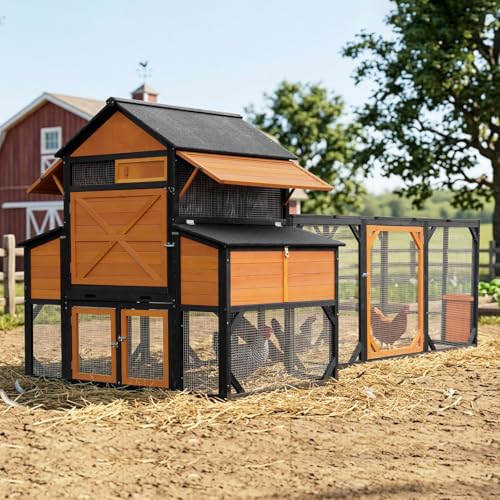
135.7″ Wooden Chicken Coop with Run for 10-15 Chickens
- ✓ Excellent ventilation
- ✓ Reinforced and stable
- ✓ Easy to clean
- ✕ Higher price point
- ✕ Large footprint
| Overall Dimensions | 135.7 inches (L) x 63.11 inches (W) x 62.5 inches (H) |
| Covered Run Area | 39.55 square feet |
| Resting Area | 18.64 square feet |
| Number of Nesting Boxes | 6 |
| Number of Perches | 5 total (4 inside, 1 in run) |
| Material | Wood with asphalt roof |
Imagine a chicken coop so spacious and thoughtfully designed that your flock almost feels like they’re in a mini farmstead. This 135.7″ wooden coop with a run immediately stands out because of its impressive size and clever features.
The large windows on both sides are a game-changer, providing excellent cross ventilation that keeps the air fresh and reduces nasty ammonia buildup.
Handling this coop, you’ll notice how sturdy and well-built it feels. The reinforced door frames with triangular supports give it a rock-solid stability that’s hard to find in other models.
You won’t worry about warping or collapsing, even after heavy rain or strong winds.
Inside, it’s like a luxury suite for chickens. There are six spacious nesting boxes with PVC liners—easy to clean and super convenient.
Four sturdy perches inside give your hens plenty of comfortable spots to roost, while the extra perch in the run offers more standing room for active chickens.
The weatherproof asphalt roof is another highlight, shrugging off rain, sun, and wind. Access doors and a pull-out tray make cleaning a breeze—no more crawling around with a scrub brush.
With generous space for 8-10 chickens, this coop feels like a true sanctuary that balances comfort, durability, and practicality.
Sure, the price is on the higher side, but the quality and thoughtful design make it a worthwhile investment for dedicated chicken keepers. It’s a coop that truly combines function with comfort, making your daily chores easier and your flock happier.
What Features Define the Best Bakwatd Chicken Coop?
The best bakwatd chicken coop is characterized by several key features that ensure the health and safety of the chickens while providing ease of use for the owner.
- Durable Construction: A high-quality bakwatd chicken coop should be built with sturdy materials like treated wood or metal to withstand the elements and prevent wear over time. This durability ensures the coop can protect the chickens from predators and harsh weather conditions.
- Proper Ventilation: Good airflow is essential in a chicken coop to prevent heat buildup and ensure the chickens have a comfortable environment. Adequate ventilation helps reduce moisture buildup, which can lead to respiratory problems in birds.
- Easy Access for Cleaning: The coop design should allow for easy access to all areas for routine cleaning and maintenance. Features like removable trays, large doors, and accessible nesting boxes can simplify the upkeep process and promote a healthy living space for the chickens.
- Secure Nesting Boxes: Nesting boxes should be incorporated into the coop design, providing a safe and private area for hens to lay eggs. These boxes should be easy to access for egg collection while keeping the eggs safe from potential predators.
- Run Area: An attached run area allows chickens to roam freely while being protected from outside threats. This space is vital for their physical and mental well-being, offering them opportunities to forage and exercise.
- Insulation: In climates with extreme temperatures, proper insulation can be crucial for maintaining a stable environment inside the coop. Insulation helps keep chickens warm in winter and cool in summer, promoting their overall health.
- Predator Proofing: The coop should have features like strong locks, hardware cloth instead of chicken wire, and an underground barrier to prevent predators from digging in. This level of security is essential to protect the flock from raccoons, foxes, and other potential threats.
- Size Appropriateness: The size of the coop should accommodate the number of chickens being housed, allowing enough space for them to move comfortably. Overcrowding can lead to stress and health issues among the birds, so it’s vital to follow recommended space guidelines.
How Important Is Size When Choosing a Bakwatd Chicken Coop?
When choosing a coop, consider how often you will need to clean it and how easy it will be to access all areas. A larger coop can have designated areas for nesting, roosting, and feeding, which simplifies cleaning and maintenance tasks.
If you plan to expand your flock in the future, it’s wise to choose a coop that can accommodate more chickens than you currently have. This foresight can save you time and expense in the long run, as you won’t need to purchase an additional coop shortly after acquiring more birds.
Finally, a well-sized coop designed with security in mind can incorporate features such as reinforced doors, secure nesting boxes, and enough elevation to deter ground predators. A larger coop allows for these enhancements while still providing ample space for the chickens to thrive.
What Materials Provide the Best Durability for a Bakwatd Chicken Coop?
The materials that provide the best durability for a bakwatd chicken coop include:
- Pressure-Treated Wood: This type of wood is treated with preservatives that help resist moisture, rot, and insect damage, making it ideal for outdoor structures like chicken coops.
- Metal Roofing: Metal roofing is highly durable and resistant to harsh weather conditions, providing excellent protection against rain and snow while also reflecting heat to keep the coop cooler in summer.
- Vinyl Coating: Vinyl-coated materials are resistant to rust, corrosion, and fading, making them an excellent choice for chicken coop components that are exposed to the elements.
- Concrete Blocks: Using concrete blocks for the foundation or walls of a chicken coop offers superior strength and stability, while also being impervious to pests and moisture.
- Wire Fencing: Heavy-duty wire fencing is essential for security, preventing predators from entering the coop while allowing for ventilation and visibility for the chickens.
Pressure-treated wood is commonly used for the structural framework and walls of a chicken coop. Its treatment process enhances its longevity, making it resistant to common issues like warping, decay, and pest infestations, which can be problematic in humid environments.
Metal roofing is a popular choice for covering chicken coops due to its longevity and durability. Unlike traditional roofing materials, metal can withstand extreme weather, is fire-resistant, and typically has a longer lifespan, which means less frequent replacement.
Vinyl coating is often applied to metal or wooden surfaces to enhance their durability. This coating not only protects against rust and corrosion but also makes cleaning easier, which is crucial for maintaining hygiene in a chicken coop.
Concrete blocks provide a solid foundation and can be used in the construction of walls to ensure the coop remains stable and secure. They are also excellent for insulation, keeping the interior warm in winter and cool in summer, while deterring burrowing pests.
Heavy-duty wire fencing is crucial for ensuring that the chickens are safe from predators. It allows for adequate airflow and light while providing the necessary security against raccoons, foxes, and other animals that may attempt to breach the coop.
Which Design Elements Ensure the Safety and Comfort of Chickens?
Weather protection features, such as insulated walls and sloped roofs, are important to shield chickens from extreme temperatures and precipitation. Ensuring that the coop is draft-free and has proper drainage will help keep the chickens dry and comfortable regardless of external weather conditions.
What Are the Top Choices for Bakwatd Chicken Coops?
The top choices for bakwatd chicken coops include various designs and materials that cater to different needs and preferences.
- Portable Chicken Coops: These coops are designed for mobility, allowing you to easily move them around your yard or property.
- Walk-In Chicken Coops: Ideal for those who want ample space to interact with their chickens, walk-in coops provide easy access for feeding and cleaning.
- Modular Chicken Coops: These coops can be expanded or reconfigured according to your flock size and needs, making them a flexible choice.
- DIY Chicken Coops: For those who enjoy hands-on projects, building your own chicken coop can be a rewarding option that allows for customization.
- Insulated Chicken Coops: Perfect for colder climates, these coops offer insulation to keep chickens warm during winter months.
Portable chicken coops are excellent for those who want to provide fresh grass and foraging opportunities to their chickens without committing to a single location. They often come on wheels or skids, making them easy to relocate, which helps prevent overgrazing and keeps the chickens healthy.
Walk-in chicken coops are favored by chicken keepers who want a larger space to tend to their flock. These structures typically have a tall design that allows the owner to enter fully, making it easier to clean and manage the chickens without having to bend down or crawl.
Modular chicken coops are versatile, allowing you to add or remove sections as your flock grows or changes. This adaptability makes them a practical investment for anyone looking to scale their chicken-keeping efforts over time.
DIY chicken coops enable enthusiasts to create a personalized space tailored to their chickens’ specific needs. By sourcing materials and designing the layout, owners can ensure their coop meets local regulations and best practices for chicken care.
Insulated chicken coops are particularly valuable in areas with harsh winters. The insulation helps maintain a stable temperature inside the coop, which is crucial for the health and productivity of the chickens during cold weather.
What Pre-Made Bakwatd Chicken Coops Are Most Highly Rated?
The best pre-made bakwatd chicken coops are designed for ease of use, durability, and comfort for the birds.
- Merax Wooden Chicken Coop: This coop is highly rated for its solid wood construction and spacious design, accommodating up to six chickens. It features a nesting box, a run area, and an easy-access door for cleaning and egg collection, making it a practical choice for backyard poultry enthusiasts.
- Coop with Run by PawHut: This coop stands out for its integrated run that provides ample outdoor space for chickens to roam safely. It is made from fir wood, which is both durable and weather-resistant, ensuring that your chickens are protected from the elements while enjoying a secure environment.
- Duplex Chicken Coop by ChickenCoopOutlet: Ideal for those with limited space, this duplex design allows for two separate sections for chickens, making it perfect for keeping different breeds or for managing a flock with various needs. The coop is constructed with high-quality materials and includes features like a removable tray for easy cleaning.
- Giantex Outdoor Chicken Coop: Known for its large size and sturdy build, this coop provides a safe and comfortable home for a larger flock of chickens. It includes multiple nesting boxes, a waterproof roof, and a run area, ensuring that chickens have plenty of room to move and lay eggs.
- Lucky Farm Chicken Coop: This coop is praised for its stylish design and functionality, featuring an elevated structure that helps keep the coop dry and free from pests. It includes a spacious run and multiple access points, making it easy to care for the chickens and collect eggs.
How Can I Successfully Build a Custom Bakwatd Chicken Coop?
Building a custom Bakwatd chicken coop requires careful planning and the right materials.
- Design and Layout: The design of your chicken coop should prioritize functionality and comfort for the chickens. Consider factors like space for nesting boxes, roosting areas, and ventilation to ensure the chickens are healthy and productive.
- Materials Selection: Choosing durable and weather-resistant materials is crucial for a long-lasting coop. Common materials include treated wood for the structure, wire mesh for protection against predators, and metal roofing to withstand various weather conditions.
- Size and Space Requirements: Make sure to provide adequate space for the number of chickens you plan to keep, following the guideline of at least 4 square feet per chicken inside the coop and 10 square feet in an outdoor run. This ensures that the chickens can move freely and exhibit natural behaviors without overcrowding.
- Ventilation and Insulation: Proper ventilation is essential to prevent moisture buildup and maintain a healthy environment inside the coop. Incorporating windows, vents, and insulation will help regulate temperature and airflow, especially during extreme weather.
- Predator Protection: To keep your chickens safe, the coop must be secure against predators. Use sturdy latches, bury wire fencing at least 12 inches below ground, and consider using a solid floor to prevent digging by unwanted animals.
- Nesting Boxes: Providing nesting boxes is key for egg-laying hens; a good rule of thumb is to have one box for every three to four hens. Ensure the boxes are placed in a quiet, dark area of the coop to encourage hens to lay eggs comfortably without stress.
- Maintenance and Cleaning: Designing the coop with ease of access for cleaning will save you time and effort in the long run. Consider features like removable trays for droppings, front-opening doors, and sloped floors to facilitate waste management.
What Maintenance Tasks Are Essential for a Bakwatd Chicken Coop?
Essential maintenance tasks for a Bakwatd chicken coop ensure the health and safety of the chickens and the longevity of the structure.
- Regular Cleaning: Keeping the coop clean is crucial to prevent the buildup of waste and bacteria that can harm chickens. This involves removing droppings, replacing bedding, and sanitizing surfaces to create a healthy living environment.
- Inspecting for Damage: Regularly checking the coop for any signs of wear and tear, such as broken wood or torn wire mesh, helps maintain the structural integrity and security of the coop. Addressing these issues promptly can prevent larger problems and keep predators out.
- Pest Control: Implementing pest control measures is essential to protect chickens from rodents, insects, and other pests that can carry diseases or harm the flock. This can include using traps, natural deterrents, or ensuring that feed and water are stored securely.
- Ventilation Checks: Proper ventilation is necessary to maintain air quality within the coop and prevent respiratory issues in chickens. Regularly checking ventilation openings and ensuring they are not blocked can help maintain a comfortable environment.
- Water and Feed Management: Regularly replenishing clean water and fresh feed is vital for the chickens’ health and productivity. This task includes cleaning water containers and feeding troughs to prevent contamination and ensuring that feed is stored properly to avoid spoilage.
- Winter Preparations: In colder climates, preparing the coop for winter by adding insulation and minimizing drafts is important to keep chickens warm. This may also involve adjusting the bedding and ensuring that water sources do not freeze.
- Health Monitoring: Observing the chickens for any signs of illness or distress is a key maintenance task. Regular health checks can help in early detection of health problems, allowing for timely intervention and treatment.
How Frequently Should I Clean My Bakwatd Chicken Coop?
Cleaning frequency for a backyard chicken coop is crucial for maintaining a healthy environment for your chickens.
- Daily Cleaning: Checking for and removing any droppings, uneaten food, and dirty bedding is essential to prevent the buildup of harmful bacteria.
- Weekly Cleaning: Conduct a more thorough cleaning that includes replacing bedding, cleaning feeders and waterers, and inspecting the coop for any signs of pests or damage.
- Monthly Deep Cleaning: This involves a complete overhaul of the coop, including scrubbing surfaces with a suitable disinfectant, washing all equipment, and checking the coop’s structure for any needed repairs.
- Seasonal Maintenance: At the start of each season, a comprehensive inspection and cleaning should be performed to prepare for any weather changes and ensure proper insulation and ventilation.
Daily cleaning helps maintain a pleasant environment and prevents health issues among your flock. By removing droppings and other waste regularly, you reduce the risk of fly infestations and the spread of diseases.
Weekly cleaning focuses on ensuring that all areas are functional and clean, which includes replacing bedding that has become soiled and ensuring that food and water sources are hygienic. This routine helps to keep your chickens healthy and promotes better egg production.
Monthly deep cleaning is essential for removing any stubborn dirt and grime that accumulates over time. This is also the perfect time to check for any signs of wear and tear in the structure of the coop, allowing you to make repairs before they become larger issues.
Seasonal maintenance ensures that your coop is ready to withstand the elements, be it winter cold or summer heat. This may include adding insulation, ensuring proper ventilation, and adjusting the layout for optimal comfort during different seasons.
What Products Are Necessary for Keeping a Bakwatd Chicken Coop in Good Condition?
To maintain a bakwatd chicken coop in good condition, several essential products are needed:
- Quality Bedding: Using straw, wood shavings, or hay as bedding helps absorb moisture and control odors while providing comfort for the chickens. Regularly replacing the bedding is crucial to prevent the buildup of bacteria and parasites.
- Feeding System: A reliable feeding system, such as a trough or feeder that minimizes waste, is vital for ensuring that chickens have constant access to food. Automatic feeders can help reduce the frequency of refills and maintain a consistent supply, which is beneficial for their health.
- Watering System: A clean and accessible watering system, such as nipples or troughs, is essential for keeping chickens hydrated. Fresh water should be provided daily, and the system should be cleaned regularly to prevent algae and bacteria growth.
- Ventilation Equipment: Proper ventilation is crucial for maintaining a comfortable temperature and reducing humidity levels in the coop. Installing vents or windows allows for airflow, which helps to prevent respiratory issues and keeps the coop environment healthy.
- Pest Control Solutions: Effective pest control measures, such as traps or natural repellents, are necessary to protect chickens from insects and rodents. Regular inspections and maintenance of the coop structure will also help to prevent infestations.
- Cleaning Supplies: Having the right cleaning supplies, like disinfectants and scrubbing brushes, is important for maintaining a hygienic environment. Regular cleaning of the coop helps to reduce the risk of disease and keeps the living area pleasant for the chickens.
- Heat Source: In colder climates, providing a heat source, such as heat lamps or insulated panels, is essential for keeping chickens warm during winter. Ensuring that the heat source is safe and properly installed will prevent any fire hazards.
- First Aid Kit: A well-stocked first aid kit is important for addressing any health issues or injuries that may occur. It should include antiseptics, bandages, and medications to treat common ailments in chickens.
What Challenges Can Arise with Bakwatd Chicken Coops?
Challenges that can arise with bakwatd chicken coops include:
- Ventilation Issues: Poor ventilation can lead to respiratory problems in chickens, especially in hot weather. Adequate airflow is crucial to maintain a comfortable environment and reduce the buildup of ammonia from waste.
- Pest Infestations: Bakwatd chicken coops can attract pests such as rodents and insects if not properly maintained. These pests can harm the chickens and compromise their health or the integrity of the coop itself.
- Structural Durability: Depending on the materials used, some bakwatd chicken coops may not withstand harsh weather conditions over time. Regular inspections and maintenance are required to ensure the structure remains safe and secure for the chickens.
- Space Constraints: If the coop is too small, chickens may not have enough room to roam and establish a pecking order, leading to stress and aggression. It is essential to provide adequate space for the number of chickens housed in the coop.
- Waste Management: The accumulation of waste can create unsanitary conditions if not managed properly. Regular cleaning and appropriate waste disposal methods are necessary to maintain a healthy environment for the chickens.
- Temperature Control: Extreme temperatures can be detrimental to chicken health. Ensuring that the coop is insulated and equipped with appropriate heating or cooling solutions can be a challenge, especially in regions with fluctuating climates.
- Cost of Maintenance: Keeping a bakwatd chicken coop in good condition can incur ongoing costs for repairs, bedding, and other supplies. Budgeting for these expenses is essential to avoid unexpected financial strain.
Which Pests and Predators Pose the Most Risk to My Chickens?
Foxes, on the other hand, are versatile predators known for their ability to hunt both during the day and night. They are skilled at digging and can burrow under fences if they notice any weakness. Installing buried fencing or using electric fencing can mitigate this risk and protect your chickens.
Hawks present a unique challenge as they can attack swiftly from above, making it essential to provide ample cover for your birds. Planting trees or installing netting can help to shield your chickens from aerial attacks and reduce the likelihood of hawk predation.
Weasels are small, but their agility allows them to slip through very small openings in coops. Once inside, they can wreak havoc, often killing more chickens than they can eat. Regular inspections of the coop for gaps and reinforcing them can prevent weasel intrusions.
Snakes are often drawn to coops by the presence of eggs or chicks. They can squeeze through surprisingly small holes, making it vital to ensure that your coop is sealed tight. Regular checks for snake activity and using snake-proof fencing can help protect your flock.
Ants and mites can infest coops, leading to discomfort and health problems in chickens. They can cause skin irritations and stress, impacting egg production. Regular cleaning and maintenance of the coop, along with monitoring for pests, can help keep your chickens healthy.
Domestic dogs, even those that are friendly, can pose a threat to chickens due to their natural instinct to chase. It is essential to supervise dogs around chickens and to train them to avoid interacting with the flock to prevent injuries.
How Can Inclement Weather Affect My Bakwatd Chicken Coop?
Inclement weather can significantly impact your bakwatd chicken coop in various ways:
- Temperature Regulation: Extreme temperatures can lead to stress in chickens. In hot weather, inadequate ventilation can cause overheating, while cold weather can lead to frostbite if the coop isn’t properly insulated.
- Water Management: Rain and snow can affect the water supply for your chickens. If water sources freeze or become contaminated, it can lead to dehydration and health issues among your flock.
- Structural Integrity: Heavy rain, snow, or strong winds can compromise the structure of your coop. Regularly checking for leaks and ensuring that the coop is built to withstand harsh conditions is essential to keep your chickens safe.
- Pest Control: Wet and humid conditions can attract pests like rodents and insects. These pests can pose health risks to your chickens and may compromise their living environment.
- Ground Conditions: Inclement weather can affect the ground around the coop, leading to muddy or slippery areas. This can cause discomfort for the chickens and increase the risk of injuries or infections.
What Advantages Does Owning a Bakwatd Chicken Coop Offer?
Owning a Bakwatd chicken coop offers numerous advantages for poultry enthusiasts and small-scale farmers.
- Space Efficiency: The Bakwatd chicken coop is designed to maximize vertical space, allowing for more birds to be housed in a smaller footprint.
- Easy Maintenance: These coops are often constructed with easy-to-clean materials and designs that facilitate routine upkeep, making them user-friendly for busy owners.
- Enhanced Security: Built with robust materials, Bakwatd chicken coops provide strong protection against predators, ensuring the safety of your flock.
- Ventilation and Comfort: The design typically incorporates adequate ventilation systems to ensure that chickens remain comfortable, reducing the risk of heat stress.
- Customization Options: Many Bakwatd coops come with customizable features, allowing owners to tailor the space according to their specific needs and preferences.
Space efficiency in a Bakwatd chicken coop is achieved through a vertical design that allows owners to house more birds without requiring a larger area. This is particularly beneficial for urban or suburban settings where space may be limited, enabling chicken enthusiasts to maintain a flock without sacrificing yard space.
Easy maintenance is a critical aspect of Bakwatd chicken coops, as they are often constructed with smooth surfaces and accessible layouts. This design makes it simple to clean the coop regularly, promoting better hygiene and health for the chickens, while also saving time for the owner.
The enhanced security of Bakwatd chicken coops is one of their standout features, as they are built with durable materials that deter common predators such as raccoons and foxes. This security ensures that chickens can roam freely during the day and rest safely at night, which is essential for their well-being.
Ventilation and comfort are prioritized in Bakwatd chicken coops, which typically include windows and vents to promote airflow. Proper ventilation is crucial to prevent overheating and to maintain a healthy environment, especially during warmer months, ensuring that the chickens remain happy and productive.
Customization options in Bakwatd chicken coops allow owners to modify their coop to suit their specific needs, whether that includes adding nesting boxes, run areas, or extra storage for feed. This flexibility ensures that the coop can adapt over time as the owner’s flock grows or their needs change, making it a long-term investment.
In What Ways Does Raising Chickens Promote Sustainability?
Raising chickens contributes significantly to sustainability through several key practices:
-
Waste Reduction: Chickens thrive on kitchen scraps and garden waste, turning what would otherwise be discarded into valuable nutrients. This reduces landfill waste and promotes better waste management.
-
Natural Fertilizer: Chicken manure is a potent organic fertilizer. When properly composted, it enriches soil, reducing the need for synthetic fertilizers, which can harm the environment.
-
Pest Control: Chickens are natural foragers that consume pests and insects in gardens, minimizing the need for chemical pesticides while helping maintain a healthier ecosystem.
-
Local Food Production: Keeping chickens provides a steady supply of fresh eggs or meat, reducing reliance on commercially farmed options that often involve long transportation, which is carbon-intensive.
-
Education: Raising chickens instills a deeper understanding of food production and agricultural practices, fostering appreciation and awareness of sustainable living.
By integrating these practices, raising chickens supports a more sustainable lifestyle, benefits local ecosystems, and encourages eco-friendly behaviors.
What Health Benefits Can I Gain from Consuming Homegrown Eggs?
Raising your own chickens can reduce exposure to harmful chemicals and antibiotics that are sometimes used in commercial egg production, leading to healthier eggs. This control over their diet and environment ensures that you are consuming eggs that are free from harmful substances.
Homegrown eggs come from chickens that are often raised in better conditions, leading to less stress and healthier birds, which in turn can lead to healthier eggs. This ethical aspect of raising chickens for eggs contributes to a more sustainable and responsible food system.
How Can I Connect with Others in the Bakwatd Chicken Coop Community?
Connecting with others in the Bakwatd Chicken Coop community can enhance your experience and knowledge about raising chickens.
- Join Online Forums: Participating in online forums dedicated to chicken keeping allows you to share experiences and ask questions.
- Social Media Groups: Joining Facebook groups or other social media platforms focused on Bakwatd chicken coops can provide a space for sharing tips and photos.
- Attend Local Meetups: Look for local meetups or workshops that focus on chicken farming, which can help you connect with fellow enthusiasts in person.
- Participate in Workshops: Enroll in workshops or classes about chicken care, which often foster connections with other attendees who share your interests.
- Utilize Local Agricultural Extensions: Local agricultural extension services can connect you with community resources and fellow chicken keepers.
Joining online forums can provide a wealth of information and support, as members often share their successes and challenges in chicken raising. These platforms create a sense of community where you can ask for advice or share your own tips.
Social media groups are particularly useful for real-time interaction and visual inspiration, allowing you to showcase your Bakwatd chicken coop and receive feedback from other members. These groups often feature discussions, live Q&A sessions, and shared resources that can deepen your knowledge.
Attending local meetups is beneficial for hands-on learning and networking. Meeting fellow chicken keepers face-to-face allows for meaningful connections and the exchange of practical advice that can improve your chicken-keeping practices.
Participating in workshops is another excellent way to gain knowledge while connecting with like-minded individuals. These events often feature expert speakers and provide opportunities for group discussions that can enhance your understanding of chicken care.
Utilizing local agricultural extensions can be a great resource for connecting with other chicken enthusiasts. These services often host events or provide information about local clubs and organizations focused on poultry farming.
What Online Platforms Provide Valuable Support for Bakwatd Chicken Coop Owners?
Several online platforms provide valuable support for Bakwatd chicken coop owners:
- Facebook Groups: Many Facebook groups are dedicated to chicken farming, where Bakwatd chicken coop owners can share experiences, seek advice, and connect with fellow enthusiasts.
- YouTube Channels: Numerous YouTube channels offer tutorials, tips, and insights specifically tailored to chicken coop management, including the unique needs of Bakwatd chickens.
- Forums like Backyard Chickens: Online forums such as Backyard Chickens provide a space for owners to ask questions, share knowledge, and discuss various topics related to chicken care and coops.
- Instagram Accounts: Many chicken owners and breeders showcase their Bakwatd chickens on Instagram, creating a visual platform for inspiration and tips on coop design and management.
- Online Courses and Webinars: Various websites offer courses and webinars focused on poultry care, including specifics on suitable environments for Bakwatd chickens, which can be valuable for new coop owners.
Facebook groups allow for community interaction, making it easy for owners to share tips, stories, and solutions to common challenges faced in chicken farming. Members often post photos and updates on their coops, fostering a sense of belonging and support.
YouTube channels dedicated to poultry farming feature a plethora of content, from building chicken coops to feeding and health management. These visual resources can be particularly helpful for new owners looking for step-by-step guidance.
Forums like Backyard Chickens serve as a repository of knowledge where experienced chicken keepers discuss everything from coop designs to health issues. The interactive nature of forums allows for real-time advice and peer support.
On Instagram, chicken enthusiasts often share captivating visuals of their Bakwatd chickens and coops, which can inspire others while providing practical ideas for coop decoration and management techniques through hashtags and community engagement.
Online courses and webinars are structured learning opportunities that cover various aspects of chicken care, including best practices for raising Bakwatd chickens. These resources often feature expert insights and can help owners ensure they meet the specific needs of their flock.
Which Local Workshops or Classes Are Available for New Chicken Owners?
For new chicken owners looking to enhance their knowledge and skills, there are various workshops and classes available.
- Backyard Chicken Keeping Workshops: These workshops typically cover the basics of raising chickens, including selection, care, and housing.
- Coop Building Classes: Focused on the construction and design of chicken coops, these classes teach participants how to create safe and comfortable environments for their birds.
- Organic Chicken Farming Seminars: These seminars delve into organic practices for chicken care, emphasizing natural feeding and health management.
- Egg Production and Processing Workshops: These sessions educate chicken owners about the best practices for maximizing egg production and handling eggs safely.
- Pest and Disease Management Courses: These courses focus on identifying common ailments and pests that affect chickens, providing strategies for prevention and treatment.
Backyard Chicken Keeping Workshops: These workshops are designed for beginners and often cover topics such as chicken breeds, feeding, and basic health care. Participants gain hands-on experience and can ask questions from experienced chicken keepers.
Coop Building Classes: In these classes, attendees learn how to design and build a functional chicken coop that meets the needs of their flock. Instruction may include selecting materials, understanding ventilation, and ensuring security against predators.
Organic Chicken Farming Seminars: These seminars focus on sustainable practices for raising chickens without synthetic chemicals. Participants learn about organic feed options, natural remedies for common ailments, and the benefits of pasture-raised chickens.
Egg Production and Processing Workshops: These workshops teach the essentials of managing a flock for optimal egg production, including nutrition, lighting, and flock management. Participants also learn how to properly wash, store, and market their eggs.
Pest and Disease Management Courses: These courses provide valuable information on recognizing and treating common health issues in chickens. They may include discussions on preventative measures, vaccination protocols, and natural pest control methods.
Related Post: