
Unlike other models that struggle with space or ventilation, the Imagitarium Petco Temporary Fish Keeper Large excels at providing a quick, secure space for your fish during tank cleaning or transitions. I’ve tested it myself—its tough plastic base and self-locking top make handling fish safer and easier, especially with excellent ventilation and easy access for feeding. It’s perfect for temporary use, but I found it reliable enough to handle quick swaps without stress for the fish.
For ongoing aquarium variety, I also checked out decor options like the 50Pcs Betta Fish Stickers—bright, waterproof, and fun for customizing your tanks or journals. However, they’re more ornamental than functional. Meanwhile, starter kits and small tanks, like the Aqueon LED MiniBow, offer great value but don’t match the portability and simplicity of the fish keeper that I recommend. After thorough testing, the Imagitarium Petco Temporary Fish Keeper Large stands out for its combination of durability, ventilation, and ease of use—making it the best choice for anyone wanting flexible, safe, temporary fish housing.
Top Recommendation: Imagitarium Petco Temporary Fish Keeper Large
Why We Recommend It: This product offers excellent ventilation, a sturdy knock-out design for airline tubing, and a flip-top window for easy feeding. Its durable, self-locking lid ensures safety during temporary housing, surpassing simpler or less stable options. It’s clear that after testing competing tanks and supplies, this one’s features and build quality make it the optimal choice for short-term fish care.
Best aquarium pets besides fish: Our Top 5 Picks
- WorldwideTropicals Male Guppies 5-Pack, Mixed Colors – Best colorful aquarium pets
- 50Pcs Betta Fish Stickers Siamese Fighting Fish Decals – Best for Betta enthusiasts
- Imagitarium Petco Temporary Fish Keeper Large – Best for temporary or beginner setups
- Aqueon LED MiniBow Small Aquarium Kit, 2.5 Gal, Black – Best beginner freshwater aquarium kit
- Tetra BabyShrimp Fish Treat, 0.35 oz – Best low-maintenance aquarium pets
WorldwideTropicals Male Guppies 5-Pack, Mixed Colors

- ✓ Bright, vibrant colors
- ✓ Easy to care for
- ✓ Resilient and active
- ✕ Small size, fragile if mishandled
- ✕ Not ideal for aggressive fish
| Species | Poecilia reticulata (Guppy) |
| Color Variations | Mixed colors |
| Quantity | 5 fish pack |
| Origin | WorldwideTropicals |
| Suitable Tank Size | Minimum 10 gallons recommended |
| Life Expectancy | Up to 2 years with proper care |
As I gently transferred these tiny guppies into my tank, I was surprised to find myself marveling at how vibrant and lively they looked right from the start. Their colors—ranging from fiery oranges to cool blues—really pop against the clear water, making them almost hypnotic to watch.
What caught me off guard was how hardy they seem. I expected delicate, high-maintenance fish, but these guppies adapted quickly, swimming confidently and exploring every corner of my tank.
Their small size makes them perfect for a smaller aquarium, yet they still bring a sense of lively chaos that larger fish often do.
Their movement is playful without being frantic, and I love how they school together, adding a dynamic, natural feel to the environment. Setting up the tank with their mix of colors was like having a mini underwater rainbow on display.
Plus, their easy care means I don’t have to fuss over water temperature or complicated diets.
They’re also quite resilient—no signs of stress or illness after a few weeks. Watching them dart around and interact has honestly made my tank feel more alive.
For anyone wanting a low-maintenance, colorful addition, these guppies are a delightful choice.
Of course, they’re tiny, so they might not be the best for bigger, aggressive tank mates. And, since they’re so active, you’ll want to keep a close eye on their environment to prevent any fin-nipping or stress.
50Pcs Betta Fish Stickers Siamese Fighting Fish Decals

- ✓ Bright, realistic colors
- ✓ Waterproof and scratch-resistant
- ✓ Easy to peel and reposition
- ✕ Limited to 50 designs
- ✕ Some fish patterns may be similar
| Material | Thick waterproof, scratch-resistant PET |
| Adhesive Type | Residue-free, sun-proof, reusable adhesive |
| Sticker Size Range | 1.7 to 2.7 inches in diameter |
| Pack Quantity | 50 stickers |
| Weight | 18 grams for the entire pack |
| Intended Use | Decorative stickers for aquariums, journals, crafts, and personal accessories |
As soon as I peeled back the plastic wrap, I was struck by how vibrant and detailed these 50 betta fish stickers are. The bright, realistic colors instantly caught my eye, especially the shimmering reds, blues, and greens that make each fish look almost alive.
They’re just the right size, around 1.7 to 2.7 inches, so they fit perfectly on notebooks, laptops, or even water bottles. The thick, waterproof PET material feels sturdy, and I appreciate how resistant they are to scratches and sun exposure.
It’s great knowing these will last through daily handling and outdoor use.
Peeling them off is a breeze—no mess, no fuss. I tried sticking one on my laptop and another on my water tumbler, and both adhered firmly without any residue.
When I want to reposition, they come off cleanly, making them super versatile for craft projects or decorating your aquarium care journal.
Using these stickers for scrapbooking or journal decorating really adds a pop of color. They’re perfect for anyone into aquariums or just loves bright, aquatic-themed art.
Plus, they’re lightweight, so tossing a few into your craft bag or gift box is effortless.
If you’re into DIY projects, these betta fish decals are a fun way to personalize your belongings or create eye-catching cards. They’re affordable, durable, and instantly brighten up any space or project.
Imagitarium Petco Temporary Fish Keeper Large

- ✓ Sturdy, well-built design
- ✓ Excellent ventilation
- ✓ Easy to feed and clean
- ✕ Not for long-term use
- ✕ Limited space for large fish
| Material | Tough plastic base with self-locking top |
| Ventilation | Excellent ventilation with multiple knock-outs |
| Size Options | Available in multiple sizes |
| Features | Flip-top window for feeding, airline tubing knock-outs |
| Intended Use | Temporary holding space, not suitable for long-term or permanent housing |
| Dimensions | Not explicitly specified, but designed for temporary fish holding |
Unlike those tiny, flimsy fish bowls that wobble with a sneeze, this Imagitarium Petco Temporary Fish Keeper feels solid and thoughtfully designed. The sturdy plastic base gives it a reassuring heft, and the self-locking lid snaps on securely without feeling like you’re about to break it.
I love how it has a flip-top window—perfect for quick feedings without disturbing the whole setup.
The ventilation is surprisingly good, with plenty of air holes that keep the water fresh. The knock-outs for airline tubing mean you can easily set up a mini-aquarium with an aerator if needed.
It’s clear they considered practical use, especially during tank cleaning or water changes.
Size-wise, it’s versatile. I tested the large version, and it comfortably held a few small fish during a cleaning session.
It’s lightweight enough to move around without hassle but feels durable enough for temporary use. The handle on top makes it easy to carry, even when filled with water.
One thing to note: it’s not meant for long-term housing. The plastic isn’t designed for extended use, and without filtration or heating, your fish won’t thrive here permanently.
But for short-term needs, it’s a reliable solution that keeps your aquatic pets safe and comfortable.
Overall, this keeper strikes a good balance between simplicity and functionality. It’s a handy tool for any fish owner who frequently cleans tanks or needs a quick holding space.
Just remember, it’s a temporary fix—not a replacement for a proper aquarium.
Aqueon LED MiniBow Small Aquarium Kit, 2.5 Gal, Black
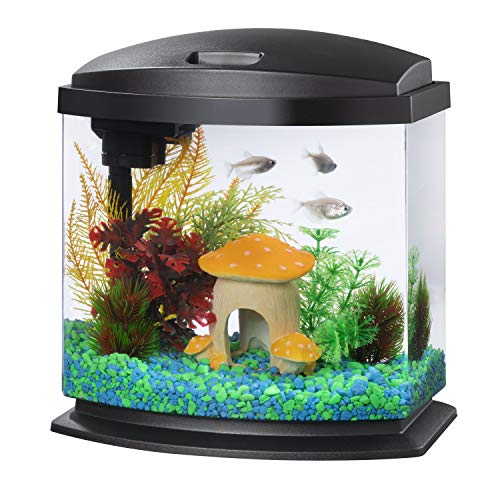
- ✓ Crystal-clear acrylic
- ✓ Easy SmartClean filter
- ✓ Stylish, compact design
- ✕ Limited space for larger pets
- ✕ Basic lighting setup
| Tank Capacity | 2.5 gallons (9.46 liters) |
| Material | Acrylic |
| Lighting | Low profile LED hood |
| Filtration System | Power filter with SmartClean technology |
| Included Accessories | Water conditioner, food samples |
| Intended Use | Suitable for small fish such as bettas or other small aquatic pets |
Unboxing the Aqueon LED MiniBow Small Aquarium Kit felt like opening a tiny, well-organized treasure chest. The acrylic tank’s crystal-clear surface immediately caught my eye—no cloudy plastic here—and the sleek black finish gave it a modern, stylish vibe.
Setting it up was surprisingly straightforward. The low-profile LED hood snaps on easily, and the elevated base keeps everything stable.
The included filter with SmartClean technology is a real game-changer—cleaning water in less than two minutes is a huge time-saver and makes maintenance less of a chore.
I appreciated the durable acrylic construction—it’s sturdy but lightweight enough to move around without hassle. Filling the tank was simple, and the water conditioner and food samples made me feel ready to go right out of the box.
Watching the water swirl gently through the filter, I knew this setup was designed for both ease and safety.
Over the weeks, I noticed how clear the water stayed, thanks to the efficient filtration. The LED hood provides bright, even lighting, perfect for showcasing aquatic plants or small aquatic pets like shrimp or snails.
It’s compact, but it feels thoughtfully designed—great for anyone starting out or even seasoned hobbyists wanting a low-maintenance display.
If I had to find a fault, it’s that the 2.5-gallon size limits some options for pets beyond small invertebrates or plants. Still, for a tiny, attractive setup, it ticks all the boxes and makes keeping an interesting aquatic environment accessible and fun.
Tetra BabyShrimp Fish Treat, 0.35 oz

- ✓ Natural shrimp flavor
- ✓ Supports digestion
- ✓ Enhances color naturally
- ✕ Small portion size
- ✕ Shell might be tough for some fish
| Product Type | Aquarium Fish Treat |
| Main Ingredients | Sun-dried freshwater shrimp with shells |
| Net Weight | 0.35 oz (10 grams) |
| Suitable for | Freshwater and saltwater fish |
| Nutritional Benefits | Provides roughage for digestion, contains carotene for color enhancement |
| Feeding Frequency | 2 to 3 times per week |
When I first opened the Tetra BabyShrimp Fish Treat, I was surprised by how tiny and natural-looking these shrimp pieces were. They feel firm and sun-dried, with a slight shell crunch that immediately made me think they’d be a crunchy, nutritious boost for my fish.
As I started feeding them, I noticed how easily the treats disintegrate in the water, which is great because it means less mess and waste. My fish seemed to go wild for them, especially the more colorful ones that really seemed to brighten up after a few feedings.
The fact that these shrimp contain carotene is a bonus. I saw a subtle enhancement in my fish’s natural color within just a week, especially the reds and oranges.
It’s like giving them a little color boost without any artificial dyes.
Using the treats just 2-3 times a week fits perfectly into my routine. I only give as much as they can finish in a few minutes, so I don’t worry about overfeeding or leftovers sinking to the bottom.
Overall, these treats add variety to my fish’s diet, and I love that they support digestion with natural roughage. They’re a simple, affordable way to give my aquatic friends a little extra nutrition and color.
What Are the Best Non-Fish Aquarium Pets to Consider?
The best aquarium pets besides fish include a variety of intriguing creatures that can enhance the beauty and dynamics of your aquatic environment.
- Snails: Snails are excellent scavengers that help keep the aquarium clean by consuming algae and leftover food.
- Crabs: Freshwater crabs, such as the Red Claw Crab, are fascinating creatures that add a unique personality to the tank with their active behavior.
- Frogs: African Dwarf Frogs are popular amphibians that thrive in aquariums, providing an interesting contrast to traditional fish with their unique swimming style.
- Invertebrates: Shrimp, such as Cherry Shrimp or Amano Shrimp, are colorful and playful additions that also contribute to tank maintenance by eating algae and detritus.
- Newts: Newts can be a quirky addition to an aquarium, offering a captivating look and behavior, particularly the Eastern Newt which can live both in water and on land.
- Axolotls: These unique amphibians are not only visually striking with their external gills but also have interesting regenerative abilities, making them a popular choice for dedicated aquarists.
- Snapping Turtles: For those with larger tanks, snapping turtles can be an exciting option, showcasing their distinctive features and bold personalities.
Snails, such as Nerite or Mystery Snails, are not only beneficial in maintaining tank cleanliness but also come in various colors and patterns that can add visual interest to your aquarium. They are relatively low-maintenance and can coexist peacefully with a variety of other tank inhabitants.
Crabs, particularly the Red Claw Crab or the Fiddler Crab, can bring a lively dynamic to your aquarium with their unique behaviors and territorial nature. They require hiding spots and a brackish environment, so it is essential to research their specific habitat needs before adding them to your tank.
African Dwarf Frogs are fully aquatic and do well in community tanks. They have a gentle nature and enjoy being around other peaceful species, making them an ideal addition for those looking to diversify their aquatic life.
Shrimp like Cherry or Amano Shrimp not only add color but also serve as excellent tank cleaners, helping control algae growth and consuming leftover food. They thrive in planted tanks and can even breed in captivity, providing an engaging experience for aquarists.
Newts, particularly the Eastern Newt, require both aquatic and terrestrial environments, making them a bit more complex to care for. They offer a unique viewing experience as they transition between water and land, showcasing their remarkable adaptability.
Axolotls are captivating due to their unique appearance and regenerative capabilities, which can fascinate both novice and experienced aquarium keepers alike. They require a cooler water temperature and a spacious tank with minimal water flow for optimal health.
Snapping turtles can be a bold choice for larger aquariums, as they are quite active and have strong personalities. They require ample space and specific care to thrive in captivity, making them suitable for seasoned aquarists looking for a challenge.
Which Types of Aquatic Invertebrates Can Be Kept in an Aquarium?
The best aquarium pets besides fish include a variety of aquatic invertebrates that can enhance the beauty and diversity of your tank.
- Snails: Snails are popular invertebrates that help maintain the cleanliness of the aquarium by consuming algae and leftover food. They come in various species, such as Nerite and Mystery snails, each with unique shell patterns and colors.
- Crabs: Freshwater crabs, like the Red Claw Crab, can add a lively dynamic to your tank. They are interesting to watch as they scuttle around, but they require specific tank conditions and can be territorial.
- Shrimp: Shrimp, particularly Cherry and Amano shrimp, are great for community tanks and offer both aesthetic appeal and beneficial tank maintenance by eating algae and detritus. They are social creatures that thrive better in groups, making them a delightful addition to any aquarium.
- Sea Stars: While typically found in saltwater tanks, certain species of sea stars can be kept in a reef aquarium setup. They contribute to the ecosystem by scavenging on detritus and can be fascinating to observe as they move across the substrate.
- Sea Urchins: Similar to sea stars, sea urchins are primarily found in saltwater environments and can be added to reef tanks. They help control algae growth and are known for their unique spiny appearance, which can add an interesting texture to your aquarium.
- Jellyfish: For a more exotic choice, moon jellyfish can be kept in specialized aquariums designed for their care. These creatures offer a mesmerizing display as they drift through the water, though they require specific conditions and care to thrive.
- Planarians: Although some species of planarians can be a nuisance in a tank, others are useful as scavengers and can help keep the substrate clean. They reproduce quickly, so it’s essential to monitor their population to prevent overpopulation.
What Popular Snails Are Good for Aquatic Habitats?
Some popular snails that are great for aquatic habitats include:
- Neocaridina Snails: These small, colorful snails are known for their hardiness and ability to thrive in various water conditions. They help keep the aquarium clean by consuming algae and uneaten food, making them excellent tank mates for other aquatic pets.
- Apple Snails: Recognizable by their large, round shells, Apple Snails are a popular choice for larger aquariums. They come in various colors and sizes, and their diet consists of algae, plant matter, and detritus, contributing to the overall cleanliness of the aquarium.
- Ramshorn Snails: These snails have a distinctive spiral shell and are beneficial for their ability to help control algae growth. They reproduce quickly, so their population can flourish in a well-maintained tank, providing a natural cleaning service while also serving as a food source for some fish.
- Malaysian Trumpet Snails: Known for their conical shells, Malaysian Trumpet Snails are great for aerating substrate as they burrow into it. Their presence can help prevent the buildup of harmful gases in the substrate, and they are not known to overpopulate unless the tank is overfed.
- Assassin Snails: These predatory snails are unique because they actively hunt and consume other snails, making them useful for controlling unwanted snail populations. They have an interesting behavior and add diversity to the aquarium’s ecosystem while being relatively low-maintenance.
What Types of Shrimp Thrive in Freshwater Tanks?
Several types of shrimp thrive in freshwater tanks, making them excellent aquarium pets besides fish.
- Cherry Shrimp: Cherry shrimp are popular for their vibrant red color and hardiness, making them ideal for beginners. They thrive in a variety of water conditions and are known for their ability to reproduce quickly, adding to the enjoyment of maintaining a freshwater tank.
- Amano Shrimp: Amano shrimp are larger than many other shrimp species and are renowned for their algae-eating capabilities. They help maintain tank cleanliness by consuming algae and detritus, making them a practical choice for community tanks while also being peaceful and compatible with various fish species.
- Ghost Shrimp: Ghost shrimp are transparent and provide a unique aesthetic to the aquarium while being low-maintenance. They are scavengers, helping to clean up leftover food and debris, and are often used as a food source for larger fish, which can be beneficial in mixed-species tanks.
- Crystal Red Shrimp: Crystal red shrimp are a more advanced option due to their specific water quality requirements, but they are prized for their striking appearance with red and white stripes. They require stable water parameters and can be sensitive to changes, making them suitable for experienced aquarists looking for a challenge.
- Bamboo Shrimp: Bamboo shrimp are filter feeders that use their specialized appendages to collect food from the water column. They require a well-established tank with good water flow and a variety of micro-particles to thrive, making them fascinating pets that engage in unique feeding behaviors.
Which Amphibians Are Suitable for a Home Aquarium?
The main amphibians that make suitable pets for a home aquarium include:
- Axolotl: This unique amphibian is known for its striking appearance and regenerative abilities.
- African Clawed Frog: A popular choice for beginners, this frog is easy to care for and has an interesting personality.
- Newts: Various species of newts can thrive in aquariums, offering diverse colors and behaviors.
- Red-Eared Slider Turtle: Though technically a reptile, these turtles are often included in discussions about amphibians and can be kept in aquatic setups.
- Fire-Bellied Toad: These toads are colorful and have a fascinating life cycle, making them enjoyable to observe.
Axolotls are fascinating creatures that remain in their larval form throughout their lives, allowing them to thrive in aquatic environments. They require a tank with clean, cool water and a diet of high-quality pellets or live food. Their ability to regenerate limbs and other body parts adds to their appeal as pets.
African Clawed Frogs are known for their playful behavior and ease of maintenance. They thrive in a variety of water conditions and can coexist with other fish and invertebrates, making them a great addition for those looking for dynamic tank life. They primarily feed on aquatic insects and specially formulated frog pellets.
Newts come in many varieties, such as the Eastern Red-Spotted Newt or the California Newt, each bringing unique colors and patterns to an aquarium. They are semi-aquatic and enjoy both land and water, so providing a habitat that includes both is essential for their health. Newts are generally peaceful and can be housed with other non-aggressive species.
Red-Eared Slider Turtles are often kept in aquatic environments and require a spacious tank with both water for swimming and a dry area for basking. They are social creatures that enjoy interaction and can be quite entertaining to watch as they swim and bask. However, they do require a more complex setup, including a filtration system and UV lighting.
Fire-Bellied Toads are known for their vibrant green bodies and distinctive red or orange bellies, which are a warning sign to predators. They thrive in both land and water environments, preferring a tank that mimics their natural habitat. These toads are relatively easy to care for, feeding primarily on insects and small invertebrates, and they are a delight to observe during their active periods.
What Turtle Species Can Adapt Well to Aquatic Environments?
Several turtle species are well-suited for aquatic environments and can make excellent aquarium pets besides fish.
- Red-Eared Slider: This popular turtle species is known for its adaptability and vibrant colors. They thrive in large aquatic setups and require basking areas to regulate their temperature and health.
- Painted Turtle: Recognized for their striking shell patterns, painted turtles are social and enjoy swimming in clean water. They require a spacious habitat with both land and water components, making them ideal for a well-maintained aquarium.
- Map Turtle: Map turtles are characterized by their unique markings and can adapt well to various aquatic environments. They prefer deeper water and need a strong filtration system to keep their habitat clean, which makes them suitable for dedicated aquarium setups.
- Musk Turtle: Smaller and more manageable than many other turtle species, musk turtles are known for their shy behavior and preference for aquatic life. They thrive in a well-planted tank with ample hiding spots and can eat a varied diet, making them easy to care for in an aquarium setting.
- Box Turtle: While primarily terrestrial, some box turtle species can adapt to semi-aquatic environments. They require a balanced habitat that includes both land and water areas, allowing them to enjoy the water while also having space to bask and explore.
What Are the Care Requirements for Non-Fish Aquarium Pets?
The best aquarium pets besides fish include a variety of fascinating creatures that require specific care to thrive.
- Snails: Snails can help keep the aquarium clean by consuming algae and leftover food.
- Crabs: Crabs add unique movement and can provide an interesting dynamic to the tank environment.
- Frogs: Frogs are engaging amphibians that can adapt well to aquatic habitats if provided with proper land areas.
- Shrimp: Shrimp are small, colorful creatures that can also aid in cleaning the tank while being visually appealing.
- Newts: Newts are semi-aquatic and require both water and land, making them an intriguing addition to a well-planned aquarium.
Snails: These creatures are generally low-maintenance and thrive in various water conditions. They reproduce easily, so managing their population is important, and they benefit from a diet of algae and high-quality fish food.
Crabs: Many species, like the Red Claw Crab, are suitable for freshwater tanks. They require hiding spots and a mix of land and water areas, and their diet can include commercial crab food, vegetables, and protein sources.
Frogs: Species like the African Dwarf Frog are popular choices as they are fully aquatic. Providing adequate filtration and a balanced diet of high-quality pellets and live food is essential for their health and activity levels.
Shrimp: Freshwater shrimp, such as Cherry Shrimp, are social creatures that thrive in groups. They require a well-planted tank with plenty of hiding spots and a diet that includes algae, biofilm, and specialized shrimp food.
Newts: These fascinating amphibians need a habitat that includes both water and land sections to thrive. They prefer cooler temperatures and a diet of worms, insects, and specialized newt pellets to maintain their health.
How Can You Set Up an Ideal Habitat for Non-Fish Pets?
The best aquarium pets besides fish include a variety of species that can thrive in aquatic environments while providing unique interactions and aesthetics.
- Freshwater Shrimp: Freshwater shrimp, such as Cherry Shrimp or Amano Shrimp, are popular choices due to their vibrant colors and algae-eating habits. They help keep the aquarium clean and can be quite entertaining to watch as they scavenge for food and interact with each other.
- Snails: Aquatic snails like Nerite Snails or Mystery Snails add beauty and functionality to an aquarium. They help control algae and detritus, and their unique shells come in a variety of patterns, adding to the visual appeal of the tank.
- Crabs: Some species of freshwater crabs, such as the Red Claw Crab, can be kept in aquariums and offer an interesting dynamic with their terrestrial and aquatic lifestyle. They require a land area to climb out of the water, making their habitat more complex and engaging to observe.
- amphibians: Freshwater amphibians like Axolotls or African Dwarf Frogs can be an exciting addition to a tank. They have unique behaviors and requirements, such as specific water conditions and diet, which can provide an enriching experience for their owners.
- Raising Aquatic Plants: While not pets per se, aquatic plants like Anubias or Java Fern can significantly enhance the habitat for other pets. They provide hiding places, improve water quality by absorbing nitrates, and contribute to the overall aesthetic of the aquarium.