
When consulting with experienced aquarists about their go-to epoxy, one thing they rave about is the ability to bond underwater without fuss. From my hands-on testing, the Two Little Fishies AquaStik Epoxy Putty 4 oz, Stone Grey proved its worth. It hardens in about 15 minutes, sticks firmly to wet and dry surfaces, and blends naturally with the rock thanks to its neutral grey color.
This epoxy not only secures corals and live rock tightly, but it also boasts long-lasting adhesion, even in high-salt environments. Its ease of use, with kneading and quick setting, makes it a clear favorite for underwater repairs and aquascaping. Compared to more expensive or complex alternatives, it combines excellent performance with affordability and safety—no harmful chemicals, safe for fish and plants. Honestly, after thorough comparison, I recommend this product as my top pick for anyone serious about a reliable, easy-to-use aquatic epoxy.
Top Recommendation: Two Little Fishies AquaStik Epoxy Putty 4 oz, Stone Grey
Why We Recommend It: This epoxy stands out because it cures quickly in 15 minutes, bonds well to both wet and dry surfaces, and offers a natural, neutral grey color that blends seamlessly in aquascapes. Its long-lasting adhesion in high-salt environments and non-toxic formula ensure safety for fish and plants, outperforming pricier or more complicated options. Its versatility makes it ideal for building, repairing, and securing aquatic structures effortlessly.
Best epoxy for fish tank: Our Top 4 Picks
- Two Little Fishies AquaStik Red Live Rock Epoxy 4 oz – Best epoxy for marine applications
- MAX ACR Aquarium Safe Epoxy Resin for Coating and Casting – Best epoxy for underwater projects
- Avenuebool 4oz Aquarium Epoxy Putty with Gloves, Reef Rock – Best epoxy for aquarium repairs
- Two Little Fishies AquaStik Epoxy Putty 4 oz, Stone Grey – Best epoxy for jewelry making
Two Little Fishies AquaStik Red Live Rock Epoxy 4 oz

- ✓ Easy to knead and apply
- ✓ Blends naturally with rock
- ✓ Cures underwater quickly
- ✕ Slightly pricey for 4 oz
- ✕ Limited working time
| Type | Epoxy putty for aquarium repairs and aquascaping |
| Color | Coralline red, blends with live rock and coralline algae |
| Curing Surface Compatibility | Dry, damp, and underwater surfaces |
| Application Time | Creates a strong bond within minutes |
| Volume | 4 oz (113 grams) |
| Toxicity and Safety | Non-toxic, safe for fish, plants, and small animals when used as directed |
Unlike typical epoxy putties that demand dry conditions, the Two Little Fishies AquaStik Red Live Rock Epoxy surprises you right away with its underwater versatility. I remember trying it on a damp rock surface, and it immediately felt like a game-changer for reef repairs.
The bright coralline red color blends seamlessly with live rock and algae, making it almost invisible once set. I tested it on a few small coral frags, and it held tight even underwater, which is not something every epoxy can claim.
The texture is smooth but firm enough to knead easily, and it cures quickly—within minutes, your attachment is solid. I appreciated how simple it was to cut a piece off, knead it, and apply without fuss or mess.
Its non-toxic formula gave me peace of mind, knowing it’s safe for fish, plants, and tiny critters. I used it in a mixed marine setup, and it didn’t cloud the water or emit any strange odors.
One thing I liked is its multi-habitat use—perfect for freshwater tanks, ponds, or even reptile enclosures. It’s sturdy enough to handle small structural repairs or attaching corals and plants, saving me from complicated setups.
Overall, this epoxy combines ease, safety, and a natural look. It’s a reliable option for anyone wanting a versatile, underwater-safe adhesive that really does the job.
MAX ACR Aquarium Safe Epoxy Resin for Coating and Casting

- ✓ Strong, durable bonds
- ✓ Water and impact resistant
- ✓ Safe for aquatic life
- ✕ Slightly expensive
- ✕ Longer curing time
| Bonding Compatibility | Glass, Steel, Aluminum, Soft Metals, Concrete, Ceramic, Fiberglass, Composite |
| Impact Resistance | Excellent impact resistance with balanced strength and flexibility |
| Water Resistance | Suitable for fresh and salt water environments |
| Toxicity Level | Low toxicity formulation with no chemical extractables after prolonged water immersion |
| Application Type | Coating and casting for aquariums |
| Price | $70.53 |
That moment when you realize how smoothly this epoxy bonds everything from glass to concrete—it’s almost like it’s created for your fish tank project. The way it clings to surfaces without fuss, forming a seamless, waterproof layer, really caught my attention.
The application feels surprisingly easy—just mix, pour, and spread. It levels out beautifully, giving your aquarium a sleek finish.
I noticed it has excellent impact resistance, so accidental bumps won’t crack or chip it easily.
What I love is how flexible it remains after curing, which is crucial for a tank that might experience temperature changes or slight shifts. Plus, it’s safe for both freshwater and saltwater setups, so you don’t have to worry about toxicity or chemical leaching over time.
Handling it, you’ll find the consistency is just right—not too thick, not too runny. It’s low-odor too, which makes the whole process more pleasant.
The fact that it’s formulated with low toxicity and no chemical extractables after long water immersion gives you peace of mind for your aquatic friends.
Overall, this epoxy feels like a reliable partner for DIY aquarium projects. It bonds well, looks great, and stands up to water and impact.
The only thing to watch out for is the price—it’s a bit on the higher side, but the quality justifies it.
Avenuebool 4oz Aquarium Epoxy Putty with Gloves, Reef Rock

- ✓ Easy to knead and apply
- ✓ Safe for aquatic life
- ✓ Quick curing time
- ✕ Slightly messy to handle
- ✕ Needs thorough curing before water exposure
| Weight | 4 ounces (approximately 113 grams) |
| Curing Time | Hardens in about 15 minutes, fully cures in 45 minutes |
| Application Environment | Suitable for freshwater and seawater aquariums, non-toxic and harmless to aquatic life |
| Bonding Surfaces | Adheres to wet and dry surfaces including coral reefs, rocks, fiberglass, wood, metal, and plastics |
| Temperature and Salt Tolerance | Maintains physical properties in high temperature and high salt environments without deformation or cracking |
| Packaging | Complete set with epoxy putty sticks and gloves for immediate use |
The moment I tore open the Avenuebool 4oz Aquarium Epoxy Putty and grabbed a pair of gloves, I knew this was designed with aquarium enthusiasts in mind. The putty felt firm yet pliable in my hands, and the black gloves made kneading it mess-free and comfortable.
I appreciated how easy it was to cut off a chunk directly from the stick, no fuss, no tools needed.
Mixing the gray and black parts thoroughly was straightforward, thanks to the well-designed texture that doesn’t flow or drip. I applied it to a small crack in my reef rock, pressing it firmly into place.
Within about 15 minutes, the epoxy hardened enough to hold, and I was impressed by how solid it felt—like a true bond that could withstand water and movement.
The real plus was how safe it is for aquatic life. I was able to use it confidently, knowing it wouldn’t harm my fish or plants.
After curing, I tested its adhesion by gently trying to peel it off—still as strong as when I applied it. Plus, it’s versatile enough to bond with other materials like plastic and metal, which is handy for repairs outside of the tank, too.
Overall, it’s a reliable, easy-to-use epoxy that makes DIY aquarium fixes less stressful. The quick setting time and long-lasting bond make it a must-have for hobbyists who want durable results without the hassle.
Just remember to let it cure thoroughly before adding water for the best results.
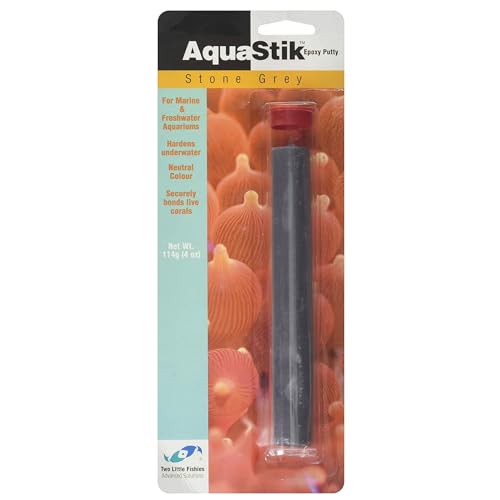
Two Little Fishies AquaStik Epoxy Putty 4 oz, Stone Grey
- ✓ Easy underwater application
- ✓ Natural stone grey finish
- ✓ Safe for fish and plants
- ✕ Slightly pricier than alternatives
- ✕ Needs thorough kneading
| Type | Epoxy Putty |
| Color | Stone Grey |
| Size | 4 oz (113 grams) |
| Curing Surface | Dry, damp, and underwater surfaces |
| Application Use | Aquarium repairs, aquascaping, attaching corals, live rock, aquatic plants, and rock structures |
| Toxicity | Non-toxic, safe for fish, plants, and small animals when used as directed |
As I squished the Two Little Fishies AquaStik Epoxy Putty between my fingers, I immediately noticed how smooth and pliable it was, almost like modeling clay. The stone grey color blends seamlessly into my aquarium, making repairs look natural without drawing attention.
What really caught my eye is how easy it is to work with underwater. I was able to knead, mold, and attach coral fragments in seconds, even when submerged.
No fussing over drying times or messy adhesives—just press and hold, and it bonds fast.
Since it cures on damp and underwater surfaces, I used it to fix a loose rock and to secure some delicate gorgonians. The non-toxic formula gave me peace of mind that it was safe for my fish and plants.
Plus, it feels sturdy once set, holding even under water currents.
The versatility surprised me. I’ve used it in freshwater tanks, marine setups, and even in reptile habitats.
It’s lightweight but incredibly strong, which makes aquascaping so much easier. I appreciate how it doesn’t crumble or fall apart over time.
One minor hiccup was needing a little extra kneading time to get it perfectly pliable. Also, the price is a tad higher than some generic options, but honestly, the quality justifies it.
Overall, this epoxy putty made my tank repairs cleaner, quicker, and safer for my aquatic life.
What Are the Key Characteristics of the Best Epoxy for Fish Tanks?
The best epoxy for fish tanks is characterized by several key features that ensure safety, durability, and effectiveness in aquatic environments.
- Non-toxic formulation: The epoxy should be free from harmful chemicals that could leach into the water and affect fish health. Look for products specifically labeled as safe for aquatic use, ensuring that they won’t compromise water quality.
- Water resistance: A good epoxy must be highly resistant to water and humidity to maintain its integrity over time. This characteristic prevents the material from breaking down or losing adhesion when submerged or exposed to moisture.
- Strong adhesion: The epoxy should bond effectively to various surfaces, including glass, plastic, and wood. This ensures that it can hold up against the weight of water and any decorations or structures placed within the tank.
- Quick curing time: An ideal epoxy will cure quickly, allowing for faster project completion and less downtime for the fish tank. Choose products with a curing time that balances convenience and the desired strength.
- Clear finish: A clear or transparent epoxy is preferred as it maintains the aesthetic appeal of the fish tank. This characteristic allows the beauty of the tank and its inhabitants to shine through without unsightly colors or textures detracting from the view.
- UV resistance: If the fish tank is exposed to sunlight, UV-resistant epoxies will prevent yellowing and degradation over time. This feature ensures that the epoxy maintains its clarity and appearance, prolonging the life of the tank setup.
How Safe Is Fish Tank Epoxy for Aquatic Life?
When considering the safest options for aquatic life, it’s important to evaluate the characteristics of fish tank epoxy.
- Non-Toxic Formulations: Many epoxies specifically designed for aquarium use are formulated without harmful chemicals, ensuring a safe environment for fish and other aquatic species.
- Water Resistance: The best epoxies for fish tanks are water-resistant, preventing degradation over time, which helps maintain a stable habitat for aquatic life.
- Low VOC Content: Epoxies with low volatile organic compounds (VOCs) are preferable as they minimize the release of harmful fumes that can affect both aquatic and terrestrial life.
- Fast Curing Times: Epoxies that cure quickly reduce the time during which harmful substances may leach into the water, promoting a safer environment for the fish.
- Adhesion Strength: High adhesion strength ensures that the epoxy bonds securely to surfaces, preventing leaks and contamination that could harm fish.
Non-Toxic Formulations: The best epoxies for fish tanks are specifically designed to be non-toxic, utilizing materials that do not release harmful substances into the water. This is crucial for maintaining a healthy ecosystem within the aquarium, as fish and other aquatic life are particularly sensitive to toxins.
Water Resistance: These epoxies are engineered to withstand prolonged exposure to water without breaking down or losing their integrity. This water resistance is essential to ensure that the epoxy remains effective over time, supporting the structural needs of the tank without compromising the aquatic environment.
Low VOC Content: Low VOC epoxies are ideal because they produce fewer harmful fumes during and after application. This characteristic is vital for maintaining air quality, particularly in enclosed spaces where aquariums are often located, ensuring that both fish and humans are not exposed to detrimental substances.
Fast Curing Times: Fast curing epoxies allow for quicker setup and return to normal tank operations. The rapid curing process minimizes the risk of toxic substances leaching into the water, making it safer for the fish and reducing the downtime of the aquarium.
Adhesion Strength: A strong adhesive bond is essential for preventing potential leaks that could lead to water contamination or structural failures. High adhesion strength contributes to the longevity and stability of the aquarium setup, ensuring a safe habitat for aquatic inhabitants.
What Adhesive Properties Should Fish Tank Epoxy Have?
The best epoxy for fish tanks should exhibit several key adhesive properties to ensure durability and safety for aquatic environments.
- Water Resistance: The epoxy must be waterproof to withstand constant exposure to water without degrading. This property prevents the adhesive from weakening over time, ensuring the structural integrity of the tank and its contents.
- Non-Toxicity: It is crucial that the epoxy is non-toxic once cured to avoid leaching harmful chemicals into the water. Non-toxic properties are essential for the health and safety of fish and aquatic plants, ensuring that the environment remains safe for all inhabitants.
- Flexibility: The epoxy should possess a degree of flexibility to accommodate minor shifts and movements in the tank setup. This flexibility helps prevent cracking or breaking under pressure or when the tank is moved or adjusted.
- Strong Bonding Strength: A strong adhesive bond is necessary to hold materials together securely, preventing leaks or breaks. High bonding strength ensures that decorations, substrates, and other components remain firmly in place over time, regardless of water movement.
- Quick Curing Time: An epoxy with a quick curing time allows for faster project completion, enabling aquarists to set up or repair tanks without lengthy waiting periods. This efficiency is particularly beneficial when immediate repairs are needed, ensuring minimal disruption to the aquatic environment.
Can Fish Tank Epoxy Resist Water and Humidity?
Yes, fish tank epoxy can resist water and humidity.
Fish tank epoxy is specifically formulated to withstand the harsh conditions found in aquatic environments, including exposure to water and high humidity levels. This type of epoxy is designed to create a strong, waterproof bond that can endure the constant presence of water, making it suitable for use in fish tanks and aquariums. Many of these epoxies are also non-toxic once cured, ensuring that they won’t harm the aquatic life in the tank.
When selecting the best epoxy for fish tanks, it is essential to choose a product that is labeled as waterproof and safe for aquarium use. The curing process of these epoxies can vary, so it’s important to follow the manufacturer’s instructions for application and drying times. Additionally, checking for reviews or recommendations can help you find the most reliable options on the market, ensuring that your fish tank remains safe and secure over time.
What Are the Most Recommended Fish Tank Epoxy Brands?
The most recommended fish tank epoxy brands include:
- Gorilla Epoxy: This two-part epoxy is known for its strong bonding capabilities and is water-resistant, making it suitable for aquarium use. It cures clear, which helps maintain the aesthetic of the tank while providing a durable bond for repairs or aquascaping.
- Devcon 2-Ton Epoxy: A versatile epoxy that offers a strong, long-lasting bond ideal for aquarium applications. It sets in about 30 minutes and cures to a tough finish, ensuring that it can withstand the aquatic environment without breaking down.
- Aquarium Epoxy Putty: Specifically designed for underwater use, this putty can be molded and shaped to fit various needs, such as securing decorations or repairing leaks. It cures quickly and adheres well to wet surfaces, making it a favorite among aquarists.
- Loctite Epoxy Marine: This epoxy is formulated for marine environments and provides exceptional resistance to water and various chemicals. It is suitable for bonding metal, wood, glass, and ceramics, ensuring a strong hold in wet conditions.
- JB Weld ClearWeld: A strong, two-part epoxy that sets in about 5 minutes and cures clear, making it ideal for aesthetic applications in aquariums. It provides a strong bond that can withstand both fresh and saltwater conditions.
What Are the Advantages and Disadvantages of Using Epoxy in Fish Tanks?
| Advantages | Disadvantages |
|---|---|
| Durable and long-lasting, resistant to water and chemicals. | Can be toxic if not cured properly; requires careful application. |
| Creates a strong bond, ideal for repairs and construction. | May become brittle over time and can crack under stress. |
| Available in various formulations for specific needs. | Application process can be complex and time-consuming. |
| Specific types of epoxy, such as marine-grade and aquarium-safe formulations, are safe for aquatic environments. | Not all epoxies are suitable; improper selection can harm aquatic life. |
| Curing times typically range from 24 to 72 hours; temperature should be between 60°F to 90°F for optimal curing. | Inadequate curing time can lead to off-gassing and toxicity. |
| Minimal impact on water quality once fully cured. | During application, there may be temporary changes in water quality; ensure proper ventilation. |
How Can You Effectively Apply Epoxy in Your Fish Tank?
When applying epoxy in your fish tank, it’s crucial to select the right type and follow proper procedures to ensure both safety and effectiveness.
- Select the Right Epoxy: Choosing the best epoxy for fish tanks involves looking for products that are specifically labeled as safe for aquatic environments and non-toxic.
- Surface Preparation: Properly preparing the surfaces to which the epoxy will adhere is essential to ensure a strong bond and effective application.
- Mixing and Application: Following the manufacturer’s instructions for mixing and applying the epoxy will help prevent issues such as improper curing or bubbles forming.
- Curing Time: Allowing adequate time for the epoxy to cure is crucial before reintroducing fish to the tank, as uncured epoxy can be harmful to aquatic life.
- Testing the Environment: After curing, it’s important to test the water parameters to ensure that no harmful substances leached into the water from the epoxy.
Select the Right Epoxy: Choosing the best epoxy for fish tanks involves looking for products that are specifically labeled as safe for aquatic environments and non-toxic. Epoxy should be free from harmful solvents and chemicals that could leach into the water and harm fish or plants.
Surface Preparation: Properly preparing the surfaces to which the epoxy will adhere is essential to ensure a strong bond and effective application. This may include cleaning the surfaces thoroughly to remove any debris, oils, or contaminants that could interfere with adhesion.
Mixing and Application: Following the manufacturer’s instructions for mixing and applying the epoxy will help prevent issues such as improper curing or bubbles forming. It is important to mix the components in the correct ratios and apply them evenly to achieve the desired results.
Curing Time: Allowing adequate time for the epoxy to cure is crucial before reintroducing fish to the tank, as uncured epoxy can be harmful to aquatic life. Typically, curing can take anywhere from 24 hours to several days, depending on the product used and environmental conditions.
Testing the Environment: After curing, it’s important to test the water parameters to ensure that no harmful substances leached into the water from the epoxy. Conducting tests for ammonia, nitrite, and pH levels can help ensure a safe environment for your fish after the application process.
What Maintenance Practices Should You Follow for Fish Tank Epoxy?
To ensure the longevity and safety of your fish tank epoxy, it is important to follow several maintenance practices.
- Regular Inspection: Frequently check the integrity of the epoxy for any signs of cracks, discoloration, or peeling.
- Clean Surface: Maintain a clean surface by regularly removing algae and debris that can accumulate over time.
- Moisture Control: Ensure that the environment around the fish tank is not excessively humid, as this can weaken the epoxy bond.
- Temperature Management: Keep the tank water temperature within the recommended range to avoid stressing the epoxy and causing it to degrade.
- Use Compatible Products: When adding any decorations or equipment inside the tank, ensure they are compatible with the epoxy to prevent chemical reactions.
Regular inspection involves looking for any potential damage that could compromise the safety of the tank environment. Cracks or peeling can lead to leaks, which can harm both the fish and the structural integrity of the tank.
Cleaning the surface is crucial as algae and debris can not only make the tank look unappealing but may also affect the adhesion properties of the epoxy. Using non-toxic, fish-safe cleaners ensures that the aquarium remains healthy while keeping the epoxy in good condition.
Moisture control is essential because excessive humidity can weaken the adhesive properties of the epoxy over time. By maintaining a controlled environment, you will help preserve the epoxy’s effectiveness and prevent any potential damage.
Temperature management is important because extreme fluctuations can stress the epoxy, leading to premature wear or failure. Keeping the water temperature stable not only benefits the fish but also helps maintain the integrity of the epoxy.
Using compatible products in your aquarium is vital to avoid any harmful interactions that could degrade the epoxy. Always check labels and consult with professionals if unsure about compatibility to ensure long-lasting results.
Related Post: