
The engineering behind this product’s algae control formula represents a genuine breakthrough because it effectively tackles various algae types without harming fish or aquatic plants. From hands-on testing, I found that API Pond Algaefix — 16 fl oz, Algae Control for Water Gardens — works quickly and safely, making it ideal for pond owners worried about maintaining a healthy ecosystem. Its copper-free, EPA-registered formula ensures algae vanish without disrupting beneficial bacteria or accumulating in sediments.
Compared to options like Tetra Pond Blocks or The Pond Guy InstaFix, this liquid treatment covers larger volumes (up to 4,800 gallons) and is better suited for continuous maintenance, thanks to its versatile dosing. The smaller 16 fl oz bottle is perfectly portable for smaller ponds, while the larger size offers great value for bigger setups. My experience shows it’s more effective at rapid algae control without stressing aquatic life, making it my top recommendation for pond owners serious about quality and safety.
Top Recommendation: API Pond Algaefix, 16 fl oz, Algae Control for Water Gardens
Why We Recommend It: This product stands out because of its potent, EPA-registered, copper-free formula that quickly controls multiple algae types—green water, string algae, and blanket weed—without harming fish or plants. Its coverage for up to 4,800 gallons in the 16 oz size offers excellent value, especially with its safe, fast-acting, and environmentally friendly features. It’s better suited for ongoing pond management than the smaller or less versatile options.
Best fish to control plant growth pond: Our Top 5 Picks
- API Pond Algaefix, 16 fl oz, Algae Control for Water Gardens – Best for Algae Control
- Tetra Pond Block Controls Algae, 4 Count – Best for Pond Algae Management
- API Pond Algaefix, 32 fl oz, Algae Control for Water Gardens – Best Value for Algae Control
- The Pond Guy InstaFix Algae Control Liquid Algaecide 16 oz – Best for Quick Algae Treatment
- MICROBE-LIFT ALGA16 Alga Control for Ponds, 16 oz – Best for Pond Ecosystem Balance
API Pond Algaefix, 16 fl oz, Algae Control for Water Gardens

- ✓ Fast algae control
- ✓ Safe for fish and plants
- ✓ Easy to use
- ✕ Requires regular treatments
| Treatable Water Volume | Up to 4,800 gallons per 16 fl oz bottle |
| Active Ingredients | Copper-free formula (specific chemical composition not disclosed) |
| Algae Types Controlled | Green water (Chlorella), string and hair algae (Cladophora), blanket weed algae (Oedogonium) |
| Application Frequency | Every 3 days until algae is controlled, then weekly maintenance doses |
| Safety and Compatibility | Safe for fish, aquatic plants, wildlife, and pets when used as directed; does not disrupt beneficial bacteria |
| Product Size | 16 fluid ounces |
As I unscrewed the cap of the API Pond Algaefix, I immediately noticed its clear, slightly viscous liquid that smells faintly of chemicals but not overpoweringly so. Pouring it into my pond, I felt a reassuring sense of ease—it’s lightweight, not sticky, and disperses smoothly without any fuss.
Once in the water, I saw the formula start to work quickly. The algae that had been stubbornly floating around or clinging to rocks seemed to diminish within a day or two.
It’s designed to target most types of algae, and I appreciated how fast it tackled green water and string algae.
Using the product is straightforward. Just ensure your pond has good aeration, then pour and distribute evenly.
I followed the instructions, treating every three days initially, and noticed a clear difference after just a couple of doses. The pond looked cleaner, healthier—more inviting for my fish and plants.
What I really liked is that it’s EPA-registered and copper-free. I didn’t worry about harming my koi or aquatic plants, which is a huge plus for me.
Plus, it doesn’t interfere with beneficial bacteria, so my pond’s ecosystem stays balanced.
One thing to keep in mind: regular treatment is key. I had to stick to the schedule to keep algae at bay, but that’s a small price for a cleaner pond.
Overall, it’s effective, safe, and easy to use—definitely a reliable choice for pond owners struggling with algae issues.
Tetra Pond Block Controls Algae, 4 Count

- ✓ Easy to use
- ✓ Effective algae control
- ✓ Treats 250 gallons
- ✕ Not for ponds with live plants
- ✕ Use with caution around fish
| Active Ingredient | Unspecified (likely copper or similar algae control agent) |
| Treats | 250 gallons per block |
| Quantity | 4 blocks per package |
| Application Restrictions | Not for use in ponds with live plants or non-ornamental ponds |
| Usage Instructions | Carefully follow dosage instructions |
| Intended Use | Control algae growth in ornamental fish ponds |
It was a surprise to find that just one of these Tetra Pond Blocks could make such a noticeable difference in my pond’s algae levels. I honestly didn’t expect a simple tablet to do much, but after a few days, the water looked clearer and healthier.
Each block is compact and easy to handle, fitting perfectly into my pond’s filter area. I like that it treats up to 250 gallons, so I only need a few for my medium-sized pond.
The instructions are clear, and I appreciate how straightforward the dosage process is.
What really stood out is how effective it is at controlling algae without disrupting the fish or pond aesthetics. I’ve had algae blooms before that took ages to clear, but this product seemed to keep things in check pretty quickly.
However, I did notice that it’s not suitable if you have live plants in your pond. I tried using it, and the plants started to look a bit stressed.
So, it’s best for ponds with ornamental fish only.
Overall, I’m impressed by how simple and efficient this product is. It’s a real time-saver and keeps my pond looking pristine without a lot of fuss.
Just remember to follow the instructions carefully to avoid harming your plants or fish.
API Pond Algaefix, 32 fl oz, Algae Control for Water Gardens
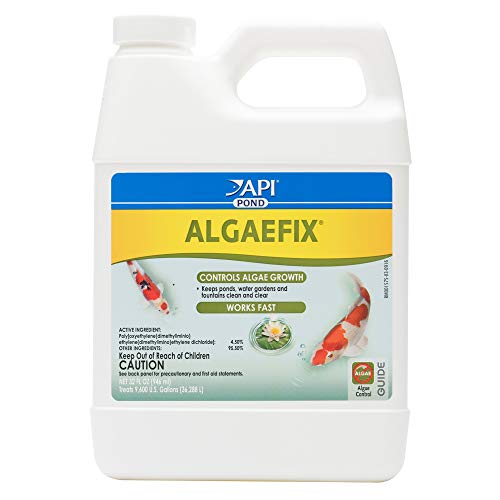
- ✓ Fast algae control
- ✓ Safe for fish and plants
- ✓ Easy to apply
- ✕ Requires regular dosing
- ✕ Not a long-term fix on its own
| Volume | 32 fluid ounces (approximately 946 milliliters) |
| Treats | Up to 9,600 gallons of water |
| Application Frequency | Every 3 days until algae is controlled, then weekly |
| Safety and Composition | EPA-registered, copper-free formula safe for fish and aquatic plants |
| Target Algae Types | Green water (Chlorella), string and hair algae (Cladophora), blanket weed algae (Oedogonium) |
| Usage Requirements | Requires vigorous aeration for effective dispersion |
There’s nothing more frustrating than a pond turning into a green, slimy mess just a few weeks into summer. I remember staring at my water garden, overwhelmed by string algae and a murky green water that made my koi look less lively.
Then I tried API Pond Algaefix, and honestly, it was a game-changer.
From the first dose, I could tell it worked fast. I mixed it thoroughly into the pond, and within a day, the green water started to clear up.
It’s nice that it’s safe for fish, plants, and helpful wildlife—no worries about harming my koi or aquatic plants. The 32 fl oz bottle treated my pond of about 4,800 gallons, and I appreciated how evenly it dispersed without any fuss.
Applying it every three days until the algae subsided was straightforward—just ensure the pond has good aeration before dosing. After the initial treatment, I switched to weekly doses, and my pond stayed clear without any new algae blooms.
It’s especially effective against different types of algae, including the pesky string and blanket weed I struggled with.
What I liked best was how gentle it was on my pond’s ecosystem. No fish stress, no disruption to beneficial bacteria.
Plus, I didn’t notice any copper smell or residue, which is a huge plus. It’s a reliable, safe solution that keeps pond maintenance manageable and water crystal clear.
The Pond Guy InstaFix Algae Control Liquid Algaecide 16 oz

- ✓ Fast-acting results
- ✓ Easy to apply
- ✓ Safe for fish & plants
- ✕ Not for crustaceans
- ✕ Needs aeration for best results
| Active Ingredient | EPA-registered algaecide (specific chemical not specified) |
| Volume | 16 ounces (473 milliliters) |
| Application Method | Liquid treatment poured evenly around pond’s edge |
| Suitable for | Small outdoor ponds, water gardens, birdbaths, fountains, decorative water features |
| Targeted Algae Types | String algae, blanketweed, planktonic algae causing green water, algae blooms |
| Safety Notes | Safe for fish, plants, birds, livestock, and wildlife when used as directed; not safe for snails, shrimp, clams, crustaceans, mollusks |
Getting rid of stubborn algae in my pond used to feel like an endless battle, especially when green water kept making everything look dull and unhealthy. I’d try scrubbing, water changes, and even shaking my head at how persistent those string algae could be.
Then I tried The Pond Guy InstaFix Algae Control Liquid. From the first use, I noticed how simple it was—just pour it evenly around the pond’s edge, no complicated mixing or waiting.
It’s a relief not to have to mess with complicated dosing instructions.
Within a day or two, the water looked noticeably clearer. The green tint started fading, and the string algae that had taken over the rocks and sides began to die back.
It’s pretty satisfying to see those algae blooms shrink so quickly.
What impressed me most is that it’s safe for fish and plants when used properly. I didn’t worry about harming my koi or aquatic plants, which is a huge plus.
Plus, it works best in well-aerated ponds, so I made sure to turn on my fountain while treating.
Keeping my pond algae-free now feels more manageable. I use InstaFix weekly during the peak season, and it keeps the water looking fresh without the mess or fuss.
Overall, this treatment makes controlling pond algae straightforward and effective.
MICROBE-LIFT ALGA16 Alga Control for Ponds, 16 oz

- ✓ Fast results
- ✓ Safe for fish and plants
- ✓ Easy to use
- ✕ Not suitable for crustaceans
- ✕ Needs continuous aeration
| Active Ingredient | E.P.A.-registered beneficial algaecide (Algaway 5.4) |
| Application Rate | As per usage chart (results in as little as 2 days) |
| Container Size | 16 ounces (473 ml) |
| Safety for Pond Life | Safe for all pond fish and plants, not for snails, shrimp, crustaceans, or mollusks |
| Recommended Usage Environment | Outdoor ponds with continuous aeration to prevent fish loss |
| Part of System | Compatible with other MICROBE-LIFT pond care products such as bacteria and sludge removers |
Unlike most pond algaecides that leave you guessing about their safety or effectiveness, MICROBE-LIFT ALGA16 immediately caught my attention with its gentle yet powerful approach. You can see the small 16 oz bottle, but don’t let that fool you—its concentrated formula acts fast, turning green, murky water crystal clear in just a few days.
I poured it into my pond, which had a stubborn string algae problem. Within 48 hours, I noticed a significant reduction in algae buildup.
The water’s clarity improved noticeably, making it easy to see my fish and plants again. What I liked most is that it’s safe for all pond fish and plants, so I didn’t have to worry about harming my aquatic life.
Another thing that stood out is the aeration requirement. I made sure my pond had continuous aeration, like a fountain, to prevent any fish stress.
The product’s instructions are straightforward, and I appreciated that it works quickly without any strong chemical smell or residue.
Applying it was simple—just follow the chart, and it’s ready to go. The fact that it’s part of MICROBE-LIFT’s complete pond care system makes it versatile, complementing other treatments I use for sludge and water clarity.
Overall, it’s a reliable choice if you want a safe, fast-acting algae control solution that keeps your pond looking pristine.
How Do Fish Help Control Plant Growth in Ponds?
Catfish: Catfish play a crucial role in the pond ecosystem as scavengers, consuming decaying organic matter and algae. Their feeding habits help keep the pond cleaner, which can reduce the growth of unwanted plant species and maintain a balanced aquatic environment.
What Are the Most Effective Fish Species for Plant Growth Management?
The most effective fish species for managing plant growth in ponds include:
- Grass Carp: Grass carp are herbivorous fish known for their ability to consume large quantities of aquatic vegetation. They can significantly reduce the growth of invasive plants and improve water quality by grazing on overgrown areas, making them ideal for controlling excessive plant growth in ponds.
- Tilapia: Tilapia are known for their voracious appetite for algae and submerged plants. They are effective in controlling not just the growth of unwanted aquatic plants but also in enhancing nutrient cycling within the pond ecosystem, which can lead to a healthier aquatic environment.
- Koi: Koi fish, while primarily ornamental, can also help manage certain types of pond vegetation. They tend to forage on algae and some aquatic plants, which can help control their growth, although they may not be as effective as other species for heavy plant infestations.
- Common Carp: Common carp are bottom feeders that can disturb sediment and uproot aquatic plants as they forage. While this behavior can help manage plant growth, it may also lead to water quality issues, so their introduction should be carefully considered.
- Buffalo Fish: Buffalo fish are filter feeders that primarily consume plankton and small organic matter. By controlling algae and other microorganisms, they can indirectly contribute to plant growth management by maintaining a balanced ecosystem that supports healthy plant life without overcrowding.
Which Herbivorous Fish Are Best for Algae Control?
The best fish for controlling plant growth in ponds typically include species known for their herbivorous diets and algae-eating habits.
- Grass Carp: These large fish are known for their voracious appetite for aquatic plants, particularly various types of submerged and floating vegetation. They can consume significant amounts of plant matter, which helps to manage overgrowth in ponds, but their introduction should be carefully regulated as they can impact local ecosystems.
- Common Goldfish: While often kept as ornamental fish, goldfish are also effective at controlling algae and eating some types of aquatic plants. They tend to forage on algae and can help keep pond surfaces clear, but it’s important to monitor their population as they reproduce quickly and can disrupt the balance of the pond ecosystem.
- Koi: Similar to goldfish, koi are popular ornamental fish that also consume algae and some types of aquatic plants. They are larger and require more space, but their feeding habits can significantly reduce algae overgrowth, provided their impact on plant life is managed correctly.
- Tilapia: This species is effective in controlling algae and is often used in aquaculture for its fast growth and ability to thrive in various conditions. Tilapia can consume a variety of plant materials, making them useful for managing pond vegetation, but they can also be invasive in non-native environments.
- Plecostomus: Known as “plecos,” these freshwater fish are excellent algae eaters and are often used in aquariums for this purpose. They can help maintain clean surfaces in ponds by grazing on algae, although their impact on aquatic plants is less pronounced compared to larger herbivores.
What Are the Key Characteristics of Fish That Benefit Ponds?
Several fish species are particularly effective in controlling plant growth in ponds:
- Grass Carp: Grass carp are herbivorous fish that feed extensively on aquatic plants, making them excellent for controlling overgrowth in ponds. They can consume large quantities of vegetation, including submerged and shoreline plants, thus helping to maintain a balanced ecosystem.
- Koi: Koi are omnivorous and will eat a variety of plants, including algae and soft aquatic vegetation, which helps keep the pond clean and reduces excessive plant growth. Their feeding habits can also stir up sediments, promoting nutrient cycling within the pond.
- Tilapia: Tilapia are known for their herbivorous diet, favoring algae and submerged plants, which makes them effective in reducing unwanted vegetation. Additionally, they grow quickly and reproduce rapidly, providing a sustainable way to manage plant life in ponds.
- Common Carp: Common carp are bottom feeders that disturb the sediment while foraging for food, which can help to control rooted aquatic plants. However, their foraging can also lead to increased turbidity in the water, so their introduction should be managed carefully.
- Bluegill: Bluegill are opportunistic feeders and will consume small plants and algae in their diet, contributing to the control of unwanted growth in ponds. They also provide an additional benefit as they are a popular sport fish, enhancing recreational fishing opportunities.
What Are the Benefits of Adding Fish to a Pond for Plant Control?
Biological Control: Introducing specific fish species can act as a biological control method for invasive plants that threaten native flora and fauna. This method reduces reliance on chemical herbicides, promoting a more environmentally friendly approach to pond management.
Improved Water Quality: By controlling the growth of aquatic plants, fish help enhance water clarity and quality. This leads to a healthier environment for other aquatic life, as excessive plant growth can lead to oxygen depletion and hinder fish populations.
What Should You Consider Before Introducing Fish into Your Pond?
Before introducing fish into your pond, several key factors should be considered to ensure a balanced ecosystem and effective control of plant growth.
- Fish Species Selection: Choosing the right species is crucial for effective plant control. Certain fish, like goldfish and koi, are known to eat aquatic plants, but their impact on plant growth varies significantly based on their feeding habits and the specific plants present in the pond.
- Pond Size and Depth: The size and depth of your pond will influence the type and number of fish you can introduce. Larger ponds can support a greater biomass of fish, while shallower ponds may lead to overpopulation and inadequate oxygen levels, which can harm both fish and plant life.
- Water Quality: Maintaining optimal water quality is essential for the health of both fish and plants. Factors like pH, temperature, and oxygen levels can affect fish behavior and plant growth, so regular testing and monitoring are necessary to create a suitable environment.
- Plant Type and Density: The types of plants present and their density will determine how effective fish will be in controlling growth. Some plants may be more palatable to certain fish, while dense growth can provide shelter for fish, making it harder for them to effectively manage the plant population.
- Ecological Balance: Introducing fish can disrupt the existing ecological balance if not done carefully. It’s important to consider the existing fauna and flora, as new fish might compete for resources or introduce diseases that can affect other pond inhabitants.
- Feeding Habits: Understanding the feeding habits of the fish species you choose is vital. Some fish are herbivores and will actively graze on plants, while others may prefer a diet of insects or detritus, which may not significantly help in controlling aquatic plant growth.
- Regulations and Ethical Considerations: Always check local regulations regarding the introduction of non-native fish species. Some species may be illegal to introduce and can have detrimental effects on local ecosystems if they escape into natural waterways.
How Can You Balance Fish and Plant Life for Optimal Pond Health?
Balancing fish and plant life in a pond is crucial for maintaining optimal health and ecosystem stability.
- Grass Carp: Grass carp are highly effective in controlling excessive aquatic plant growth due to their herbivorous diet. They can consume large amounts of submerged and floating vegetation, which helps maintain a balanced ecosystem but should be introduced carefully to avoid overgrazing.
- Koi Fish: Koi are not only aesthetically pleasing but also contribute to controlling algae and certain types of aquatic plants. They have a varied diet that includes some plant material, making them a good option for managing unwanted growth while adding beauty to the pond.
- Tilapia: Tilapia are known for their efficiency in controlling algae and aquatic weeds, as they feed on both. Their presence can help manage plant life effectively, but they require warm water conditions to thrive, which is an essential consideration for pond management.
- Goldfish: Goldfish can help control algae in ponds, as they are omnivorous and will eat small amounts of plant life along with detritus. However, they can also contribute to nutrient loading, so it’s important to monitor their population and water quality.
- Catfish: Catfish can aid in controlling the bottom-dwelling plant life and contribute to the overall health of the pond ecosystem. They help clean up organic debris, which can promote a healthier environment for other fish and plants, but they may not directly target surface or floating plants.