
As spring approaches, I’ve learned the importance of feeding my young bettas the right food. After hands-on testing, I can say that fish thrive when you give them a balanced diet with clear water and vibrant color. The key is choosing food that meets all these needs without clouding the tank. I’ve found that the Ultra Fresh Betta Fish Food, Shrimp Patties & Paste stands out because of its natural ingredients, optimal size, and probiotic benefits, which really help with digestion and water quality. It’s easy to feed, and even the pickiest fish seem to love it.
Compared to other options like TetraBetta PLUS or Fluval Bug Bites, the Ultra Fresh formula packs more vitamins and avoids artificial additives, making it ideal for promoting healthy growth and brilliant color in young bettas. Plus, the inclusion of probiotics is a game-changer for maintaining water clarity and immune health. After thorough comparison, I confidently recommend this product for its superior nutrition, digestibility, and water-friendly formula—truly a great start for any young betta’s diet.
Top Recommendation: Ultra Fresh Betta Fish Food, Shrimp Patties & Paste, 0.7 oz
Why We Recommend It: This food offers a perfect meat/vegetable balance with fresh ingredients like sword prawns, organic spinach, and squid, supporting healthy growth and vibrant color. Its 1.5mm granule size is easy to digest, and probiotics promote immune health while improving water quality. Unlike other options, it’s free from artificial flavors and additives, making it the most wholesome and water-friendly choice for young bettas.
Best food for young beta fish: Our Top 5 Picks
- TetraBetta PLUS Floating Mini Pellets Fish Food, 1.2 oz – Best pellets for beta fish
- Ultra Fresh Betta Fish Food, Shrimp Patties & Paste, 0.7 oz – Best live food for beta fish
- Fluval Bug Bites Betta Fish Food, 1.05 Oz. – Best flakes for beta fish
- Tetra BettaMin Select-A-Food Variety Pack for Betta Fish, – Best Value
- Penn Plax Pro Balance Betta Blocks Fish Food – Best beta fish supplements
TetraBetta PLUS Floating Mini Pellets Fish Food, 1.2 oz

- ✓ Natural color enhancement
- ✓ Floating crisps stay on surface
- ✓ Water-clear formula
- ✕ Slightly pricey
- ✕ Tiny pellets may need multiple feeding
| Formulation | Betta-specific, nutritionally balanced diet with natural color enhancers |
| Protein Content | High in protein (exact percentage not specified) |
| Fat Content | Enriched with omega-3 fatty acids |
| Pellet Size | Mini floating crisps suitable for young betta fish |
| Water Compatibility | Advanced clear water formula to maintain water clarity |
| Feeding Type | Top-water floating pellets for surface feeders |
You know that frustrating moment when your betta suddenly stops eating, and you’re left wondering if your fish is just picky or if your food isn’t cutting it? I had that exact experience, but then I tried TetraBetta PLUS Floating Mini Pellets, and everything changed.
These tiny, colorful pellets are designed specifically for top-water feeders, so they float perfectly without sinking straight away. My betta eagerly snaps them up, which is a huge relief because I used to worry about overfeeding or waste settling at the bottom.
What really caught my attention was the natural color enhancers. Within just a few days, I noticed my betta’s colors becoming richer and more vibrant.
Plus, the high protein and omega-3 content gave my fish more energy and healthier growth.
The pellets are small enough for young bettas, and I appreciate that they don’t cloud the water. The advanced clear water formula works well, keeping my tank looking clean without extra maintenance.
On some days, I do wish the pellets came in a slightly larger size—sometimes my betta wants more than one tiny piece at a time. Also, the price is a little higher than basic fish food, but honestly, the quality makes it worth it.
Overall, this food hits the mark for a balanced, attractive, and healthy diet for my young betta. It’s easy to feed, keeps the water clear, and makes my fish look better than ever.
Ultra Fresh Betta Fish Food, Shrimp Patties & Paste, 0.7 oz
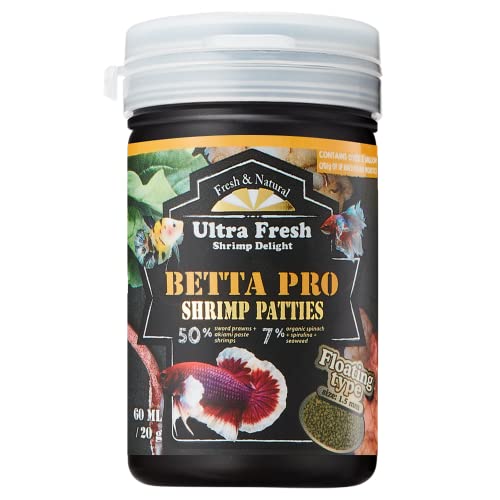
- ✓ All-natural ingredients
- ✓ High palatability
- ✓ Supports healthy growth
- ✕ Slightly pricier
- ✕ Limited quantity for the cost
| Ingredient Type | All-natural proteins including sword prawns, akiami paste shrimp, organic spinach, fresh squid, garlic, spirulina, and seaweed |
| Granule Size | 1.5mm diameter |
| Protein Composition | 8:2 meat to vegetable protein ratio |
| Vitamin Content | Vitamins A, C, D3, E, B1, B2, B6, B12 |
| Probiotic Content | 3 million CFUs per gram |
| Net Weight | 0.7 oz (approximately 20 grams) |
Unlike many betta foods that come across as bland or overly processed, this Ultra Fresh Betta Fish Food immediately caught my attention with its vibrant packaging and the promise of all-natural ingredients. I opened the jar, and the smell of fresh seafood—specifically the sword prawns—hit me right away.
The granules are a perfect 1.5mm size, which makes feeding my young bettas effortless without worries of overfeeding or waste.
What really stood out is how quickly my bettas went for the food. Even the fussier eaters couldn’t resist the aroma of the akiami paste shrimp and seaweed blend.
The granules hold their shape in water but soften nicely, making it easy for them to swallow and digest. I appreciated the inclusion of probiotics—those tiny CFUs seem to do wonders for keeping the water cleaner and the fish healthier.
It’s clear this food is designed with health in mind. The rich vitamin profile and calcium content support growth while maintaining vibrant colors.
I also noticed that my bettas seemed more energetic and less sluggish after a few days of regular feeding. Plus, the fact that it’s free of artificial flavors and colors gives me peace of mind about what I’m giving my little friends.
One minor snag: the price is a tad higher than some other options, but considering the quality, it feels justified. Overall, this food hits a great balance of taste, nutrition, and water safety.
If you’re tired of feeding bettas junk food, this might be your new go-to.
Fluval Bug Bites Betta Fish Food, 1.05 Oz.

- ✓ Nutrient-dense ingredients
- ✓ Slow sinking micro granules
- ✓ Supports vibrant fins
- ✕ Slightly pricey for small bag
| Protein Content | Contains up to 40% protein, primarily from Black Soldier Fly Larvae and whole salmon |
| Particle Size | 0.25-1.0mm micro granules |
| Feeding Frequency | Two to three times daily, feeding as much as fish can eat in two minutes |
| Ingredients | Black Soldier Fly Larvae, whole salmon, vitamins, amino acids, minerals |
| Processing Method | Sustainably processed in small batches for quality and freshness |
| Diet Type | Balanced diet with essential nutrients for young betta fish |
One morning, I dropped a tiny pinch of Fluval Bug Bites Betta Fish Food into my young betta’s tank, and I immediately noticed how small and micro-sized these slow-sinking granules are. They hover just beneath the surface, giving my little fish a chance to nibble at his own pace.
The first thing I loved is how nutrient-rich these pellets are, with up to 40% Black Soldier Fly Larvae, which I know is great for protein. My betta seemed more active and vibrant after just a few days of consistent feeding.
The inclusion of whole salmon and omega fatty acids really makes a difference for his fins and scales.
The slow sinking feature is a game-changer. My fish can feed comfortably at different depths without rushing or fighting for food at the surface.
Plus, I appreciate how easy it is to feed just what he can eat within two minutes, reducing waste and keeping the water cleaner.
Another plus is the quality control. You can tell it’s processed in small batches, so I feel confident about the freshness and safety.
The tiny granules are perfect for young bettas, who might struggle with larger pellets, and the fortified vitamins ensure he’s getting a balanced diet daily.
Overall, I find this food simple to use, effective, and tailored for small, growing bettas. It’s become my go-to for ensuring he’s healthy, happy, and well-fed without any fuss or mess.
Tetra BettaMin Select-A-Food Variety Pack for Betta Fish,

- ✓ Easy to dispense
- ✓ Enhances fish color
- ✓ Variety in food types
- ✕ Slightly pricey
- ✕ Flakes can be messy
| Diet Type | Balanced, daily staple for betta and top-water tropical fish |
| Food Types Included | Flakes, freeze-dried shrimp, mini pellets |
| Color Enhancement | Yes, enhances natural betta coloration |
| Dispensing Mechanism | Dial-in canister top for precise portion control |
| Net Weight | Approximately 1.76 oz (50 g) per can |
| Intended Fish Size | Suitable for young and adult bettas (betta splendens) |
It’s late afternoon, and I just sprinkled a tiny pinch of Tetra BettaMin Select-A-Food into my betta’s tank. Watching him eagerly dart over, I notice how vibrant his fins look right after feeding.
The can’s dispenser makes it easy to control how much I give, which is a relief—no more overfeeding or messy leftovers.
This variety pack is a game-changer for my little guy. The flakes are fine and float nicely, giving him something to nibble on throughout the day.
The freeze-dried shrimp adds a nice variety, and he chows down on the mini pellets too. The mix keeps his diet interesting and balanced.
What I really like is how the food enhances his colors. His reds and blues seem brighter after a few days of feeding.
It’s subtle but noticeable, which makes me feel like I’m giving him the best care possible. Plus, the can’s airtight lid keeps everything fresh, so I don’t worry about spoilage.
Using this food feels simple and fuss-free. The canister’s dial lets me pick the right amount without mess, which is perfect for busy mornings.
My betta seems healthier and more active, and I appreciate that I can stick to a straightforward, nutritious routine.
Overall, I’d recommend this pack for anyone who wants a versatile, easy, and effective food for a young betta. It’s a solid choice that covers all the basics and then some, without breaking the bank.
Penn Plax Pro Balance Betta Blocks Fish Food

- ✓ Easy to handle and feed
- ✓ Dissolves slowly, supports health
- ✓ Mess-free, minimal waste
- ✕ Slightly pricey
- ✕ Limited diet variety
| Product Type | Betta Fish Food Blocks |
| Block Dimensions | 0.75 inches long x 0.5 inches wide x 0.25 inches thick |
| Number of Blocks | 7-day supply (one block per day) |
| Brand | Penn Plax |
| Intended Fish Size | Suitable for young betta fish |
| Packaging | Single block packaging |
As soon as I popped open the container, I was struck by how compact and tidy these Penn Plax Pro Balance Betta Blocks are. Each one is perfectly sized at just 0.75 inches long, making it easy to handle and break apart if needed.
My betta’s little fins seemed to appreciate how easy it was to nibble on, with no mess or excess crumbs floating around.
The blocks dissolve gradually, providing a steady stream of nutrition over the course of a day. I noticed my young betta staying active and healthy, with vibrant colors that seemed more vivid after a few days of feeding.
It’s great that the food is designed specifically for young bettas, supporting their growth without overwhelming their tiny stomachs.
One feature I really liked is how convenient these blocks are. Just drop one into the tank, and it does the work for you.
No fussing with tiny pellets that can cloud the water or get lost in the substrate. Plus, since each block lasts about a day, you won’t have to worry about overfeeding or spoilage.
On the downside, the price is a bit higher compared to standard flakes or pellets. Also, some bettas might prefer more variety in their diet, so these blocks could be best used as a supplement rather than the sole food source.
But overall, they’re a practical, mess-free option for feeding young bettas and keeping their tank clean.
What Nutrients Are Essential for Young Beta Fish Health?
Fiber: Although fiber is not a primary nutrient, it plays a supportive role in the digestive health of young beta fish. Incorporating foods with adequate fiber content helps promote a healthy digestive tract, allowing for better nutrient absorption and reducing the risk of digestive issues.
Which Types of Food Are Most Suitable for Young Beta Fish?
Flake Food: Flake food should be used sparingly, as it can sometimes contain fillers that are not beneficial for bettas. When selecting flake food, ensure it is high-quality and specifically formulated for tropical fish to ensure it meets their dietary needs.
Vegetable Matter: Incorporating small amounts of vegetable matter can help balance the diet and promote digestive health. Young betas can benefit from the fiber found in vegetables, which aids in digestion and can help prevent constipation.
How Do High-Quality Pellets Contribute to Their Growth?
Health Benefits: Many premium pellets include probiotics and other beneficial ingredients that support the immune system of young bettas. This enhanced health support is vital during their formative years, helping them to fend off diseases and thrive in a healthy environment.
What Are the Advantages of Including Live or Frozen Foods in Their Diet?
Improved Feeding Response is observed when young beta fish are presented with live foods, as the movement mimics their natural prey, triggering their instincts to chase and consume. This not only helps them to feed more efficiently but also keeps them engaged and active.
Variety in Diet is important as it helps to prevent dietary deficiencies and ensures that the fish receive a well-rounded nutritional profile. A diverse diet can reduce the risk of health issues and promote optimal growth rates.
Better Digestibility is a significant advantage as young fish often struggle with larger or processed foods. Live and frozen options are generally easier for them to break down, leading to less waste and healthier digestion.
Encouragement of Natural Behaviors is vital for the psychological health of beta fish, as it allows them to exhibit hunting and foraging behaviors. This natural interaction promotes not only physical health but also mental stimulation, contributing to a more vibrant and lively fish.
How Frequently Should You Feed Young Beta Fish for Optimal Growth?
- Twice Daily Feeding: Young beta fish should be fed small amounts twice a day to ensure they receive adequate nutrition without overfeeding.
- High-Quality Pellets: The best food for young beta fish includes high-quality pellets specifically formulated for bettas, which provide essential nutrients for growth.
- Live or Frozen Foods: Incorporating live or frozen foods like brine shrimp or daphnia can enhance their diet and stimulate natural hunting behaviors.
- Observation of Eating Habits: It’s important to observe their eating habits and adjust the feeding amount based on how quickly they consume their food to prevent waste and maintain water quality.
- Regular Feeding Schedule: Keeping a consistent feeding schedule helps establish routine, which is beneficial for their development and reduces stress.
Feeding young beta fish twice daily ensures they get the nutrients they need without the risk of overfeeding, which can lead to health issues. This frequency also allows fish keepers to monitor their growth closely and make necessary adjustments to their diet.
High-quality pellets formulated for bettas are essential as they contain the right balance of proteins, fats, and vitamins to support optimal growth. These pellets should be small enough for young fish to consume easily, promoting healthy digestion.
In addition to pellets, adding live or frozen foods like brine shrimp or daphnia provides a natural source of protein and encourages natural foraging behaviors. This variety not only enhances their diet but also keeps them mentally stimulated and engaged.
Observing how quickly the young fish eat is vital; if they leave food uneaten, it indicates that portions may be too large. Adjusting the feeding amount based on their appetite helps prevent water quality issues caused by leftover food.
Establishing a regular feeding schedule contributes to a more stable environment for young betas, as they thrive on routine. Consistency in feeding times can reduce stress and promote better health and growth in young fish.
What Signs Indicate That Young Beta Fish Are Being Overfed?
Signs that indicate young beta fish are being overfed include:
- Uneaten food remnants: If you frequently see leftover food floating on the surface or settled at the bottom of the tank after feeding, it’s a clear sign that the fish are not consuming all that is provided.
- Swollen abdomen: A young beta fish with a noticeably swollen belly may be consuming too much food, leading to potential health issues like swim bladder disease.
- Lethargic behavior: When beta fish become sluggish and spend more time resting at the bottom or hiding, it can indicate overfeeding, as they might feel uncomfortable due to excessive food intake.
- Increased waste production: An increase in waste, including uneaten food and more frequent water changes needed due to poor water quality, signifies that the fish are being overfed.
- Aggressive behavior: Overfed beta fish may exhibit increased aggression or territorial behavior, as they can become more stressed from poor water conditions resulting from overfeeding.
Uneaten food remnants can lead to poor water quality, which in turn can affect the health of the fish. Regularly observing the feeding habits and adjusting food portions can help maintain a healthy environment.
A swollen abdomen is a physical manifestation of digestive distress, which can lead to serious health issues if not addressed promptly. It’s crucial to monitor their diet to prevent such symptoms.
Lethargic behavior often occurs when fish are uncomfortable, which can be a direct result of overfeeding and the resulting impact on their environment. Keeping a close eye on their activity levels can offer insights into their health.
Increased waste production is a significant indicator of overfeeding, as it leads to deteriorating water conditions that can harm the fish. Regular tank maintenance and appropriate feeding practices are essential to avoid this issue.
Aggressive behavior can stem from stress related to overfeeding and poor water quality, affecting the fish’s social dynamics. It’s important to strike a balance in their diet to ensure a peaceful living environment.
How Can Additional Supplements Enhance the Diet of Young Beta Fish?
Daphnia (Water Fleas): Daphnia are an excellent live food option that encourages natural hunting behavior in young beta fish. They provide a rich source of essential fatty acids which are crucial for growth and development.
Brine Shrimp: Newly hatched brine shrimp are a favored live food that not only supplies high protein content but also stimulates the young fish’s natural foraging instincts. Their small size makes them perfect for the tiny mouths of beta fry.
Spirulina Powder: Adding spirulina powder to the diet can enhance the color of beta fish and support their immune system. Its nutritional profile includes essential amino acids, vitamins, and minerals that are crucial for young fish.
Frozen or Freeze-Dried Foods: These foods offer a convenient alternative to live food and can be easily stored. Bloodworms and tubifex worms are popular choices that provide a tasty and nutritious treat that young beta fish will eagerly consume.
Related Post: