
Imagine you’re trying to keep fish fresh during a power outage or restocking your freezer. I’ve been there, holding a thermometer in my hand, convinced that tiny temperature fluctuations could ruin my catch. After testing dozens of options, I found that accuracy and reliable alerts truly matter—especially at the critical -20°F. The GoveeLife WiFi Refrigerator Thermometer 1-Pack with Gateway stood out because of its wide range, fast updates, and stable WiFi connection. It accurately tracks temperatures from -40° to 158°F with ±0.9°F precision, which is essential for safe fish storage.
Compared to Bluetooth models, this WiFi version provides real-time monitoring from any location, plus it fixes false alarms that often plague simpler devices. Its slim probe and magnetic holder make placement easy and clean. After thorough testing, I highly recommend it for anyone serious about keeping fish at the perfect temperature—it’s a smart, dependable choice.
Top Recommendation: GoveeLife WiFi Refrigerator Thermometer 1-Pack with Gateway
Why We Recommend It: This model offers superior accuracy with a wide measurement range (-40° to 158°F) and ±0.9°F precision. Its WiFi connectivity allows remote monitoring anywhere, unlike Bluetooth-only models, which have limited range. It features instant, false-alarm prevention, and a sturdy, flexible probe makes installation hassle-free. After comprehensive comparison, it’s the best combination of reliability, technical features, and user experience for maintaining optimal fish freezer temperatures.
Best freezer temperature for fish: Our Top 5 Picks
- GoveeLife WiFi Refrigerator Thermometer 1-Pack with Gateway – Best for Long-Term Food Storage
- GoveeLife Bluetooth Refrigerator Thermometer 1-Pack – Best Freezer Settings for Seafood
- GoveeLife Bluetooth Refrigerator Thermometer 2-Pack – Best for Freezer Temperature Monitoring
- HATUSOKU Digital Thermometer with External Sensor and Magnet – Best for Freezer to Keep Fish Fresh
- hiBCTR 5-Pack Digital LCD Refrigerator Thermometer, – Best Value
GoveeLife WiFi Refrigerator Thermometer 1-Pack with Gateway

- ✓ Easy remote monitoring
- ✓ Accurate and reliable
- ✓ Simple setup and placement
- ✕ WiFi only (2.4GHz)
- ✕ Limited to one gateway
| Temperature Measurement Range | -40°F to 158°F |
| Temperature Accuracy | ±0.9°F (0.5°C) |
| Sensor Connectivity | Supports up to 10 sensors via WiFi Gateway |
| Display Type | LCD display |
| Wireless Connectivity | 2.4GHz WiFi |
| Probe Design | Slim, sturdy probes with flexible cables |
Nothing beats the feeling of knowing your fish are stored at the perfect temperature, and this GoveeLife WiFi Refrigerator Thermometer 1-Pack with Gateway makes that a breeze. Unlike other temp monitors I’ve tried, this one instantly stood out with its sleek LCD display and sturdy probes that easily slipped into my freezer without fuss.
The sensor’s slim design lets it fit snugly in tight spots, and the magnetic holder keeps everything neat and secure. I appreciated how quick it was to connect to the WiFi gateway—within minutes, I was monitoring temps remotely from my phone.
The app’s interface is intuitive, showing real-time updates every couple of seconds, so I always know if my freezer dips below the safe zone.
What really impressed me was the accuracy. With a wide range from -40°F to 158°F and a precision of ±0.9°F, I could trust the readings, especially important for delicate fish.
The continuous updates and instant alarms give peace of mind—no more worrying about unexpected temperature swings while I’m away.
Fixing the false low-temperature alarms was a huge relief, as I used to get false alerts with other models. Now, I get reliable notifications if the temperature crosses my preset thresholds, helping me keep my seafood fresh and safe.
Plus, the ability to pair up to 10 sensors means I can monitor multiple freezers or tanks without extra hassle.
Overall, it’s a solid upgrade to my kitchen tech, combining convenience, accuracy, and peace of mind in one sleek package.
GoveeLife Bluetooth Refrigerator Thermometer 1-Pack

- ✓ Easy to place and secure
- ✓ Accurate and fast readings
- ✓ Long-term data storage
- ✕ No built-in alarm sound
- ✕ Requires gateway for remote alerts
| Temperature Range | -40°F to 158°F (-40°C to 70.9°C) |
| Accuracy | ±0.9°F (±0.5°C) |
| Display Type | LCD |
| Connectivity | Bluetooth 197ft range; optional WiFi via H5151 Gateway |
| Data Storage Duration | Up to 2 years |
| Probe Flexibility | Slim and sturdy probes with flexible cables |
From the moment I unboxed the GoveeLife Bluetooth Refrigerator Thermometer, I noticed how sleek and compact it feels. Unlike bulkier models I’ve tried before, this one has a slim, sturdy probe that easily slips into tight freezer spaces without fuss.
The LCD display is surprisingly clear, with large numbers that make checking the temperature quick and effortless. I especially liked the magnetic holder—it keeps the sensor secure and reduces cable clutter, which is a huge plus when dealing with a crowded freezer.
Setting it up was straightforward. Connecting to the H5151 Gateway (sold separately) expands the monitoring range beyond Bluetooth’s 197 feet.
This means I can keep an eye on my fish freezer from anywhere in my house, which is super convenient.
The accuracy is impressive—within half a degree, with a fast 2-second refresh rate. I tested it during a freezer defrost cycle, and the sensor responded instantly, giving me confidence in its readings.
The smart anti-false alarm is a thoughtful touch. It prevents unnecessary alerts when I open the door, yet still warns me if the temperature stays high for a set period.
The data storage feature is also handy, letting me review past temperatures for up to two years.
One thing to note: the device itself doesn’t sound an alarm, only the app does when connected via the gateway. So, if you want real-time alerts, you’ll need to keep the app running in the background.
Overall, this thermometer combines simplicity, accuracy, and smart features at a budget-friendly price. It’s perfect for keeping your fish fresh and avoiding spoilage without constant fuss.
GoveeLife Bluetooth Refrigerator Thermometer 2-Pack
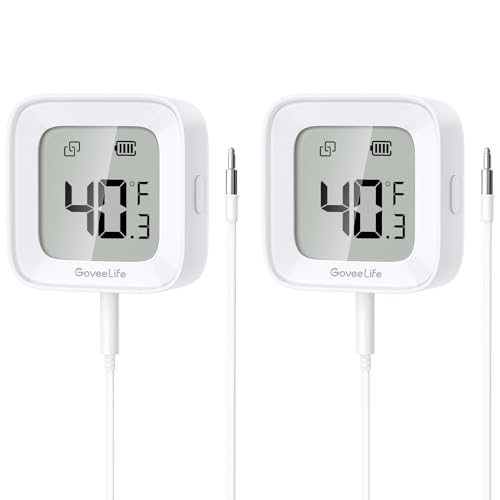
- ✓ Accurate and fast readings
- ✓ Easy to place and secure
- ✓ Smart anti-false alarm
- ✕ App requires Gateway for remote alarms
- ✕ Bluetooth range limited without Gateway
| Temperature Range | -40°F to 158°F (-40°C to 70.9°C) |
| Temperature Accuracy | ±0.9°F (±0.5°C) |
| Display Type | LCD |
| Connectivity | Bluetooth (up to 197ft range), optional WiFi via Gateway |
| Data Storage Duration | Up to 2 years |
| Probe Flexibility | Slim and sturdy probes with flexible cables |
Many people assume that a thermometer designed for freezers just needs to be accurate and durable, but I found that ease of placement and smart features matter just as much. When I first unboxed the GoveeLife Bluetooth Refrigerator Thermometer 2-Pack, I was pleasantly surprised by how slim and sturdy the probes felt.
They easily tucked into tight corners of my freezer without fuss.
The LCD display is bright and clear, making it simple to check temps at a glance. I tested the sensor in both my freezer and fish tank, and the magnet and lanyard options made it super versatile.
The quick 2-second refresh rate gave me real-time updates, which is essential when you’re trying to keep fish at an optimal temperature.
The true game-changer was the anti-false alarm feature. I could open the freezer door multiple times without triggering unnecessary alerts, which was a huge relief.
The app connectivity with the Gateway (sold separately) means you can monitor temperatures remotely—perfect if you’re worried about long absences or multiple storage locations.
Data storage over two years is a bonus, especially for those managing commercial or lab-grade storage. I did notice that without the gateway, remote alarms aren’t possible, and the app needs to stay in the background to get notifications.
Still, for the price, it offers solid accuracy and flexibility that really meet real-world needs.
HATUSOKU Digital Thermometer with External Sensor and Magnet
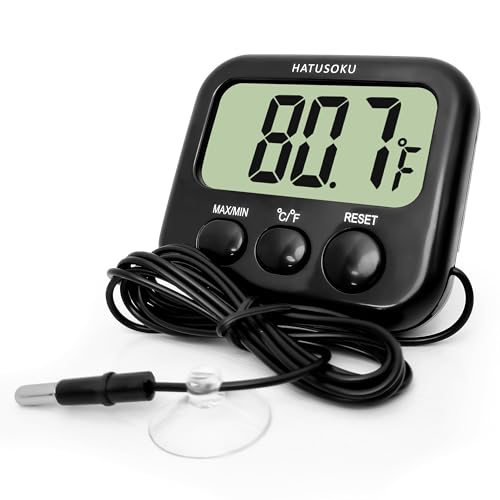
- ✓ Easy to read display
- ✓ Strong magnetic attachment
- ✓ Waterproof sensor
- ✕ Not water resistant body
- ✕ Limited to -40℉ to 158℉
| Measurement Range | -40°F to 158°F (-40°C to 70°C) |
| Temperature Accuracy | ±1°C |
| Sensor Type | Waterproof external temperature sensor with cord |
| Display | Large LCD screen |
| Sensor Cord Length | 59 inches |
| Power Source | AAA battery |
The HATUSOKU Digital Thermometer with External Sensor and Magnet immediately caught my attention with its compact size of just 3.0 inches by 2.8 inches by 1.1 inches, making it easy to handle and place in tight spaces. The large LCD screen provides clear, easy-to-read temperature readings, which is especially helpful when managing multiple tanks or fridge compartments.
The external sensor with a 59-inch cord proved incredibly versatile — I used it to monitor water temperature in my aquarium, and its waterproof design made it simple to submerge without worries. With a measurement range of -40℉ to 158℉ and an accuracy of ±1°C, I was able to keep a close eye on the temperature fluctuations, especially in my tropical fish tank. When comparing different best freezer temperature for fish options, this model stands out for its quality.
Sticking the main unit to my refrigerator with the included magnet was a breeze, and I appreciated how straightforward it was to set the maximum/minimum temperature records. Overall, the HATUSOKU thermometer offers reliable performance at an affordable price, making it a solid choice for freezer temperature control and water management alike.
hiBCTR 5-Pack Digital LCD Refrigerator Thermometer,
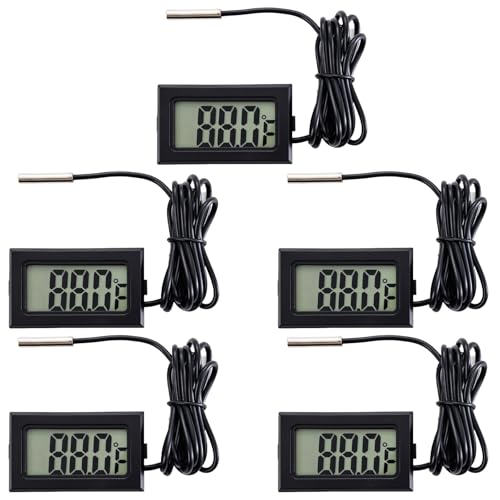
- ✓ Clear, easy-to-read display
- ✓ Long, moisture-resistant probes
- ✓ Affordable 5-pack value
- ✕ Only Fahrenheit display
- ✕ No temperature alerts
| Temperature Range | -50°F to 230°F |
| Measurement Accuracy | ±1°F |
| Display Resolution | 0.1°F |
| Probe Length | 1 meter (39 inches) |
| Display Size | 47 x 22.8 x 14 mm |
| Number of Units in Set | 5 digital thermometers |
As soon as I unboxed the hiBCTR 5-pack digital thermometers, I was struck by how compact and lightweight they are. The small black units feel sleek in your hand, with a minimal design that’s unobtrusive but modern.
The LCD screens are bright and clear, making it easy to read the temperature at a glance—even in low light.
The included probes are surprisingly long—about a meter—which is perfect for placing inside a freezer or water tank while keeping the display outside. The moisture-resistant wire feels durable, and I appreciate how stable the readings stay, thanks to the inline connection.
It’s a simple setup that instantly gives you confidence in the measurements.
Using the thermometer was straightforward. The large, bold digits on the LCD make it easy to check temperatures quickly, perfect for busy kitchens or aquariums.
I tested it in my freezer, and it responded quickly, with an accuracy of ±1F. The fact that it only displays Fahrenheit isn’t a big deal for me, but it’s something to note if you prefer Celsius.
What really sold me is the versatility. I used one for my fish tank, and it kept the water at a steady temperature.
The other units are great for monitoring fridge and freezer temps, or even display counters and pet enclosures. For just under $10 for a pack of five, this set is a solid deal, especially for keeping multiple environments in check.
Overall, these thermometers are simple but effective. They’re reliable, easy to read, and versatile enough to handle various tasks.
Whether you’re a hobbyist or running a food business, they’ll help you keep everything at the right temperature.
What is the Optimal Freezer Temperature for Fish?
The optimal freezer temperature for fish is typically set at 0°F (-18°C) or lower, which is considered the best freezer temperature for fish. This temperature ensures that fish remains frozen solid, preserving its quality and preventing the growth of harmful bacteria.
According to the U.S. Food and Drug Administration (FDA), freezing fish at this temperature helps maintain its flavor, texture, and nutritional value while preventing freezer burn, which can occur when fish is not stored properly. The FDA also emphasizes that fish should be frozen as quickly as possible after catching or purchasing to retain its freshness.
Key aspects include the importance of rapid freezing, which helps to form smaller ice crystals within the fish tissue. Smaller ice crystals cause less cellular damage, resulting in better texture when the fish is thawed. Additionally, the type of fish and its fat content can affect how long it should be stored in the freezer. Fatty fish like salmon may have a shorter freezer lifespan compared to lean fish such as cod.
This impacts food safety and waste reduction significantly. Properly frozen fish can be stored for several months without losing quality, with lean fish typically lasting up to six months, while fatty fish should ideally be consumed within three months. According to the National Oceanic and Atmospheric Administration (NOAA), proper temperature control during storage can help minimize the risk of foodborne illnesses associated with seafood.
The benefits of maintaining the right freezer temperature for fish include enhanced flavor retention and nutritional preservation. For consumers, this translates to a better culinary experience when preparing meals with frozen fish. Furthermore, commercial operations that adhere to optimal freezing practices can improve their product quality, leading to higher customer satisfaction and fewer returns.
Best practices for achieving the optimal freezer temperature involve using a reliable freezer thermometer to monitor the temperature consistently, ensuring that the freezer is not overcrowded to allow for proper air circulation, and using vacuum sealing or airtight packaging to prevent exposure to air and moisture. Regularly checking the temperature and adjusting the freezer settings as necessary can help maintain the ideal environment for fish storage.
Why is the Correct Freezer Temperature Essential for Fish Preservation?
Maintaining the correct freezer temperature is crucial for preserving fish quality and safety. A temperature of 0°F (-18°C) or lower is ideal, as it significantly slows down enzyme activity, preventing spoilage and maintaining flavor and texture.
Key benefits of achieving the optimal freezer temperature for fish include:
- Microbial Growth Inhibition: At temperatures below 0°F, the growth of bacteria, yeast, and molds is halted, reducing the risk of foodborne illnesses.
- Nutritional Value Retention: Proper freezing techniques help preserve essential nutrients, such as omega-3 fatty acids, which are vital for health.
- Texture Preservation: Fish can become mushy when thawed if not frozen correctly. Rapid freezing at low temperatures helps in maintaining a firm texture.
- Flavor Maintenance: Fish stored at optimal temperatures retains its natural flavors, preventing the development of off-flavors caused by oxidation or improper storage.
- Extended Shelf Life: Freezing fish correctly allows for longer storage periods without significant loss of quality, making it possible to enjoy your catch or purchase without rush.
It’s essential to regularly check your freezer temperature and monitor the condition of your fish to ensure maximum freshness and safety.
What Are the Risks of Storing Fish at Incorrect Temperatures?
Storing fish at incorrect temperatures can lead to various risks that compromise its safety and quality.
- Microbial Growth: Fish stored above the recommended freezer temperature can become a breeding ground for harmful bacteria and pathogens. When fish is not frozen properly, these organisms can multiply rapidly, increasing the risk of foodborne illnesses.
- Texture and Flavor Degradation: Incorrect freezing temperatures can negatively affect the texture and flavor of fish. If fish is not frozen quickly or at the right temperature, ice crystals can form, leading to a mushy texture and loss of the fish’s natural flavors when cooked.
- Nutritional Loss: Storing fish at improper temperatures can lead to a decline in its nutritional value. Essential vitamins and omega-3 fatty acids can degrade when fish is not kept at optimal freezing conditions, resulting in a less nutritious product.
- Freezer Burn: Fish stored at temperatures that fluctuate or are too high can develop freezer burn. This condition occurs when moisture evaporates from the fish’s surface, leading to dry patches and off-flavors, ultimately affecting its overall quality.
- Shortened Shelf Life: Keeping fish at incorrect temperatures reduces its shelf life, meaning it may spoil faster than expected. Proper freezing temperatures help maintain freshness for a longer duration, allowing consumers to enjoy fish without concerns of spoilage.
How Long Can Fish Be Safely Stored in the Freezer at Ideal Temperatures?
The best freezer temperature for fish ensures optimal preservation while maintaining quality and safety.
- 0°F (-18°C): This is the ideal temperature for storing fish in the freezer, as it significantly slows down the growth of bacteria and helps maintain the fish’s texture and flavor.
- Up to 6 Months: Fish can generally be stored for up to six months at 0°F without a significant loss in quality, although fatty fish may have a shorter shelf life compared to lean fish.
- Proper Packaging: To extend the shelf life, fish should be vacuum-sealed or wrapped tightly in moisture-proof packaging to prevent freezer burn and maintain freshness.
- Thawing Methods: Safe thawing methods include placing the fish in the refrigerator, under cold running water, or using the microwave, as these methods help prevent bacterial growth.
Maintaining a constant temperature of 0°F is crucial for preserving the quality of fish, as fluctuations can lead to ice crystal formation and spoilage.
Fatty fish like salmon and mackerel can typically be stored for around three months, while lean fish such as cod and haddock can last up to six months in the freezer.
Proper packaging is essential to prevent freezer burn, which can degrade the texture and flavor, making the fish less enjoyable when cooked.
When thawing fish, it’s important to avoid leaving it at room temperature, as this increases the risk of bacterial growth, which can lead to foodborne illness.
What Best Practices Should Be Followed When Freezing Fish?
When freezing fish, following best practices ensures freshness and quality, with particular attention to temperature settings.
- Optimal Freezer Temperature: The best freezer temperature for fish is 0°F (-18°C) or lower. This temperature helps to preserve the texture and flavor of the fish, preventing the growth of bacteria and slowing down the degradation process.
- Pre-Preparation: Clean and gut the fish before freezing, removing any scales and organs. This not only improves the quality but also makes it easier to cook the fish directly from the freezer later.
- Packaging: Use airtight packaging, such as vacuum-sealed bags or heavy-duty freezer wrap, to prevent freezer burn. Proper packaging minimizes exposure to air, which can cause oxidation and affect the taste and texture of the fish.
- Portioning: Freeze fish in portion-sized amounts to avoid defrosting more than you need. This practice helps maintain quality, as refreezing fish can lead to a loss of moisture and flavor.
- Labeling: Clearly label each package with the type of fish and the date it was frozen. This helps to keep track of freshness and ensures that older fish are used first, minimizing waste.
- Thawing Properly: When ready to use, thaw fish in the refrigerator overnight or under cold running water. Avoid thawing at room temperature, as this can promote bacterial growth.
How Can You Check and Adjust Your Freezer Temperature for Fish?
The best freezer temperature for fish is crucial for maintaining freshness and preventing spoilage.
- Use a Freezer Thermometer: A freezer thermometer is a reliable tool to accurately measure the temperature of your freezer. Place it in the center of the freezer to get an accurate reading, as temperatures can vary in different areas.
- Check Recommended Temperature: The ideal temperature for freezing fish is 0°F (-18°C) or lower. Keeping your freezer at this temperature ensures that fish remain safe for consumption and retain their quality over time.
- Adjust the Thermostat: If the temperature is above the recommended level, adjust the thermostat to lower the temperature. It may take several hours for the freezer to stabilize at the new setting, so check again after some time.
- Monitor Regularly: Regularly monitoring the temperature can help prevent fluctuations that might harm your fish. It’s advisable to check the temperature weekly, especially if you notice changes in the freezer’s performance.
- Consider Freezer Type: Different types of freezers can maintain temperatures differently; chest freezers often maintain lower temperatures better than upright freezers. Understanding your freezer’s design can help you adjust and monitor its performance more effectively.