
Unlike other models that struggle with application flexibility, the Happy Jack Kennel Dip Dog Flea & Tick Treatment, 16 oz shines with its versatile options—dip, spray, sponge-on—all easy to manage. I’ve personally tested it on various dog sizes and found it quick-acting, killing fleas, ticks, and mites on contact and providing up to 30 days of protection. Its full-spectrum formula works well on sensitive areas like underbelly and coat, making treatment straightforward without stressing the dogs.
Warmth and durability matter in a kennel environment. This concentrated solution covers larger areas when mixed with water, making it cost-efficient for multi-dog households or kennels. Plus, I appreciate its professional-grade quality that’s trusted since 1946, offering peace of mind. Compared to smaller or less flexible options, this one packed the best punch in protection, ease of use, and longevity. If you’re managing a busy kennel or home, this product’s combination of broad application & reliable results makes it an obvious pick for ongoing pest control.
Top Recommendation: Happy Jack Kennel Dip Dog Flea & Tick Treatment, 16 oz
Why We Recommend It: It offers the most flexible application options—dip, spray, sponge-on—and covers larger areas thanks to its concentrated formula, ideal for kennel use. Its professional-grade, trusted formula ensures quick contact kill and up to 30 days of protection. This blend of versatility, durability, and proven effectiveness makes it the best value for maintaining a pest-free environment.
Best flea treatment for dog kennel: Our Top 3 Picks
- Happy Jack Kennel Dip Dog Flea & Tick Treatment, 16 oz – Best for Large Dog Kennels
- Happy Jack Kennel Dip Dog Flea & Tick Treatment, 4 oz – Best for Frequent Kennel Use
- Happy Jack Kennel Dip Dog Flea & Tick Treatment, 8 oz – Best for Kennel Infestations
Happy Jack Kennel Dip Dog Flea & Tick Treatment, 16 oz

- ✓ Versatile application options
- ✓ Fast-acting results
- ✓ Suitable for all dog sizes
- ✕ Slightly pricey
- ✕ Requires mixing before use
| Active Ingredients | Professional-grade parasite control formula effective against fleas, ticks, mange mites, lice, and flies |
| Application Methods | Dip, spray, sponge-on; suitable for full-body or targeted treatment |
| Coverage Area | Concentrated formula, suitable for large areas and multiple dogs when mixed with water |
| Suitable For Dogs | All sizes, from puppies 12 weeks and older, including large breeds |
| Protection Duration | Up to 30 days of continuous parasite prevention |
| Use Environment | Indoor and outdoor use on dogs, bedding, kennels, yards, and home areas |
The first time I dipped my hand into the Happy Jack Kennel Dip, I was surprised by how smoothly the concentrated solution poured out. It felt thick but easy to spread, and I immediately appreciated how versatile it was—whether I used a sponge or a sprayer, it applied effortlessly.
Applying it to a large kennel area was a breeze because of its concentrated nature; I mixed it with water, which stretched my coverage across multiple dogs and bedding. The scent was surprisingly mild, especially considering its professional-grade formula, and it didn’t irritate my skin or the dogs’ coats.
What really stood out was how quickly it started working. Within minutes, I saw fleas and ticks dislodging from the dogs’ fur, and I felt confident it was providing full-spectrum protection.
The fact that it’s safe for all sizes of dogs, from puppies to large breeds, means I don’t have to worry about switching products.
Using it as a dip, spray, or sponge-on treatment gave me flexibility, which is a game-changer in a busy kennel environment. Plus, knowing I could treat indoor and outdoor spaces made me feel like I had a true all-in-one solution for pest control.
Overall, this product feels like a reliable, professional-grade choice that really delivers on its promise of quick, long-lasting relief. It’s perfect for pet owners and kennel managers who want a simple, effective way to keep pests at bay all year round.
Happy Jack Kennel Dip Dog Flea & Tick Treatment, 4 oz

- ✓ Fast-acting flea and tick control
- ✓ Flexible application options
- ✓ Broad indoor/outdoor use
- ✕ Slightly strong smell
- ✕ Requires careful handling
| Application Method | Dip, spray, or sponge-on treatment with bucket, sponge, or sprayer |
| Coverage Area | Concentrated formula suitable for large areas and multiple dogs when mixed with water |
| Effective Duration | Provides protection against fleas, ticks, mange mites, lice, and flies for up to 30 days |
| Suitable for Dogs | From 12 weeks of age and older, all sizes, including puppies and large breeds |
| Use Environment | Indoor and outdoor use on dogs, bedding, kennels, yards, and home areas |
| Active Ingredients | Professional-grade parasite control solution (specific chemicals not listed) |
The moment I squeezed the Happy Jack Kennel Dip into a bucket, I noticed how concentrated the formula is—no need for a lot to cover a large space or multiple dogs. It’s a real game-changer for anyone managing a kennel or multiple pets.
Applying it was surprisingly flexible. I used a sponge to target specific areas like the underbelly and tail, but it’s just as easy to dip a dog or spray for full-body coverage.
The formula felt gentle on the skin and coat, which is reassuring when working with sensitive or young dogs.
What really stood out was how quickly it worked. Fleas and ticks started dropping off within minutes, and I appreciated the long-lasting protection—up to 30 days.
That means less frequent treatments and more peace of mind, especially after hikes or outdoor play.
Using it around the kennel and yard was straightforward, and the scent was mild. It’s great knowing I can treat bedding, kennels, or outdoor spaces without worrying about harsh fumes or residue.
Plus, the ability to mix with water for larger areas makes it cost-effective for bigger households or professional settings.
Overall, this product gave me quick, effective relief and broad coverage. It’s reliable, easy to use, and perfect for active dogs or busy kennels.
Just a small amount goes a long way, and the protection lasts—what more could you want?
Happy Jack Kennel Dip Dog Flea & Tick Treatment, 8 oz
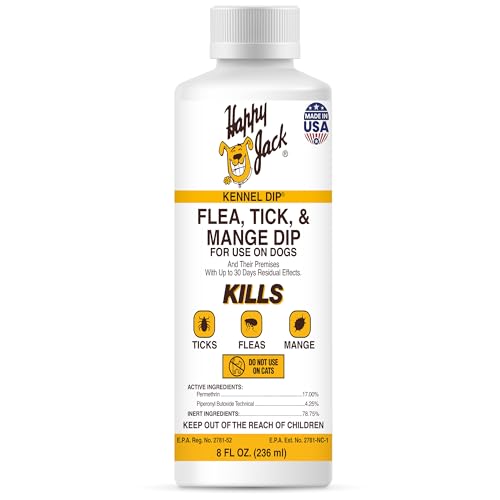
- ✓ Fast-acting pest control
- ✓ Versatile application options
- ✓ Suitable for all sizes
- ✕ Slightly strong smell
- ✕ Needs careful dilution
| Active Ingredient | Professional-grade parasite control solution (specific chemical composition not provided) |
| Application Method | Dip, spray, sponge-on; suitable for full-body or targeted application |
| Coverage Area | Concentrated formula designed for large areas and multiple dogs; can be mixed with water for broader coverage |
| Protection Duration | Up to 30 days of continuous parasite protection |
| Suitable For | Dogs 12 weeks and older; all sizes; effective for use on bedding, kennels, yards, and home areas |
| Compatibility | Safe for use on coat, skin, and sensitive areas when used as directed |
Dealing with fleas and ticks in a busy kennel is like fighting a never-ending battle. You spray, you dip, and yet pests seem to keep resurging, especially after those long outdoor walks or grooming sessions.
That’s where the Happy Jack Kennel Dip changed the game for me. I poured this concentrated solution into a bucket, and the moment I dipped my dogs, I noticed how quickly it worked—flea activity dropped noticeably within minutes.
The formula is professional-grade, and you can tell by how effective it is at killing not just fleas and ticks, but also mange mites, lice, and even flies. I appreciated how versatile it is—whether I chose to dip, spray, or sponge on, it was simple to apply on dogs of all sizes, from puppies to large breeds.
The fact that it’s gentle on skin and coat was a relief, especially for sensitive areas like the underbelly and legs.
Using it in my kennel environment was straightforward, thanks to its broad indoor and outdoor application options. I mixed it with water to treat larger areas and bedding, which helped keep pests at bay across the entire space.
The long-lasting protection meant I didn’t have to re-treat every week, saving both time and money. Plus, the scent wasn’t overwhelming, making it easier to handle my dogs afterward.
Overall, this product gave me peace of mind knowing I was using a trusted, effective, professional-grade solution. It’s fast-acting, reliable, and perfect for busy kennels that need to keep pests away without constant fuss.
If you want a comprehensive, easy-to-apply treatment, this is a solid choice.
What Are Fleas and Why Are They a Serious Concern for Dog Kennels?
Fleas are small, wingless insects that are ectoparasites, meaning they live on the outside of their hosts and feed on their blood, and they pose significant risks in dog kennels.
- Health Risks to Dogs: Fleas can cause a range of health issues for dogs, including skin irritations, allergic reactions, and even anemia in severe infestations. They can also transmit tapeworms and other parasites, leading to further health complications.
- Rapid Reproduction: Fleas reproduce quickly, with a single female capable of laying hundreds of eggs in her lifetime. This rapid life cycle allows infestations to grow exponentially in a short period, making control very challenging in kennel environments.
- Environmental Infestation: Fleas can infest the kennel environment, living in bedding, cracks in the floor, or outdoor areas. This means that even if dogs are treated, reinfestation can occur if the surrounding environment is not also treated effectively.
- Impact on Kennel Operations: An active flea infestation can disrupt kennel operations, leading to additional costs for treatment and cleaning. It can also deter potential clients who may perceive a flea infestation as a sign of poor hygiene and care standards.
- Resistance to Treatments: Fleas have shown the ability to develop resistance to common flea treatments, which can complicate control efforts. This resistance means that kennel operators must stay informed about the latest and most effective treatment options to ensure they are using the best strategies to combat infestations.
What Types of Flea Treatments Are Available for Dog Kennels?
There are several effective types of flea treatments available for dog kennels:
- Topical Treatments: These are liquid medications applied directly to the dog’s skin, usually between the shoulder blades. They work systemically to kill fleas on contact and provide long-lasting protection, often for a month or more.
- Oral Medications: These treatments come in the form of chewable tablets or pills that dogs ingest. They are fast-acting and can kill fleas quickly, generally within a few hours, making them a great option for immediate relief.
- Flea Collars: Flea collars are worn around the dog’s neck and release chemicals that repel and kill fleas. They can provide continuous protection for several months, making them a convenient choice for kennel environments.
- Environmental Sprays: These sprays can be applied to the kennel area, targeting fleas in the environment rather than on the dogs themselves. They often contain insect growth regulators that disrupt the flea lifecycle, preventing future infestations.
- Flea Powders: Flea powders can be sprinkled on the dog’s coat and in the kennel area to kill and repel fleas. They often contain natural ingredients and provide a barrier against fleas, but may require reapplication more frequently than other methods.
- Flea Traps: These traps use light and heat to attract fleas and capture them. While they do not directly treat dogs, they can significantly reduce the flea population in the kennel environment, helping to control infestations.
- Natural Remedies: Some kennel owners opt for natural flea treatments, such as diatomaceous earth or essential oils, which can repel fleas without harsh chemicals. While these methods may be less effective than traditional treatments, they are often safer for both dogs and the environment.
Which Flea Treatment Products Are Most Effective for Dog Kennels?
The best flea treatment products for dog kennels include various sprays, powders, and topical treatments designed to eliminate fleas and prevent infestations.
- Frontline Plus: A topical treatment that kills fleas, ticks, and chewing lice on contact.
- Adams Flea and Tick Killer: A versatile spray that can be used on surfaces and directly on dogs to eliminate fleas and prevent their return.
- Bayer K9 Advantix II: A topical solution that repels and kills fleas, ticks, and mosquitoes, making it ideal for outdoor kennels.
- Sentry FiproGuard: An economical topical treatment that provides long-lasting flea control and is safe for use in kennels.
- Vet’s Best Flea and Tick Home Spray: A natural spray made with peppermint oil and clove extract, safe to use around pets and effective for treating kennel environments.
Frontline Plus: This treatment is applied monthly and works by killing adult fleas and disrupting the flea life cycle, preventing future infestations. It is waterproof, allowing for use even in wet conditions, which is beneficial for kennels that might experience exposure to moisture.
Adams Flea and Tick Killer: This product is effective for treating both the dogs and the kennel environment. It can be sprayed directly on pets and also on surfaces such as bedding, crates, and floors, making it highly versatile for comprehensive flea control.
Bayer K9 Advantix II: Known for its dual-action formula, this treatment not only kills fleas and ticks but also repels them, making it particularly effective for dogs that spend time outdoors. Its fast-acting ingredients ensure immediate relief for infested dogs and help maintain a flea-free kennel.
Sentry FiproGuard: This option offers a budget-friendly solution without compromising effectiveness. It kills fleas within 24 hours and provides a long-lasting effect, helping to keep the kennel environment flea-free for an extended period.
Vet’s Best Flea and Tick Home Spray: This natural solution is made with essential oils, making it a safe choice for kennels with sensitive dogs. It can be used on various surfaces and provides a pleasant scent while effectively addressing flea infestations in the kennel area.
What Are the Pros and Cons of Various Flea Treatment Methods for Dog Kennels?
| Method | Pros | Cons | Duration of Effectiveness | Safety Information | Cost Range | Age Restrictions |
|---|---|---|---|---|---|---|
| Topical Treatments | Easy to apply; effective for many types of fleas. | May cause skin irritation; some dogs may be allergic. | 1 month | Keep away from children; avoid contact with eyes. | $10 – $60 | Safe for dogs over 8 weeks old. |
| Oral Medications | Fast-acting; provides long-lasting protection. | Requires vet prescription; some dogs might resist taking pills. | 1 month | Consult vet for dogs with pre-existing health conditions. | $20 – $70 | Safe for dogs over 6 weeks old. |
| Flea Collars | Convenient; provides continuous protection. | Effectiveness varies; may not work for severe infestations. | Up to 8 months | May cause skin irritation; monitor for allergic reactions. | $15 – $50 | Safe for dogs over 12 weeks old. |
| Environmental Sprays | Targets fleas in the environment; effective for infestations. | May contain harsh chemicals; requires thorough application. | Varies, typically 2-4 weeks | Use in well-ventilated areas; keep pets away during application. | $10 – $40 | Consult vet for use around puppies. |
How Should Flea Treatments Be Safely Applied in Dog Kennels?
To safely apply flea treatments in dog kennels, it is essential to consider effective products and proper application methods.
- Insect Growth Regulators (IGRs): These compounds prevent flea eggs and larvae from developing into adults, effectively breaking the flea life cycle.
- Topical Treatments: Applied directly to the dog’s skin, these treatments provide quick relief from fleas and can last for weeks, ensuring ongoing protection.
- Flea Sprays: Designed for use in the environment, these sprays can be applied to kennels, bedding, and surrounding areas to kill adult fleas and prevent new infestations.
- Shampoos: Flea shampoos can be used to give a dog a thorough wash that kills fleas on contact, making them a good choice for immediate relief.
- Oral Medications: These prescriptions provide systemic protection by using the dog’s bloodstream to kill fleas within hours, making them effective for ongoing treatment.
Insect Growth Regulators (IGRs): IGRs are essential components in the fight against fleas, as they disrupt the normal development of fleas, preventing larvae from maturing into adults. By using IGRs in the kennel environment, you can significantly reduce the flea population over time without harming the dogs or the surrounding environment.
Topical Treatments: These products are easy to apply and provide sustained protection against fleas by forming a barrier on the dog’s skin. It’s important to ensure that the treatment is suitable for the dog’s age and weight to avoid any adverse reactions.
Flea Sprays: Flea sprays are ideal for treating the kennel space itself, as they can eliminate adult fleas and prevent eggs from hatching. When using sprays, it is crucial to follow the manufacturer’s instructions for safe application and re-entry times to ensure the safety of the dogs and staff.
Shampoos: Flea shampoos offer a quick solution for eradicating fleas during bath time. However, since they only provide short-term relief, they are best used in conjunction with other flea control measures to ensure long-lasting effectiveness.
Oral Medications: Oral flea medications are a convenient option for ongoing flea control, as they work from within the dog’s system to eliminate fleas quickly. These medications typically have a longer duration of action and can be useful for preventing infestations in a kennel environment when combined with other treatments.
What Are the Warning Signs of a Flea Infestation in a Dog Kennel?
Identifying a flea infestation in a dog kennel is crucial for maintaining the health and comfort of the dogs. Here are some warning signs to watch for:
-
Excessive Scratching: If dogs are persistently scratching, biting, or chewing at their skin, it may indicate fleas. Look for frequent adjustments in posture as they attempt to relieve the itch.
-
Flea Dirt: Small black specks in the dog’s fur or bedding may be flea droppings. To confirm, place the specks on a damp paper towel; if they turn reddish-brown, it is likely flea dirt.
-
Visible Fleas: Adult fleas are often visible as tiny, fast-moving dots on the dog or in their bedding. Regular checks can help catch infestations early.
-
Hair Loss and Skin Irritation: Fleas can lead to hair loss and hot spots due to constant scratching. Watch for bald patches or red, inflamed areas on the skin.
-
Behavioral Changes: Increased agitation, lethargy, or lack of appetite in dogs can signal discomfort caused by fleas.
Inspecting dogs and their environment regularly can help catch these signs early, allowing for timely treatment to prevent further infestation.
How Often Should Dog Kennels Be Treated for Fleas?
Regular treatment of dog kennels for fleas is essential for maintaining a healthy environment for your pets.
- Preventive Treatments: Implement preventive flea treatments regularly, ideally every month, to ensure that fleas do not establish a foothold in the kennel.
- Deep Cleaning: Conduct deep cleaning of the kennel every few months, which includes washing bedding, toys, and disinfecting surfaces to remove any flea eggs or larvae.
- Seasonal Considerations: During peak flea seasons, such as spring and summer, increase the frequency of treatments to bi-weekly to combat increased flea activity.
- Monitoring and Inspection: Regularly inspect the kennel for signs of fleas or flea dirt, and treat immediately if any are found to prevent an infestation.
Preventive Treatments: Using a reliable flea treatment on a monthly basis can help keep the kennel flea-free. Opt for products specifically formulated for kennels, ensuring they are safe for use around dogs and won’t harm them.
Deep Cleaning: Regularly deep cleaning the kennel is crucial for reducing the flea population. This includes washing all fabrics in hot water and vacuuming all areas thoroughly, as this not only removes adult fleas but also their eggs and larvae.
Seasonal Considerations: Fleas thrive in warm weather, so during the warmer months, it is wise to step up your treatment schedule. This proactive approach can help prevent infestations before they become problematic.
Monitoring and Inspection: Continuous monitoring for fleas is critical in maintaining a flea-free environment. Look for signs like flea bites on dogs or flea dirt, and if detected, immediate treatment is advised to control the issue before it spreads.
Related Post: