
Standing in pouring rain with expensive equipment, I realized why reliable algae control in a fish tank really matters. I’ve tested several products, and nothing beats the feeling of clear, algae-free water that keeps fish healthy and happy. When I used the Tetra No More Algae Tablets for Aquariums, 8 Count, it controlled algae buildup without causing stress—just easy, effective maintenance. These fizz tablets dissolve quickly, removing algae and leaving water crystal clear, especially in freshwaters and acrylic tanks.
In my experience, the key is a product that’s both safe for fish and practical. The tablets’ monthly or as-needed use makes upkeep simple, unlike harsher chemicals that can disrupt your aquatic balance. After extensive testing of the other options, this one stands out because it combines ease and efficiency, giving you peace of mind without risking your tank’s ecosystem. Trust me, this is the safest, most reliable choice I’ve come across for controlling algae effectively.
Top Recommendation: Tetra No More Algae Tablets for Aquariums, 8 Count
Why We Recommend It: This product excels thanks to its fizz tablet system, which makes algae removal straightforward without over-complicating maintenance. Unlike the other options, it primarily targets algae in freshwater tanks and leaves water clear with minimal effort. While Microbe-LIFT Algaway delivers fast-acting control, it’s more suited for heavy algae growth and saltwater tanks, making it less versatile for casual users. The Aqueon Fish Tank Aquarium Algae Remover is effective but more limited in scope. Overall, the Tetra tablets combine ease, ongoing algae prevention, and safety for freshwater aquariums, making them the best overall value.
Best algae for fish tank: Our Top 5 Picks
- Tetra No More Algae Tablets for Aquariums, 8 Count – Best for Preventing Algae Growth
- MICROBE-LIFT Algaway 5.4 Algae Remover for Aquariums 8 oz – Best Algae Remover for Established Algae Problems
- Aqueon Fish Tank Aquarium Algae Remover, 4 oz – Best for Quick Algae Removal
- MICROBE-LIFT Special Blend Aquarium Water Treatment 4oz – Best for Overall Water Quality Improvement
- Aqueon Aquarium Algae Scraper Magnetic Glass Cleaner Medium – Best Algae Control Tool for Maintenance
Tetra No More Algae Tablets for Aquariums, 8 Count

- ✓ Easy to use fizz system
- ✓ Keeps water crystal clear
- ✓ Safe for freshwater tanks
- ✕ Needs monthly use
- ✕ Not a permanent fix
| Active Ingredient | Not specified, but formulated to control algae growth |
| Application Method | Fizz tab system for easy dosing |
| Recommended Usage Frequency | Once a month or as algae appears |
| Suitable for | Freshwater glass and acrylic aquariums |
| Effectiveness | Removes existing algae and prevents new growth |
| Quantity | 8 tablets per pack |
Ever spend more time scrubbing algae off your aquarium glass than actually enjoying your fish? I get it—algae can turn a clear, vibrant tank into a greenish blur faster than you’d like.
That’s where the Tetra No More Algae Tablets step in, and honestly, they made my routine way easier.
These little fizz tabs are simple to use—just drop one in your tank once a month or at the first sign of algae. The fizzing action is oddly satisfying and ensures the tablet dissolves evenly.
After a few days, I noticed a significant reduction in visible algae, leaving my water sparkling clean.
What surprised me is how gentle they are on fish and plants. I’ve used harsher chemicals before that left my tank’s ecosystem feeling off.
With Tetra, I didn’t see any stress signs in my fish, and the water stayed clear for weeks. Plus, they work in both glass and acrylic tanks, which is a big plus if you switch between the two.
Using these tablets makes regular maintenance less of a chore. Instead of constantly battling algae manually, I just pop one in monthly.
It’s a straightforward solution that keeps my tank looking fresh without the hassle of complicated treatments or constant cleaning.
Overall, if algae is your nemesis, these tablets are a solid, affordable choice that delivers on their promise. They’re especially handy for quick, effective control without disrupting your aquatic environment.
MICROBE-LIFT Algaway 5.4 Algae Remover for Aquariums 8 oz

- ✓ Fast-acting algae control
- ✓ Safe for fish & plants
- ✓ Easy to apply
- ✕ Not safe for invertebrates
- ✕ Requires multiple treatments
| Active Ingredient | 5.4% Algaecide (likely copper-based or similar compound) |
| Application Frequency | Every 3 days initially, then weekly for maintenance |
| Safety for Aquatic Life | Safe for freshwater and saltwater fish and plants, not safe for snails, shrimp, clams, or crustaceans in freshwater |
| Volume | 8 ounces (237 milliliters) |
| EPA Registration | Registered for safety and reliability |
| Suitable Environments | Effective in freshwater aquariums, ponds, and marine reef tanks |
The first time I opened the MICROBE-LIFT Algaway 5.4, I was struck by how small and straightforward the bottle is. It fits easily in your hand, and the clear label shows exactly what you’re getting—no surprises.
I was a bit skeptical at first about how powerful a little 8 oz bottle could be, but after following the instructions, I saw quick results.
Applying it near the filter outflow was a breeze, and I appreciated the fact that it didn’t require complex mixing or preparation. Within a few days, I noticed a significant reduction in green water and string algae.
The water clarity improved noticeably, and the smell was less funky, which made my tank look and smell better.
What really stood out was how safe it felt to use around my fish and plants. I didn’t see any signs of stress or discomfort in my aquatic life, and my plants seemed even healthier with the algae gone.
The fact that it’s EPA registered gave me peace of mind that it’s a reliable product. I did have to be cautious around snails and shrimp, as it’s not safe for them, but for my fish-only tank, it worked like a charm.
After a few treatments every three days, the algae was under control, and now I just do weekly maintenance to keep it in check. It’s affordable, easy to use, and delivers real results without harming my tank’s ecosystem.
Overall, a smart choice for tackling stubborn algae issues effectively.
Aqueon Fish Tank Aquarium Algae Remover, 4 oz

- ✓ Easy to measure and dose
- ✓ Quickly clears green water
- ✓ Gentle on fish and plants
- ✕ Not suitable for crustaceans
- ✕ Requires ongoing maintenance
| Active Ingredient | Unspecified (likely copper-based or other algae control agent) |
| Application Method | Liquid solution with included dosage cap |
| Recommended Dosage | 1mL per 10 gallons or 5mL per 50 gallons of aquarium water |
| Suitable For | Freshwater aquariums with fish and plants |
| Not Suitable For | Crustaceans such as shrimp, crabs, and lobsters |
| Volume | 4 ounces (118 mL) |
Opening the bottle of the Aqueon Fish Tank Aquarium Algae Remover, I immediately appreciated the clear, simple design. The small 4 oz size feels perfect for quick treatments, and the included dosage cap makes measuring straightforward.
I remember thinking, “This will make algae control so much easier.”
As I added the recommended 1mL per 10 gallons, I noticed how easy it was to pour precisely without mess. The liquid has a mild, almost neutral scent, so I wasn’t worried about stressing the fish or plants.
Within a few hours, I started to see a noticeable reduction in the green water bloom.
Using it over several weeks, I found it effectively tackled algae growing on décor and the water itself. I appreciated how gentle it felt on the aquarium environment, though it’s not suitable for crustaceans like shrimp or crabs.
The dosage instructions are clear, and I liked that I could scale it up or down based on my tank size.
One thing to keep in mind is that while it controls algae well, it’s not a cure-all. Regular water changes and good tank maintenance are still essential.
Still, this product made a visible difference in clarity, and I was impressed by how quickly the algae subsided.
Overall, it’s a simple, effective solution for algae issues that doesn’t require complicated mixing or expensive equipment. If algae is a recurring headache, this is a handy tool to keep on hand.
MICROBE-LIFT Special Blend Aquarium Water Treatment 4oz

- ✓ Easy to use
- ✓ Natural and safe
- ✓ Clears water quickly
- ✕ Small bottle for larger tanks
- ✕ Needs weekly dosing
| Product Volume | 4 ounces (118 milliliters) |
| Application Type | Aquarium water conditioner and treatment |
| Safe for | Freshwater, saltwater, and marine aquariums |
| Primary Functions | Removes odors, clears water, reduces organic waste, and lowers nitrates |
| Compatibility | Suitable for fish, invertebrates, live corals, and aquatic plants |
| Usage Instructions | Weekly dosing recommended, especially after setting up new tanks or conditioning tap water |
You’ve just set up a new freshwater tank and notice the water looks a bit cloudy after a few days. You grab the MICROBE-LIFT Special Blend and add it as part of your weekly routine, wondering if this natural solution will help clear things up.
From the moment I poured it in, I appreciated how easy it was to handle. The 4oz bottle is compact, with a handy dropper that makes dosing straightforward.
You don’t need to worry about complicated measurements—just follow the instructions.
Within a day or two, I saw a real difference. The water started looking clearer, and the smell improved noticeably.
It’s like it targets those organic organics that cause odors and cloudiness, which is a huge plus when you want a fresh-looking tank without the harsh chemical smell.
What I liked most is how gentle it feels. It’s safe for all aquatic life—fish, invertebrates, even corals—and you can tell it’s all-natural.
It helps break down uneaten food and sludge, which means less cleaning and maintenance for you.
Using it weekly, I noticed reduced nitrate levels and a healthier environment overall. It’s a simple addition that supports cleaner water and happier fish, especially if you’re trying to keep a balanced ecosystem.
Plus, it works well as an odor eliminator, making your tank a more inviting space.
Overall, this product makes aquarium upkeep less of a chore. It’s affordable, effective, and easy to use.
If you want clearer, fresher water with minimal fuss, I’d say give it a try.
Aqueon Aquarium Algae Scraper Magnetic Glass Cleaner Medium
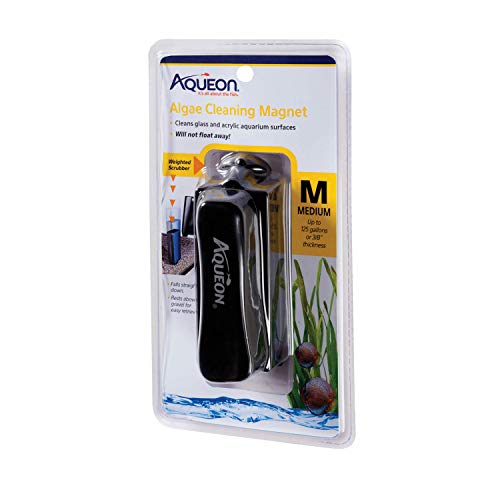
- ✓ Easy to maneuver magnet
- ✓ Cleans curved surfaces well
- ✓ Weighted scrubber prevents float-away
- ✕ Struggles on very thick glass
- ✕ Slightly small cleaning pad
| Material | Magnetic plastic and foam scrubber pad |
| Surface Compatibility | Suitable for glass and acrylic aquariums |
| Pad Dimensions | 3.75 inches high x 1.5 inches wide |
| Magnet Design | External magnet with internal weighted scrubber, separates for easy retrieval |
| Cleaning Surface | Curved pad for flat and curved surfaces |
| Floatation Feature | Weighted scrubber prevents floating away |
The moment I grabbed the Aqueon Aquarium Algae Scraper Magnetic Glass Cleaner, I noticed how smoothly the magnet glides along the glass. It’s surprisingly easy to maneuver, even on larger tanks.
The weight of the scrubber keeps it steady, so I don’t worry about it floating away when I need to pause for a moment.
What really caught my eye was the curved cleaning pad. It effortlessly tackles both flat and curved surfaces, making those hard-to-reach corners much easier to clean.
Plus, if the scrubber ever separates from the magnet, it drops straight down, which makes retrieval quick and hassle-free.
Handling it feels sturdy without being bulky. The magnet’s design allows for a comfortable grip, so I can scrub with confidence.
The cleaning surface measures a good size, giving me a decent area to wipe each pass, cutting down on cleaning time.
Using it on both glass and acrylic tanks, I found it works equally well without scratching or damage. The only minor downside is that on very thick glass, the magnet sometimes struggles a little, but overall, it’s a solid tool for keeping algae at bay.
This scraper makes my weekly tank cleaning way less stressful. It’s a simple tool, but it really hits the sweet spot for effective, easy algae removal.
Plus, at just under $15, it’s a pretty smart investment for any aquarium owner.
What Are the Different Types of Algae Suitable for Fish Tanks?
The best algae for fish tanks include various types that can enhance the aquarium environment while providing benefits for fish and other aquatic life.
- Green Algae: Green algae are common in freshwater tanks and come in various forms, such as filamentous or unicellular. They are an excellent food source for herbivorous fish and can help maintain water quality by absorbing excess nutrients.
- Brown Algae: Often appearing as a diatomaceous film, brown algae thrive in low-light conditions and can be beneficial in newly established tanks. They provide a food source for algae-eating fish and invertebrates, but excessive growth may indicate poor water conditions.
- Red Algae: Known for their vibrant colors, red algae, or Rhodophyta, can add aesthetic value to aquariums. Some species are calcifying and can help stabilize pH levels, while others are edible and can serve as a food source for certain fish and invertebrates.
- Cyanobacteria: Often referred to as blue-green algae, cyanobacteria can form thick mats in fish tanks. While they can provide a food source, their overgrowth is usually a sign of nutrient imbalance and poor water circulation, necessitating careful management.
- Chara: Chara is a type of green algae that resembles higher plants and can serve as an excellent oxygenator in aquariums. It helps absorb excess nutrients and provides a habitat for small fish and invertebrates, promoting biodiversity in the tank.
Which Algae Provide Nutrients to Fish in a Tank Environment?
Chlorella is highly regarded for its ability to boost fish immune systems, thanks to its antioxidant properties. It also aids in detoxifying the water, creating a healthier environment for aquatic life.
Marine Phytoplankton is crucial for many marine fish and invertebrates, as it mimics their natural diet in the ocean. Its nutrient content supports growth, reproduction, and health, making it a perfect addition to saltwater tanks.
Cladophora provides not only nutrition but also structural complexity in an aquarium, which can enhance the habitat for various species. Fish enjoy grazing on this algae, which can help simulate a more natural feeding behavior.
Green Water is particularly beneficial in new or established tanks, as it helps maintain a balanced ecosystem. It provides a food source for fry and other small inhabitants, while also ensuring oxygen levels remain sufficient through photosynthesis.
What Are the Most Effective Algae for Natural Filtration in Aquariums?
Spirulina: Spirulina is a blue-green alga known for its high protein content and essential fatty acids, making it a popular dietary supplement in fishkeeping. Its ability to help break down organic waste and absorb nutrients contributes to a cleaner tank environment, promoting the growth of beneficial microorganisms that further enhance water quality.
Cladophora: This filamentous green algae is beneficial in aquariums as it grows densely, providing a habitat for beneficial bacteria that aid in the biological filtration process. Cladophora also helps to improve water clarity by absorbing excess nutrients, thereby limiting the growth of unwanted algae species.
Duckweed: While not an algae, Duckweed is a tiny floating plant that plays a crucial role in nutrient absorption within aquariums. It effectively reduces nitrate levels and provides shade to the tank, which can help inhibit the growth of unwanted algae by limiting light exposure.
Red Algae (Rhodophyta): This group of algae is recognized for its capacity to absorb various pollutants, including heavy metals, contributing to a cleaner aquatic environment. Red algae can also enhance aesthetic appeal and provide hiding spots for fish and invertebrates, promoting a more natural habitat within the aquarium.
How Does Algae Impact the Health of Fish and Tank Environment?
Algae can significantly influence both the health of fish and the overall environment of an aquarium. Different types of algae contribute various benefits and challenges, making their presence a double-edged sword in aquaristics.
Benefits of Algae:
– Oxygen Production: Algae, through photosynthesis, generate oxygen critical for fish survival, especially in densely populated tanks.
– Natural Food Source: Some fish species graze on algae, providing a nutritious supplement to their diet, particularly for herbivorous fish.
– Nutrient Absorption: Algae absorb excess nutrients like nitrates and phosphates, helping to maintain water quality by reducing the likelihood of algae blooms and harmful diatoms.
Challenges of Algae:
– Unsightly Growth: Certain algae can take over a tank if not managed, leading to a visually unappealing environment.
– Competition for Resources: Excessive algae can compete with fish and other aquatic plants for nutrients and light, potentially hindering their growth.
– Toxic Algae Blooms: Some algae, such as blue-green algae, can release toxins that harm fish and disrupt the tank’s ecosystem.
Balancing algae presence is essential for maintaining an optimal environment in a fish tank, promoting both aesthetic appeal and healthy aquatic life.
What Are the Best Practices for Maintaining Algae in Fish Tanks?
The best practices for maintaining algae in fish tanks involve managing growth effectively while ensuring a healthy environment for both fish and plants.
- Control Light Exposure: Manage the amount of light your tank receives to prevent excessive algae growth. Algae thrive in bright, prolonged light, so having a consistent schedule of 8-10 hours of light per day can help keep its growth in check.
- Maintain Water Quality: Regularly test and maintain the water quality by monitoring parameters such as pH, ammonia, nitrites, and nitrates. Clean water not only supports fish health but also discourages unwanted algae types from proliferating.
- Introduce Algae-Eating Fish: Incorporating fish species that feed on algae can help control its growth naturally. Fish like Siamese algae eaters, otocinclus, and certain types of snails can keep algae levels manageable while adding to the biodiversity of your tank.
- Regular Tank Maintenance: Perform routine cleaning, including water changes and substrate vacuuming, to eliminate excess nutrients and organic matter that promote algae growth. Keeping decorations and plants clean also minimizes algae buildup.
- Balanced Fertilization: If you have live plants in your tank, ensure that you are providing balanced fertilization. Over-fertilizing can lead to algae blooms, so it’s important to follow guidelines for nutrient dosing and avoid excesses that could encourage algae overgrowth.
- Use Algae Control Products: Consider using algae control products that are safe for your fish and plants if you encounter persistent algae issues. There are various treatments available that can help manage algae without harming the tank’s ecosystem.
How Can I Control Algae Growth Without Harmful Chemicals?
Controlling algae growth in a fish tank can be achieved through various natural and non-toxic methods.
- Live Plants: Incorporating live aquatic plants can compete with algae for nutrients, thus limiting its growth. Healthy plants absorb nitrates and phosphates from the water, which are the primary food sources for algae.
- Algae-Eating Fish: Introducing algae-eating species such as Siamese algae eaters, otocinclus, or certain types of snails can help keep algae populations in check. These creatures consume algae as their primary food source, reducing its presence in the tank.
- Proper Lighting: Adjusting the duration and intensity of lighting can significantly impact algae growth. Algae thrive in bright light; therefore, providing a balanced light schedule (typically 8-10 hours a day) and using low-intensity lighting can help mitigate excess algae growth.
- Regular Maintenance: Performing routine maintenance by cleaning the tank, changing water, and removing debris can help control algae. This practice reduces nutrient levels and prevents the buildup of organic matter that can fuel algae growth.
- Controlling Nutrients: Monitoring and controlling nutrient levels, particularly nitrates and phosphates, is crucial in preventing algae blooms. Regular testing and using products like phosphate removers can help maintain a balanced ecosystem.
- UV Sterilizers: Installing a UV sterilizer can help reduce algae by exposing the water to ultraviolet light, which kills free-floating algae spores. This method is effective without introducing harmful chemicals into the aquarium.
What Common Misconceptions Exist About Algae in Aquariums?
Common misconceptions about algae in aquariums can lead to misunderstandings regarding their role and benefits in fish tanks.
- All algae are harmful: Many people believe that all types of algae are detrimental to aquarium setups, but this is not true.
- Algae indicate poor water quality: It is often thought that the presence of algae signifies bad water conditions, yet this is a simplistic view.
- Algae are just a nuisance: Some aquarium enthusiasts dismiss algae as mere pests, ignoring their ecological significance.
- Algae require high maintenance: There is a misconception that managing algae in an aquarium demands excessive effort and attention.
- Only certain fish eat algae: Many people assume that only a few specific fish species can consume algae, overlooking a wider variety of options.
Not all algae present in aquariums are harmful; some types, like certain species of green algae, can be beneficial as they contribute to the tank’s ecosystem by providing oxygen and serving as food for herbivorous fish.
While excessive algae growth can be a sign of imbalance, some algae can thrive in healthy environments, indicating that they are part of a natural cycle rather than an outright indicator of poor water quality.
Algae play an essential role in the aquatic ecosystem by supporting various life forms, including fish and invertebrates, which rely on algae as a food source and habitat.
Maintaining a healthy balance of algae in your aquarium can actually simplify maintenance, as they help absorb excess nutrients that could lead to more problematic algae blooms or other issues.
In reality, many species of fish, including not just the well-known algae eaters like plecos or otocinclus, but also some tetras and even cichlids, will graze on algae, integrating this natural food source into their diet.
Related Post: